Health & Fitness
BLOG: Supporting and Pruning Tomatoes
Is there anything as wonderful as the taste of a fresh-picked tomato straight from your garden? Supporting and pruning tomatoes is easy to do and is essential to growing large, healthy tomatoes.

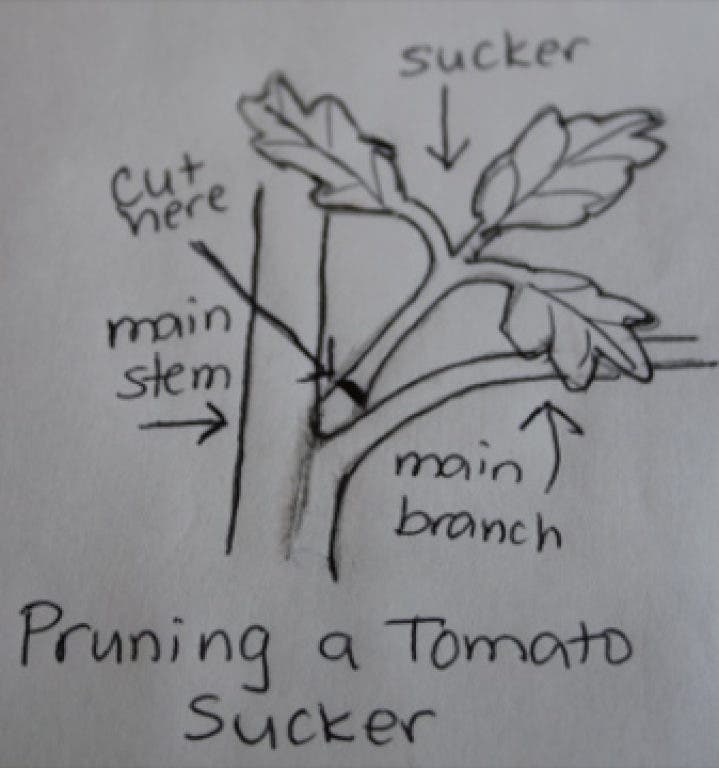


Is there anything as wonderful as the taste of a fresh-picked tomato straight from your garden? Especially compared to the ones that taste like the cellophane they’re wrapped in that you get at the grocery store. We touched on the subject of pruning tomatoes in a previous blog post, but I think it is worth taking more time to explore why it should be done.
There are two basic types of tomatoes, determinate which generally ripen at about the same time and grow on a shorter & more bushy plant and indeterminate or vining tomatoes where the fruits ripen a few at a time throughout the entire season. Because they ripen all at once, determinate tomatoes are great for canning or making into sauces. In general they mind their manners and pruning is not necessary.
The vining (indeterminate) tomatoes benefit from a good pruning. If you don’t grow them up a vertical support and don’t prune them, you can easily get a plant that will quickly take over a 4’ x 4’ area and become a nasty, tangled mess that is more prone to disease.
Find out what's happening in Glen Burniefor free with the latest updates from Patch.
According to Fine Gardening’s blog, “A tomato is a solar-powered sugar factory,” and I think that’s a great description for what’s going on inside those beautiful plants. Sugar production results in an overgrowth of new leaf growth. Of course leaves are what sucks up the sunlight and makes tomatoes, but excess growth results in more sugar and more leaves, etc.
Supporting and pruning the tomato is essential for air circulation resulting in more efficient photosynthesis (using sunlight to make food from water and carbon dioxide). When there are too many leaves, or when leaves drag on the ground they tend to be in shadow and cannot produce sugar. Then these leaves start to turn yellow because they are using more sugar than they are producing. Air circulation is critical in preventing fungal, mold and mildew diseases especially in our humid climate.
Find out what's happening in Glen Burniefor free with the latest updates from Patch.
When you properly prune your tomatoes there are fewer leaves, but the leaves that are left receive more sun and will direct the sugar production to the fruits instead of to extra, sick leaves. Won’t you have fewer fruits if you’re pruning? Yep. However the fruits you get will be larger and healthier. And because you are pruning them, you can plant more plants in a smaller space. Remember that 4’ x 4’ we talked about with a sprawling indeterminate tomato using up? Well if you prune and use supports to grow that plant upright you will be able to plant FOUR tomatoes in that same amount of space! Four well kept tomato plants are sure to produce much more than one plant that’s sprawling all over the ground.
So, how do you prune a tomato? If you look at the drawing above, you’ll see that there are main branches that grow at an angle from the main stem. Occasionally you will see something growing in the “crotch” of the “Y." This is called a sucker. If you get this sucker growth early, you can pinch it off with the fingernail of your index finger and your thumb. If it’s larger than 4” in length I’d suggest cutting the sucker with scissors or a sharp knife so you don’t damage the main stem or the branch. This is a task you should perform every week.
NOTE: My next SFG Class will be in Glen Burnie on Saturda. SFG 101 10 a.m.-noon, SFG 201 1–3 p.m. Register or contact me online at sfg4u.com. Class size is limited to 10 people so register early.