Health & Fitness
BLOG: YAY! April 15th is Coming!
No, I'm not celebrating because we get an extra day to send in our taxes, April 15th is, statistically speaking, also the last frost date for our area.

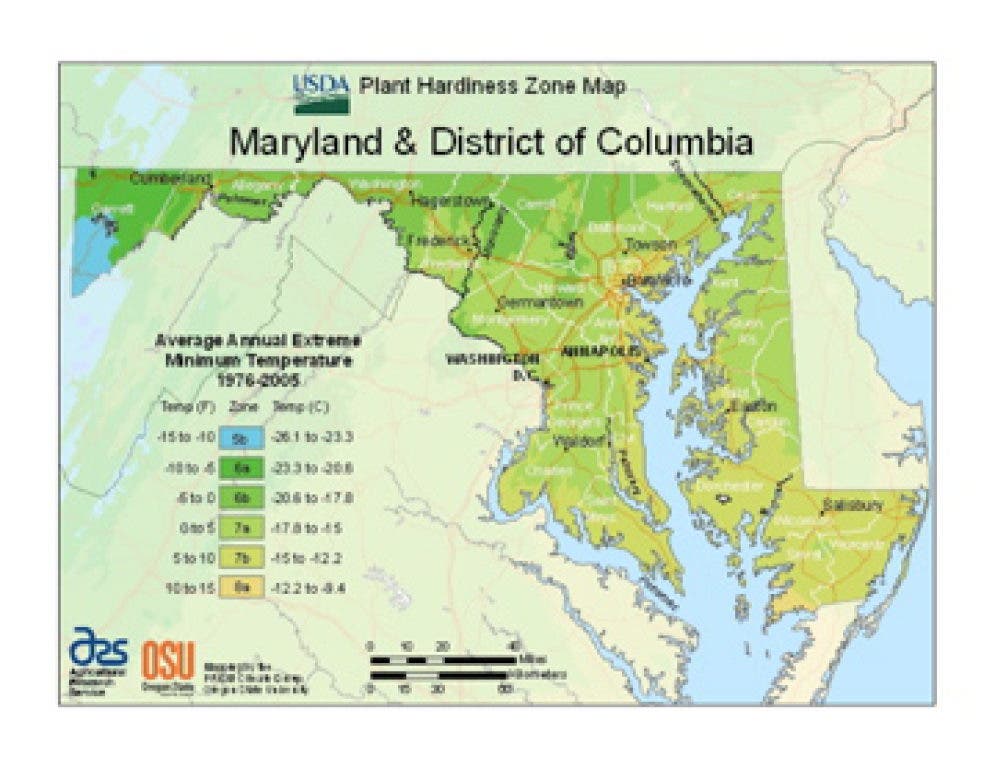

Will anyone else be doing the happy dance next Sunday (April 15th)? Oh no, not because we get an extra day to send in our taxes ... it’s the last frost date for Maryland ... well, sort of. We certainly got fooled with the extremely mild winter, but a few nights down into the 30s has certainly brought us to our senses.
As we learned in a previous blog post, the USDA (United States Department of Agriculture) Hardiness Zone Map changed in 2012 and we in the Glen Burnie area are now in Hardiness Zone 7b (we used to be classified as 7a) and Baltimore is listed as 8a. What this means is that our average annual extreme minimum temperature has risen from 0–5 to 5–10 degrees F.
I like the USDA’s definition: “The 2012 USDA Plant Hardiness Zone Map is the standard by which gardeners and growers can determine which plants are most likely to thrive at a location.”
Find out what's happening in Glen Burniefor free with the latest updates from Patch.
But what’s a hardiness zone? According to Wikipedia: “A hardiness zone is a geographically defined area in which a specific category of plant life is capable of growing, as defined by climatic conditions, including its ability to withstand the minimum temperatures of the zone. For example, a plant that is described as 'hardy to zone 10' means that the plant can withstand a minimum temperature of 30°F. A more resilient plant that is 'hardy to zone 9' can tolerate a minimum temperature of 20°F. First developed for the United States by the Department of Agriculture (USDA), the use of the zones has been adopted by other nations.”
One “fault” of the hardiness zone system is that it doesn’t take into account heat. For that information regarding heat you can use the American Horticultural Society’s (AHS) Heat-Zone Map.
Find out what's happening in Glen Burniefor free with the latest updates from Patch.
According to the AHS: “The effects of heat damage are more subtle than those of extreme cold, which will kill a plant instantly. Heat damage can first appear in many different parts of the plant: Flower buds may wither, leaves may droop or become more attractive to insects, chlorophyll may disappear so that leaves appear white or brown, or roots may cease growing. Plant death from heat is slow and lingering. The plant may survive in a stunted or chlorotic (loss of green coloring) state for several years. When desiccation (lack of moisture) reaches a high enough level, the enzymes that control growth are deactivated and the plant dies.”
Wow! You can download a copy of the heat-zone map atahs.org/pdfs/05_heat_map.pdf.
This information can help you when you’re selecting plants at the nursery or ordering seeds as this information is usually on the label. Below is the information for Silver Queen Corn. As you can see the hardiness zone information is first on the list.
Zones: 3-9 annual
Height: 8-9 feet
Spacing: 10-12 inches between plants; 30-36 inches between rows
Depth: 1-2 inches
Spread: 15-18 inches
Sun/Shade: full sun
Germination: 5-8 days
Days To Maturity: 88
Yield: 10 dozen ears/100 foot row
Fruit: Small, white, sweet, tender kernels. 14-16 rows of white kernels per ear
I have to disagree with their spacing. If you’re using the Square Foot Gardening method, you’ll be able to plant FOUR per square foot! Since you can start planting corn next Sunday, I’ll tell you how I plant my corn in just 6” of growing medium on Friday.