Health & Fitness
BLOG: Taking Square Foot Gardening Overseas—Part I
Before taking SFG to third-world countries, Mel Bartholomew decided to approach the women first and ask them, "Would you like to improve the nutrition of your children so they are healthier?"


Mel Bartholomew, creator of the Square Foot Gardening method, came out of retirement in 2001 to form a non-profit foundation. He converted Square Foot Gardening into Square Meter Gardening so that he could take the concept all over the world. The goal of the SFG Foundation is to end world hunger. Certainly a lofty goal, but you can’t sit by and “do nothing” just because you can’t fix the entire problem. Below is my interpretation of a recent article he wrote (with his permission) with notes added from a class I took from him in 2010:
Before taking SFG to third-world countries, Mel, an efficiency expert, strategized how to best accomplish this. He decided to approach the women first and ask them, “Would you like to improve the nutrition of your children so they are healthier?” What mother would say no to this question? Moms will do almost anything for their children.
Mel said that if you take the idea to the men in a village they will generally ask, “How will that help me?” Men generally want to protect and provide for their family, but they feel they have to work HARD for it. The way they “run with the ball” here would be to get a tractor, plow the land, add fertilizer and insecticides, toil, toil, toil. You known . . . they want to “be the man” and use the methods they’ve seen their fathers use.
Find out what's happening in Glen Burniefor free with the latest updates from Patch.
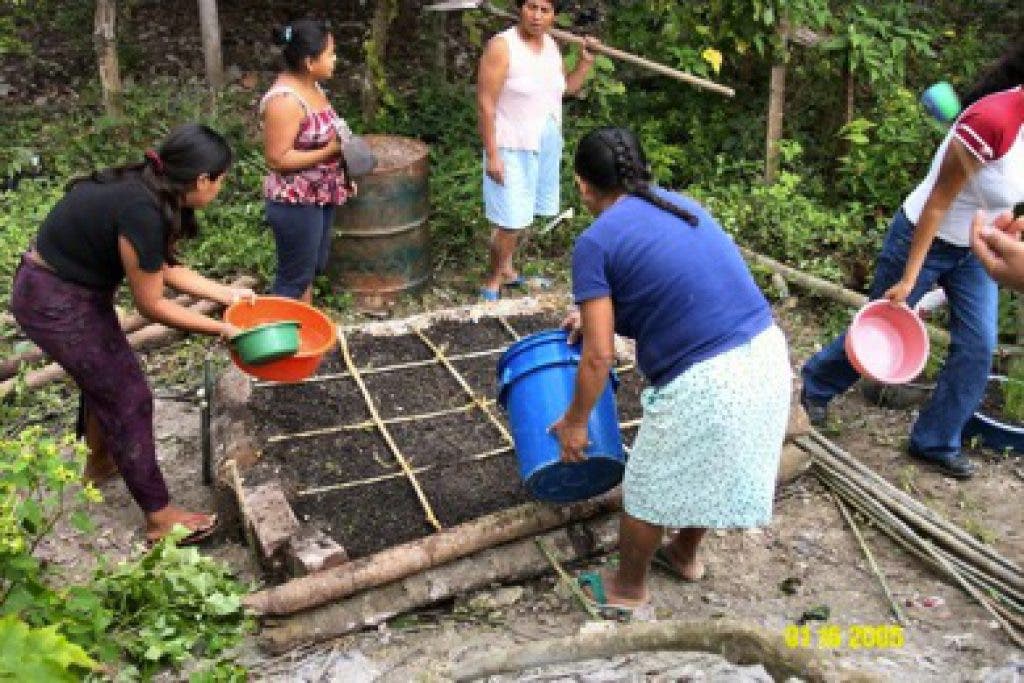
The women’s days are pretty full already, so they are more willing to try something new. After teaching them how to make compost and build a small raised bed, it’s easy for them to understand the concept of working SMARTER not HARDER. They are usually quite clever about finding free materials for the raised bed (rocks, bricks, scrap wood, etc.). We’ve talked quite a bit in past blog posts about the importance of Mel’s Mix, but Mel realizes that most third-world countries don’t have access to vermiculite or peat – or it is too expensive for them to obtain, so he has them grow in straight compost. You can do that too, just realize that this is NOT optimal as it doesn’t hold water as well and will tend to compact with out the other ingredients.
For the first phase Moms and their children are taught the basics of composting. In many of these cultures, farm animals run loose dropping fresh manure all around. Kids are sent out to scoop poop and add it to the compost pile. Not only will this improve their garden, but it’s keeping the manure out of the nearby streams from run-off – the same streams from which they get their drinking, cooking and washing water.
Find out what's happening in Glen Burniefor free with the latest updates from Patch.
Mothers and their children are also taught to gather fruit peels and other food scraps, plant materials such as junk weeds (think of things like kudzu which grows rampant), grass, discarded paper, etc. Everything is chopped well, added to the compost pile, mixed, moistened and turned frequently. Depending on how frequently the pile is turned, the compost can be ready in two to four weeks. Yes, I said WEEKS.
I love the way Mel describes this phase of the project: “What have we accomplished so far as non-gardening events? We’ve kept the children very busy and active outside hopefully without getting into trouble doing something that is going to reduce pollution, materials that would eventually go to the landfill, if there is one. Clean up and brighten the neighborhood, eliminate stream pollution and feel a great sense of accomplishment by what they are doing. A mother has organized them, cleaned up their own yard, arranged for spots for the compost operation, and has a feeling of great pride in her children because the family is working towards a common goal. They are working together toward a common goal. This is going to reduce their need for costly food and give them very fresh and very nutritious cost effect food daily.”
Next week we will continue.