Politics & Government
Brooklyn Park Residents Incensed Over Incinerator
Residents are trying to get public comment portion extended past Sept. 14 deadline.
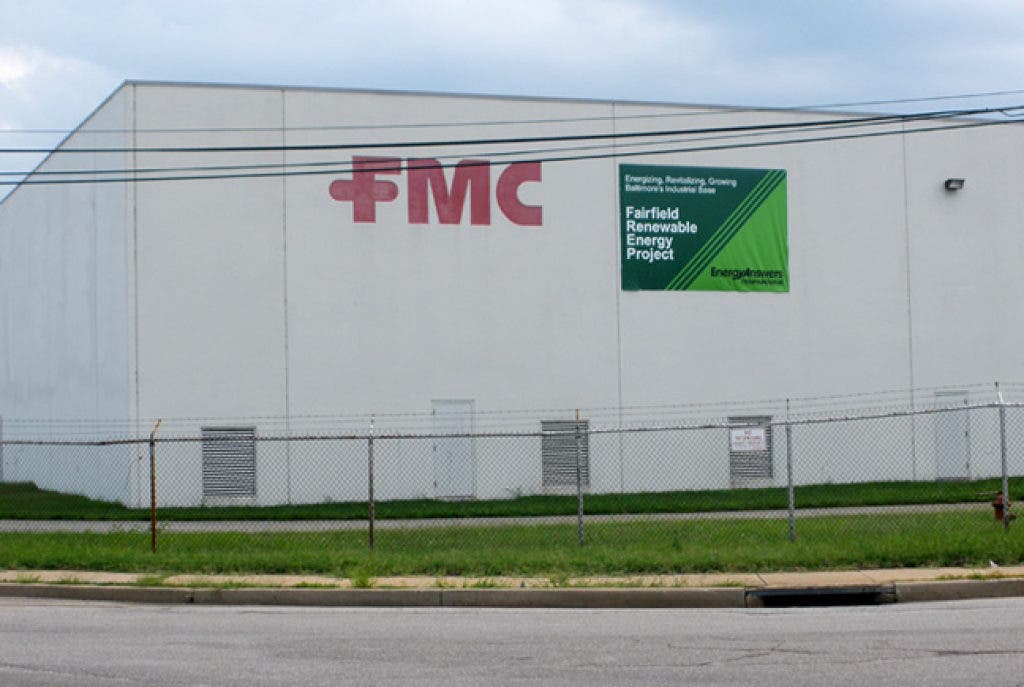
Curtis Bay and Brooklyn Park share a boundary along the Anne Arundel County line. Mark Hranicka, vice president of the Brooklyn Heights Improvement Association, said he has every reason to believe that chemicals and other pollutants from a proposed incinerator would affect not just his neighborhood, but a large swath of the Chesapeake Bay watershed.
When he heard about Energy Answers International’s plans to build the Fairfield Renewable Energy Project on the site of the former FMC chemical plant at 1701 E. Patapsco Ave., he said he was upset.
The incinerator would burn tires, wood waste and automobile shredder residue, said Andy Galli, Maryland program coordinator for Clean Water Action (CWA). Galli helped organize residents to attend a Maryland Public Service Commission (PSC) hearing Aug. 30 in Curtis Bay. The incinerator would release sulfuric acid, soot, mercury and lead, he said.
Find out what's happening in Glen Burniefor free with the latest updates from Patch.
Those fumes would not stop at the Anne Arundel County line, Hranicka said.
“No one is exempt. Whichever way the wind blows, it would devour us,” he said.
Find out what's happening in Glen Burniefor free with the latest updates from Patch.
CWA and other groups against the incinerator are trying to get the public comment portion of the project extended past the Sept. 14 deadline, arguing not enough residents know about the project. Dennis Sobol, a PSC law judge who presided over the hearing, has not made a decision.
Plans for the incinerator have been discussed for four years, according to the PSC’s case jacket, which lists meetings, rulings and other decisions.
The PSC approved the permit for the project in 2010, which required construction to begin Feb. 5. But Energy Awareness could not begin construction then because it had not completed the sale of all its power and requested an extension of that requirement, said Kurt Krammer, the project manager. The PSC hearing was to get comments pertaining to that extension, he said.
The project would be environmentally safe, Krammer said.
“This facility will meet all new clean air standards by the Environmental Protection Agency. They will exceed (Maryland Department of the Environment) and EPA standards,” he said. “We will meet or exceed them. We are setting new standards.”
The project also would provide 1,300 construction jobs over the 36 months Krammer anticipates construction lasting, he said. Many of them would be union jobs, and he estimated 600 to 700 construction workers a day would be on the site.
Once construction is completed, “150 well-paying jobs will be on site,” he said.
But Galli said environmentally friendly projects could provide those jobs using safe, green technology, such as recycling. And he disagreed with the idea that the project would meet environmental safety standards.
“We have never agreed that this is the best way to dispose of solid waste,” he said, adding it would affect the water quality through precipitation. “What goes up must come down.”
Truck traffic of 83,000 trucks a year—or 230 a day—on Interstate 95 would create emissions, Galli said.
“We’re talking about the largest incinerator in the country trucking in waste from New York City,” he said.
And because the site was home to the FMC chemical plant years ago, it reinforces the perception among Brooklyn Park residents that the community is a sort of dumping ground for the region’s trash, Hranicka said.
The incinerator won’t affect the Energy Awareness’ owners, whose headquarters are in New York, Hranicka said.
“It’s a profit thing. They’ll make money, and we’ll pay with our lives,” he said.