Health & Fitness
When Rodgers Ruled The Air: Part III
Part III of the story of how a scion of HdG's storied Rodgers family became the first man to fly across America.
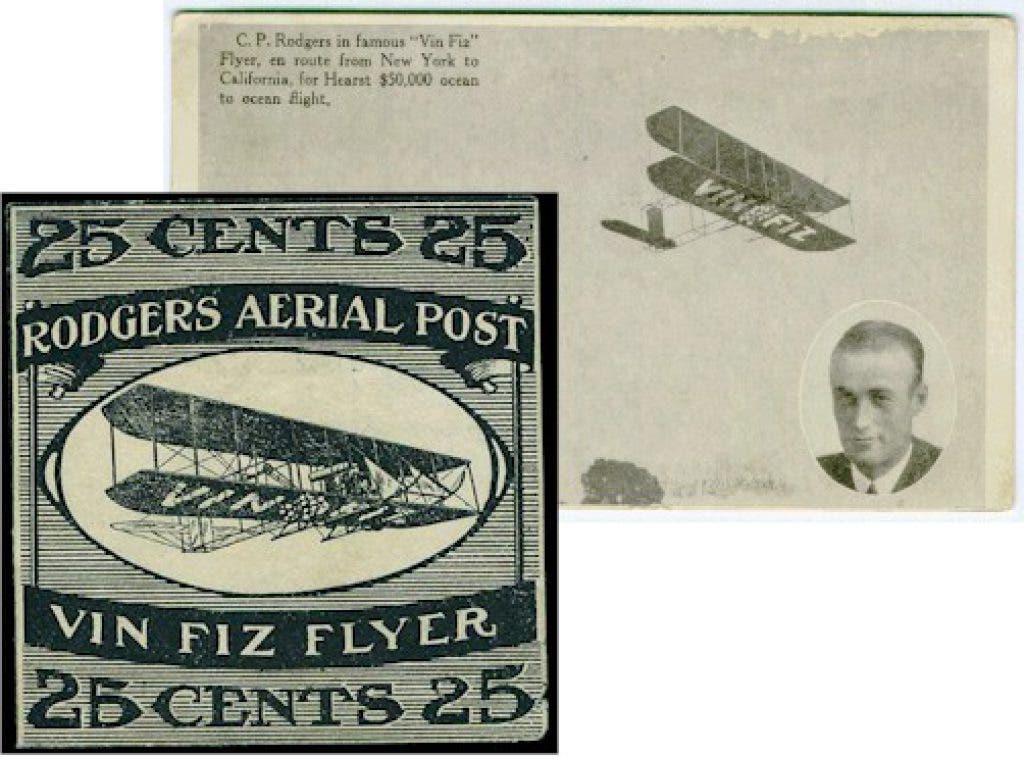


The story of how a scion of HdeG’s storied Rodgers family became the first man to fly across America
Part III "Prize or No Prize!"
"If canvas, steel and wire hold together with a little brawn, tendon and brain. I mean to get there," he said. "I am going to cross the continent simply to be the first to cross in an aeroplane."
Find out what's happening in Havre de Gracefor free with the latest updates from Patch.
Calbraith Perry Rodgers had plenty of brawn and tendon. He came by it honestly. His ancestors included three naval heroes: John Rodgers, a hero of the War of 1812, Oliver Hazzard Perry, the hero of the Battle of Lake Erie, and Matthew Perry, the man who took a fleet to the closed kingdom of Japan and opened it to the West. So, Cal Perry, the early twentieth century sportsman, had quite a legacy.
And quite a challenge. Being the first to fly across the United States was considerably harder that it looked.
Find out what's happening in Havre de Gracefor free with the latest updates from Patch.
It had taken Cal Rodgers six crashes and 21 days to reach Chicago. Only nine days remained on the 30 day limit to qualify for William Randolph Hearst’s $50,000 prize.
Rodgers cabled San Francisco, seeking an extension from Hearst on the time limit. He waited two days, and received no reply. A Hearst paper in St Louis offered $1,000 to Rodgers to fly there.
He didn’t take the St Louis offer, but the idea intrigued him, and his promoter Stewart DeKrafft.
And so he departed Chicago on a combination of expedition and exhibition. He promoted flying, Vin Fizz grape drink and courage. And in so doing, he would become the pioneer of what would later be known as “barnstorming”
He took off south, passing over Joliet penitentiary, where the warden had allowed all the prisoners out in the yard to watch the flight.
The tiny flier flew south and west, following railroad lines through Hannibal, MO, and Kansas City. He reached Muskogee, OK on Day 30, after several more crashes; the time ran out on the Hearst prize. The crowds had begun to thin, and the reporters accompanying him on his train wondered if Cal Rodgers would continue.
"This is no longer a race against time," he told the reporters and crew aboard the Vin Fiz Special on 17 October 1911. "It is not against a competitor. This is a demonstration that man is not held down by the dead hand of the past."
Overnight, public interest was reignited. Signs and messages began to appear along the flight route. "Help that man Rodgers fly across America” was chalked on the sides and tops of water tanks next to the track. And the crowds that met the plane at its many stops began to grow!
Amon Carter, the publisher of the Ft. Worth Star Telegram sponsored Rodgers' flights across Texas. At Fort Worth, a huge crowd met the flier. The next day, Cal Rodgers and his Wright Flyer went on to Dallas, where the Morning News reported:
“Amid tumultuous applause from an eager crowd of 75,000 persons, Cal P. Rodgers, sea-to-sea aviator, glided gracefully down the infield of the State Fair racetrack at 1:50 p.m. After hovering over the fairgrounds for 15 minutes in the most thrilling exhibition of aerial navigation ever seen here, he headed his biplane south and started again on his long journey to the Pacific Ocean.”
Between Austin and San Antonio, his engine seized and blew apart in the air, damaging the Wright Flyer, but not the bottle of Vin Fiz tied to one of the wing struts.
Flying across the Southwest, Cal continued to be met by crowds, and continued to encounter mishaps. At one point he was attacked by an eagle.
Finally, on Nov. 5, 1911, 49 days after leaving New York, Calbraith Perry Rodgers landed his Vin Fiz flyer before a cheering crowd at Tournament Park in Pasadena. Crowds rushed the aviator and his plane, and he was hoisted into a touring car and paraded around the track. At one point, a reporter from Hearst’s Examiner jumped on the running board.
"What about the prize? What about the Hearst money?" the reporter exclaimed.
"Forget the prize," Cal shouted back. "I did it, didn't I? I did it!”