Politics & Government
Second Blimp to Rise Above Harford County
Aberdeen Proving Ground announces second aerostat will launch this week from Edgewood area.


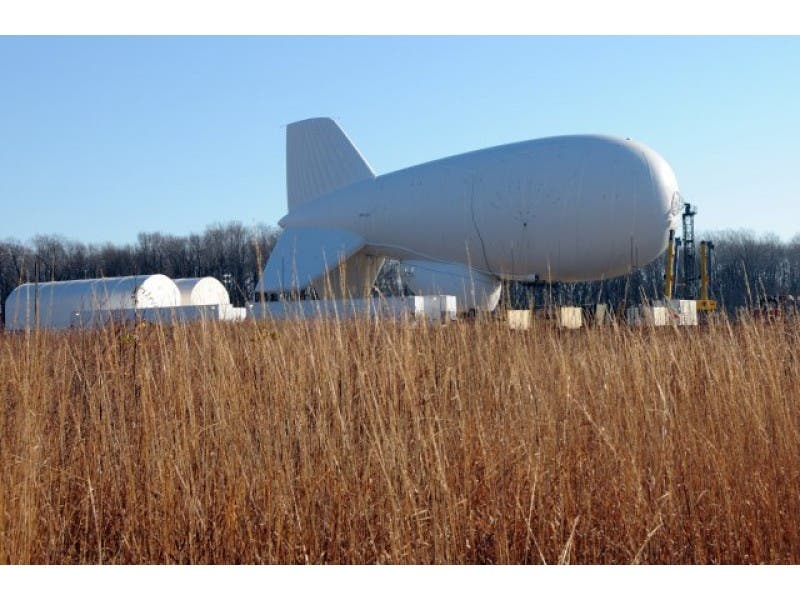
The blimp that has hovered over Harford and Baltimore counties for nearly eight months will not be alone for long.
Aberdeen Proving Ground reports that a second aerostat, or helium-filled airship, will launch on Wednesday, weather-permitting.
The North American Aerospace Defense Command (NORAD) is deploying the aerostats to watch for cruise missiles. Due to their height, they have a broader range of sight than ground-based sensors and can cover an area from New York to North Carolina to Ohio.
Find out what's happening in Havre de Gracefor free with the latest updates from Patch.
The first aerostat went up at the end of December in Baltimore County and towers 10,000 feet above the concrete pad in Graces Quarters where it is tethered.
Originally, the second blimp was to be airborne by spring.
Find out what's happening in Havre de Gracefor free with the latest updates from Patch.
However, its deployment was delayed to allow for construction, according to Kelly Luster, spokesman for Aberdeen Proving Ground.
The aerostat will be anchored in the Edgewood area of the proving ground, Luster said.
“Due to the nature of the area, extra precautions were taken to ensure the safety of personnel working in the location,” Luster told Patch.
- Blimp at Aberdeen Proving Ground Launching Soon
- Could Aberdeen’s Surveillance Blimps Spy on Everyday People?
- Second Blimp on the Way to Maryland Skies
- Blimps to Fly Over Aberdeen for 3 Years
- Congressman: APG Selected for Missile Surveillance Program
- Aberdeen Proving Ground Proposed as Site for Surveillance Balloons
Known as the Joint Land Attack Cruise Missile Defense System (JLENS), the team of blimps can detect missiles, drones and rockets using special sensors.
Here’s how it works: One blimp will conduct surveillance. If a threat is detected, the second blimp will feed the information from the sensor to NORAD, which deploys air-based, ground-based or computer-driven systems to neutralize the danger, according to the U.S. Army.
The blimps are supposed to fix a gap in the nation’s security against cruise missiles from other countries offshore.
With two blimps in the air, the cruise missile detection test will finally be able to get off the ground.
The aerostat program at Aberdeen Proving Ground will end Sept. 30, 2017, according to NORAD.
Photo Credit: Aberdeen Proving Ground.
Get more local news delivered straight to your inbox. Sign up for free Patch newsletters and alerts.