Health & Fitness
Everyday Heroes: Soccer Without Borders
When 28-year-old Jill Pardini first walked onto a field with nothing more than an idea in early 2009, she knew she had her work cut out for her.
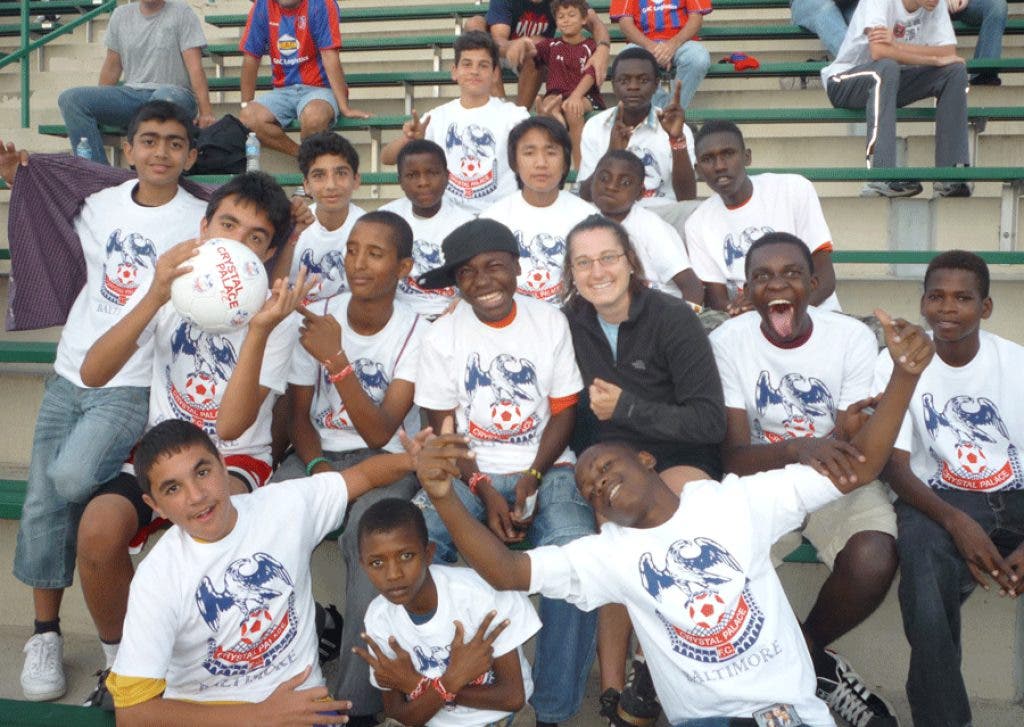
When 28-year-old Jill Pardini first walked onto a field with nothing more than an idea in early 2009, she knew she had her work cut out for her. Iraqi boys were in one group, Nepali teens in another, and a conglomerate of Congolese youngsters playing on their own. But Pardini also saw potential.
Two years later, Pardini’s hard work and dedication have turned a casual hobby into an initiative that is improving Baltimore’s communities. The Soccer Without Borders program, which combines competitive soccer with tutoring, mentoring, and other life guidance, has become an invaluable part of the lives of its participants.
And those same teenagers are now taking the field together.
Find out what's happening in North Baltimorefor free with the latest updates from Patch.
When Pardini, who lives in Waverly, was tackling public policy at a graduate program at Johns Hopkins University and an internship in the Maryland Office for Refugees, she found Baltimore to be a hotbed for refugee populations from all over the world. A former soccer player at the University of Iowa, she thought the sport may be a key to improving the lives of the city’s young refugees.
“I started with just a few soccer balls and remember thinking that the refugee community leaders were wondering, ‘What is this young girl possibly going to do?’” Pardini said. “And we had 62 kids show up that first day.”
Find out what's happening in North Baltimorefor free with the latest updates from Patch.
Seeing the surprising turnout, she contacted Soccer Without Borders, a California organization that began in 2006 to address the lack of safe spaces where young people feel cared for, have a voice and can experience the joy of sport; lack of opportunity for youth to actively explore social issues and community challenges; and lack of social capital and access to potential opportunities for education, employment and personal growth.
With permission to bring the program across the country and into Baltimore, Pardini started getting the word out. Volunteers helped to organize the 13-week program in the fall of 2010, tutor the youth, provide refreshments, and write grant applications to secure funding. Soccer Without Borders includes kids between the ages of 11 and 19 that came to Baltimore as refugees from 11 different countries.
“We only have two rules. Everyone has to speak English and perform well in school,” Pardini said. “You can see drastic improvement in their speaking skills.”
And the joy of participating in Soccer Without Borders has many of the kids vastly improving their performance in the classroom.
“There’s a lot of overlap between the program and school,” Pardini said. “A teacher will call and say a kid hasn’t been doing work, and a kid won’t be able to start a game. One student was so devastated that he wasn’t able to play in a game because of failing to do work in school. It’s really a way to push these kids to do well.”
At the program’s start, there were rough patches. Without knowledge of how to execute a kickoff to start a game or a throw-in, Jill’s early team struggled in games. But then, a player from Eritrea dribbled through the whole opposing team and scored a goal, and the whole Soccer Without Borders team sprinted from the sideline to mob the young star and celebrate with him on the field. Despite the referee’s pleas to keep her team on the sideline, Pardini looked on as her kids rejoiced. They were losing handily, but they were happy.
And the transformation has been obvious.
When Pardini first met a boy from Africa, he showed up to practice in his jeans and t-shirt, and he said he would get beat up if he wore his soccer uniform, which is shorts and a “Soccer Without Borders” shirt, to school. Eventually, he and three other students became so proud with their participation in the program that they wore their shirts on school spirit day at Digital Harbor High School.
This year, Pardini received a fellowship grant from Open Society Initiative-Baltimore that will allow her to focus all of her attention on growing the program. She envisions several full-time employees, an indoor location to run clinics and practices, involving local college athletes in mentoring programs, and a full-service aspect that will help kids with everything from paying BGE bills to getting driver’s licenses.
“I want to build a competitive and formidable soccer club that really helps these kids and lets them enjoy the program,” Pardini said. “It’s getting really exciting.”
For more information about Soccer Without Borders, check out the website at http://www.soccerwithoutborders.org/baltimore, email Pardini at jill@soccerwithoutborders.org or use Twitter or Facebook.