
On April 1, 2012 Waverly Main Street will commemorate the War of 1812 Bicentennial.
I thought it would be worth exploring what Waverly looked like 200 years ago.
The area was the subject of land grants by Lord Baltimore in 1688 to Tobias Stansboro and Charles Merryman called Huntington and Merryman’s Lot desribed as going “into the barrens”. The first recorded residence in the area called “Homestead” was built by Thomas Gorsuch in 1736.
Find out what's happening in North Baltimorefor free with the latest updates from Patch.
By the 1740s improvements were being made along a York Road enabling Pennsylvania farmers to get their wagons to market in Baltimore. This had also been known at one time as “Brittain Ridge Rolling Road”. The entire area between Jones Falls and Herring Run along the elevated piedmont above the coastal plain was also called “Brittains Ridge”.
Shortly after the American colonists were successful in their War of Independence from England, subdivisions of the those grants resulted in the appearance of estates by wealthy merchants from Baltimore. Yellow fever epidemics in 1797, 1799 and 1800 also influenced the building of homes on the hills north of town. Out of the barrens emerged county seats with farms and pastures.
Find out what's happening in North Baltimorefor free with the latest updates from Patch.
In an 1801 letter from Charles Carroll to his son concerning the construction of “Homewood” he wrote, “while you live in Baltimore it will be necessary for the health of your family and for the exercise of your mind and body to have a house on Homewood to retreat to in summer and autumn. I would recommend the repair of the present buildings on that Farms and some additional rooms to make it a comfortable, cool and convenient residence during these seasons.” “Homewood” is one of the few homes from that era to survive today as a museum on the Homewood campus of Johns Hopkins University.
To the east stood “Montebello” built by Sam Smith as his family summer home. “Cloverhill” was the home and farm of John Merryman and his family’s name was given to the lane that connected his property to York Road. South of “Montebello” was the “Clifton” estate of Henry Thompson, which later was owned by Johns Hopkins and is currently used by Civic Works. Down the York Road was Robert Oliver’s “Green Mount”, now Greenmount Cemetery.
To the east and west of York Road were William Patterson’s “Cold Stream” and William Gilmore’s “Vineyard”, the latter leading to the naming of a lane known first as “Gilmore’s Lane” and later “Vineyard Lane”.
On what was referred to in a deed from Sam Smith to James Biays as “Ensors Inspection” and would later become the “Brady Mansion” James Biays fashioned his “Mt. Jefferson” from which he could climb to a copula to watch his ships come into port at Baltimore Harbor. One gets a sense of the rustic nature of the area from this 1813 public notice in the American and Commercial Daily Advertiser, “reported (to a Justice of the peace) a trespassing stay Cow, on the farms of James Biays, a short distance from Baltimore, on the York Turnpike road, he being Farmer & Manager there, represents the back and sides of the Cow to be black, her belly and legs white. The owner is desired to come prove property, pay charges and take her away.”
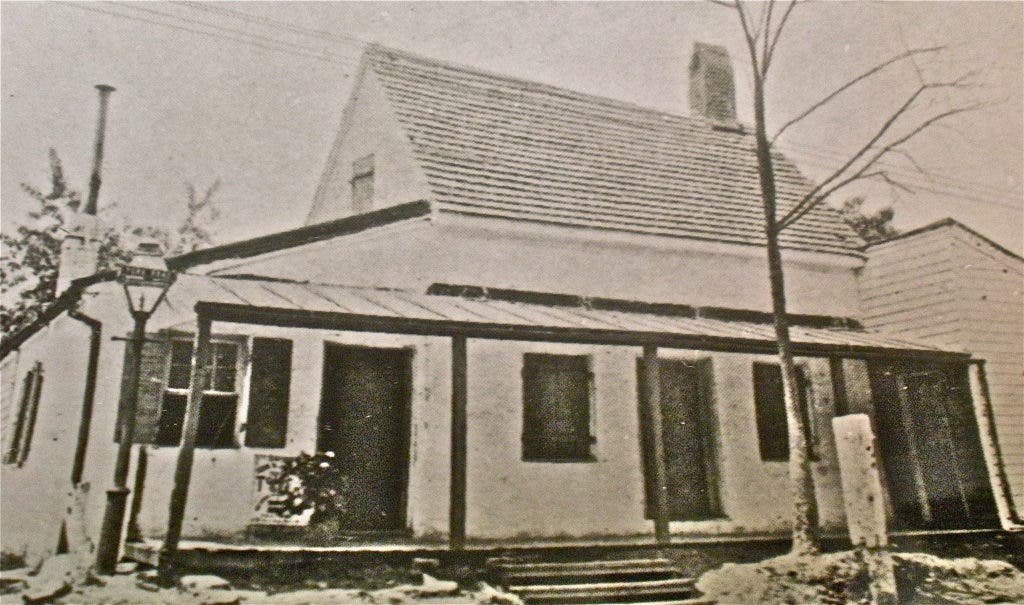
On the east side of York Road near Gilmore Lane was an American Revolutionary barracks and powder-magazine. From this barracks, Baptists and Episcopalians would later meet to worship and form congregations that build two of the first churches in Waverly, Soldiers were sent up from Fort McHenry to the barracks in summertime to escape malaria. On the west side was added in 1808 the first tollhouse and tollgate along the York Turnpike. South of the barracks Mt. Jefferson was a rendezvous for calvary. Serving in the War of 1812 from Montebello, Clifton and Mt. Jefferson were General Sam Smith, its greatest hero, Captain Henry Thompson, of the Flying Artillery, 3rd Maryland Brigade and Colonel James Biays, who commanded the calvary at the Battle of North Point.
I just completed “Merchant Congressman in the Young Republic: Sam Smith of Maryland 1752-1839” by Frank A. Cassell and am in awe of the role this great leader played in saving the new Republic from near defeat in its second war of independence. Surmounting an incredible array of obstacles, Smith took upon himself the job of preparing Baltimore for a British invasion by land and sea while having to battle his own country’s military, state and federal bureaucracies almost every step of the way.
What a fascinating Baltimorean! He spend 40 years in the U.S. House of Representatives and the U.S. Senate, fought in both American Wars of Independence, won and lost fortunes as a merchant, counseled U.S. Presidents, was beloved by the militia he led and in his 80s helped save his city from anarchy when bank failures resulted in riots by quieting the unrest and agreeing to serve as Mayor.