Crime & Safety
'Gross Indifference' Claimed in First of Six Freddie Gray Trials
Dead after injuries in police van, Freddie Gray should have been buckled in, according to prosecutor, who says officer 'simply didn't care.'


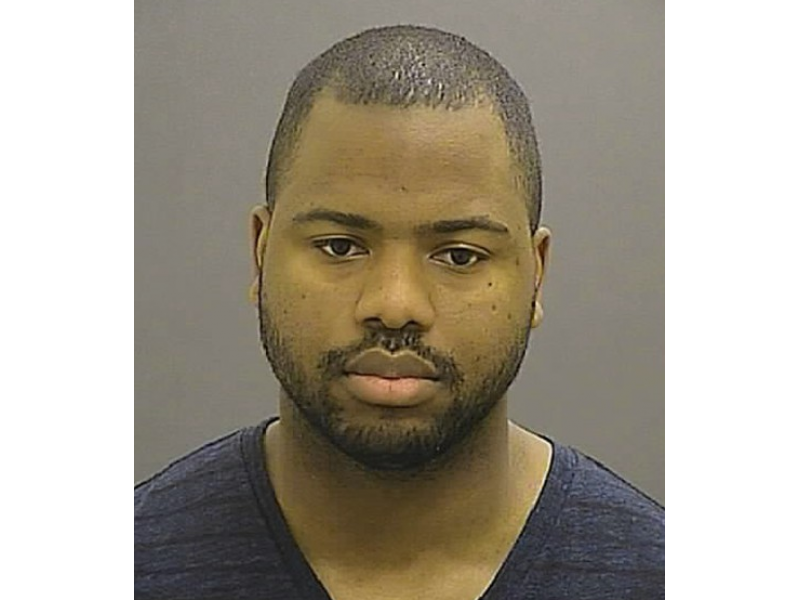

The Baltimore Police officer on trial for his alleged role in the death of a man in police custody failed to perform his sworn duty as a defender of public safety, Chief Deputy State’s Attorney Michael Schatzow said.
Officer William Porter, 26, is charged with manslaughter, second-degree assault, reckless endangerment and misconduct in office in connection with the death of Freddie Gray.
Gray died in police custody April 19 from what Schatzow said was a severe spinal cord injury that he sustained in the back of a police van on April 12.
Find out what's happening in North Baltimorefor free with the latest updates from Patch.
Jurors will be taken below the courthouse to inspect a police van as part of the trial, he said.
Before he was hospitalized, Gray was arrested April 12 and taken on a van ride in west Baltimore that lasted more than 20 minutes.
Find out what's happening in North Baltimorefor free with the latest updates from Patch.
Officer Porter was present for five of the six stops made by the police wagon transporting the detainee, who repeatedly asked the officer for help, according to Schatzow. This differs from a previous version of what happened that the state’s attorney’s office presented in May upon announcing the officers were being charged; in that sequence of events, Porter was present for two stops.
“Contrary to what he told investigators—that he wasn’t close enough to see what was going on...[at a previous stop, Porter] had to back up to make room” for the arresting officers to take Gray out of the van on the second stop, Schatzow said. He admitted that “we don’t know the exact route” that the van took, saying investigators pieced together the stops from closed-circuit TV operated by the city, witness testimony, two cell phone videos, police radio calls and surveillance from a private business.
According to Schatzow, jurors will see a video of Gray being arrested, which indicates he was in good health before being put into a police van.
“Mr. Gray was able to walk, he was able to talk...before he was put in this van,” Schatzow said. “But when he was taken out of the van at stop six, [he] was unconscious.”
‘There Was No Reason Not to Put [Gray] in a Seatbelt Unless He Simply Didn’t Care’
At the van’s fourth stop, on Dolphin Street and Druid Hill Avenue, Porter responded to the van driver’s request for someone to check on Gray, who had on a previous stop been put in leg shackles and plastic cuffs, Schatzow said.
Porter pulled his cruiser up behind the police van and when he opened the door to the wagon, Gray said he couldn’t breathe, according to Schatzow.
Instead of calling for a medic, Porter “gets him up” from the floor of the van, where Gray had been put face-down, and put him on a bench in the van “where the seat belts are” but did not buckle him in, Schatzow said.
Baltimore Police issued an order, emailed to Porter on April 9, stating all prisoners shall be buckled into vehicles, according to Schatzow. Before that, he said Porter had been trained at the academy in 2013 always to put a seat belt on a prisoner; the exception was if it would put the officer in danger.
“You will hear [Porter] say Mr. Gray was calm, he was not combative,” Schatzow said. “There was no reason not to put him in a seatbelt unless he simply didn’t care.”
How Spinal Injury Occurred
Gray suffered a broken neck because he was not buckled into the police van, Schatzow said. He likened what happened to someone diving into a shallow pool and said an expert doctor would testify about this during the trial.
He said that it was because of inertia that Gray could not see where the van was going, but his spine continued, and his neck was ”broken in a way” after bones “jumped over each other.”
After taking the other prisoner out of the van at the western district, six minutes went by before there was a call for a medic, Schatzow said.
The medic arrived and immediately called for backup, he said. First responders put a tube down Gray’s throat and did CPR all the way to shock trauma, according to Schatzow.
Gray died a week later at the hospital.
State’s Conclusion: ‘Gross Indifference’
Ultimately, Schatzow said that Porter displayed “gross indifference whether Mr. [Freddie] Gray survived.”
He said that Porter “neglected to do his duty to keep Mr. Gray safe.”
Get more local news delivered straight to your inbox. Sign up for free Patch newsletters and alerts.