Schools
Advocate From Kenyan Slum Visits Arundel High
Kenneth Owade, a community organizer from an impoverished area near Nairobi, Kenya, spoke to students involved in Arundel's global signature program.


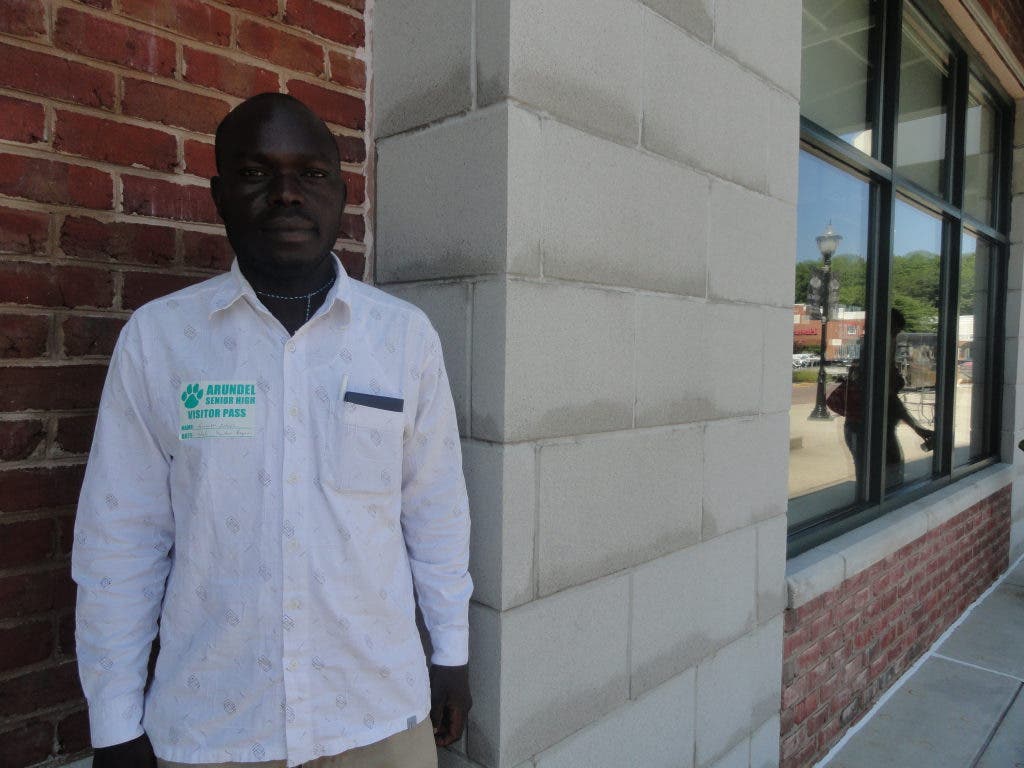


The slums of Kenya are a long way from Gambrills, but students at Arundel High got a glimpse of the experience there, after a visit Monday from a prominent community organizer.
Kenneth Owade, who runs a YMCA branch in Kenya’s largest slum of Kibera, spoke to several classes to raise awareness of the education gap in his hometown.
“It’s bad, really bad,” he said of Kibera, which has a population of 1 million, with most residents living in small, 10 x10 foot homes. “It’s sad that this is a place where people have to live like that.”
Find out what's happening in Odenton-Severnfor free with the latest updates from Patch.
Owade grew up in Kibera and still resides there, serving as a community leader and working to improve schools and raise national and international awareness of the problems there. In addition to working for the YMCA, he has run for public office and founded a grassroots organization called Dream Again Kenya.
Owade came to Arundel as part of month-long trip in the United States sponsored by the National Collegiate Inventors and Innovators Alliance. He recently spoke at a conference at the Massachusetts Institute of Technology, and will be heading back to New England to speak at Yale and Harvard.
Find out what's happening in Odenton-Severnfor free with the latest updates from Patch.
"People are not embracing education," Owade said. "We are falling behind because of this."
Arundel school officials invited Owade to speak to students involved in the school’s . Barbara Dziedzic, the lead teacher for the signature program, met Owade while in Kenya as part of a graduate school project.
“Ken is a community organizer, but at the same time he’s involved in international organizations,” Dziedzic said. “That link is exactly what the signature is about. How can we be both involved in the community and those around us but also these societies that are out there on the horizon.”
In Kibera, there are few public schools, leaving education open only to those who can afford it. Assistance from the government is lacking, Owade said, because residents of Kibera are technically viewed as squatters on government land, despite have lived there for decades.
Assistance to Africa is a common theme of discussion among students involved in the signature program.
Two students, Aashi Parikh and Jordan Luber, are raising money for an education resource center in Kenya, working with the non-profit Kenya Connect.
The school also recently re-formed the Interact Club, which focuses on international service work. Dziedic said there is talk of the club working with the school Key Club and other groups on a broad initiative to support Kenya Connect.
Owade said students can help simply by becoming more educated about the problems, but he also encouraged them to consider sponsoring children in Kibera and raising money for books and education materials. He said it costs $150 to educate a child in Kibera.
“They’re learning,” Dziedzic said of the students at Arundel. “But they’re beginning to ask questions about action.”
Get more local news delivered straight to your inbox. Sign up for free Patch newsletters and alerts.