Health & Fitness
An Essay In Comparative Irreligion
Is Christianity set apart from other religions -- and does it even matter?
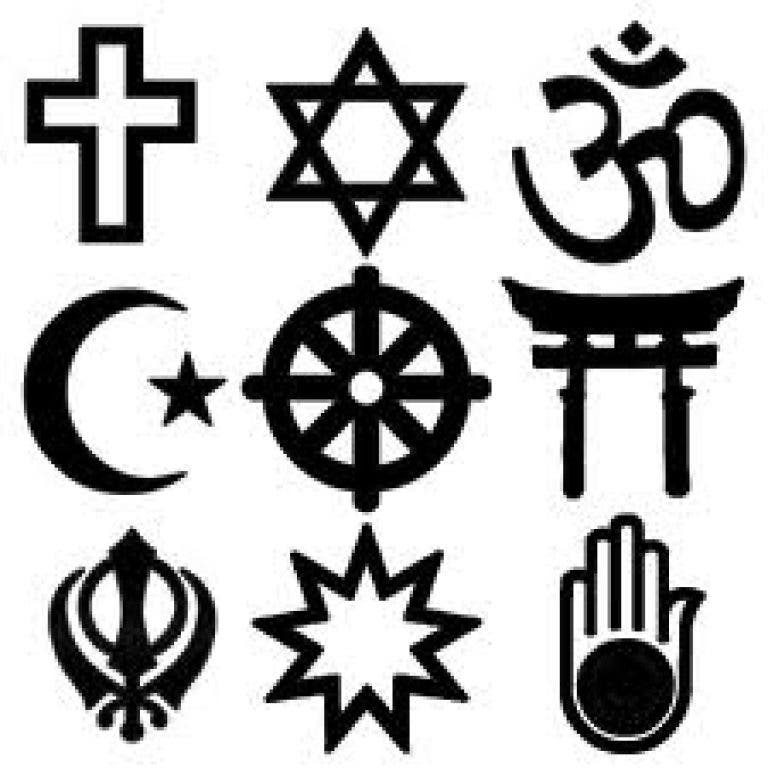
God Is Not a Christian: And Other Provocations is the title of a new book by Archbishop Desmond Tutu. The thought he expresses seems the same as that expressed by many contemporary theologians, referred to as Modernist by Catholics and Anglicans, and as liberal by evangelical Christians.
These passages on interreligious relations are specially illuminating as to his approach:
"My first point seems overwhelmingly simple: that the accidents of birth and geography determine to a very large extent to what faith we belong. The chances are very great that if you were born in Pakistan you are a Muslim, or a Hindu if you happened to be born in India ... I don't know what significant fact can be drawn from this -- perhaps that we should not succumb too easily to the temptation to exclusiveness and dogmatic claims to a monopoly of the truth ... You could so easily have been an adherent of the faith that you are now denigrating, but for the fact that you were born here rather than there. ... When we read the classics of the various religions in matters of prayer, meditation, and mysticism, we find substantial convergence, and that is something to rejoice at. We have enough that conspires to separate us; let us celebrate that which unites us ..."
Find out what's happening in Odenton-Severnfor free with the latest updates from Patch.
Now, it must be said frankly that the most fastidious Christian would agree that God is not a Christian. Christianity is meant to be a means of salvation, and God does not need salvation. And the total effect of the excerpt (available here) is ambiguous; several phrases speak of the fact that religious traditions do differ (whatever that means), and that Christ is the unique Savior of the world (whatever that means). But the impression, more psychological than logical, is that no one possesses truth in any final sense -- that no one's religious belief is the kind of "true" that means beliefs which contradict it are false.
If this is not Archbishop Tutu's contention, I apologize for the misrepresentation; though I dare say it will do him no harm coming from someone of my stature. In any case, my interest is not so much in the good Archbishop, as in the tendency of thought which his words illustrate.
Find out what's happening in Odenton-Severnfor free with the latest updates from Patch.
Now, his point about geography is quite true. The culture we are rasied in does serve as a fair predicter of what our religious beliefs shall be. But what is that to the purpose? -- for the direction he then goes in is the truth of religions. Of course, if strict agnosticism (i.e., all religious truth is intrinsically unknowable) is true, it matters little what people think about religion, and local variations in that mean no more than local variations in cuisine. And if atheism is in fact true, then debunk all religions equally, leaving them at most as objects d'art for amusement.
But if any religion is objectively true, then the fact that opinions differ by place and time is totally irrelevant. Had I been raised in Pakistan, I would porbably have been raised a Moslem; and so what? The question of what anyone might believe if circumstances had been different, raised in the context of interfaith dialogue, is a red herring (though it might be valid enough in a study of sociology). Aside from ignoring the fact that people do change their beliefs -- I was raised a Calvinist, and passed through several forms of religion and irreligion before embracing Catholicism -- it betrays contempt for truth as such, to argue that we ought not claim truth for our beliefs, merely because other people also claim truth for theirs.
If this does not seem obvious, try transferring the problem to another sphere. Suppose you went to the doctor's office complaining of a sore throat and fever. And suppose that he began applying leeches to your arm -- and then, when you protested, explained that there are African tribesmen or Pacific island peoples who believe that most sicknesses are caused by an excess of blood? Would you be disposed to praise him for refusing to allow the scientific traditions of the West to determine his beliefs about medicine, since he might easily believe very different things about medicine if he had been raised in Congo or Polynesia?
The reason people bring snobbery into the discussion of religion often has very little to do with whether it is there. Certainly some religious people are stuck-up; so are some doctors. But the question we want to answer is not whether the doctor is a snob, but whether his medical theories are right. Snobbery becomes superficially relevant because we have, unconsciously, accepted the unspoken premise that religious truth does not have a real bearing on life or thought.
This is why many Christians are suspicious of comparative religion. They observe that many of those who study comparative religions are only comparatively religious. And, even apart from any question of orthodoxy, there are those among us who find it in poor taste for a clergyman to be only comparatively religious.
As for the other claim, that substantial convergence can be found between different religions, this merely suggests a superficial approach to comparative religion. Most religions do have a fairly similar apparatus: sacred books, prayer, asceticism, social charity, ritual; but they use them to preach widely differing doctrines. Religions will seem similar if you ignore their differences. But those differences are, as a rule, the heart and soul of each religion. Islam and Christianity, for instance, share many similarities in teaching and practice -- and it is right enough to rejoice over them, and make common cause when we can -- but the distinctives are precisely where their life-blood lies. A Moslem will not be persuaded that his belief in the role of Muhammad is extraneous to him because it is not shared by Christians. A Catholic will not be persuaded that the Eucharist should not be important to him because it is not important to a Moslem. A Buddhist and a Jew equally believe that this world is not the most important thing; but the Jew affirms this because he believes God to be infinitely important, whereas the Buddhist may not believe in God at all, any more than he believes in the world.
C. S. Lewis hit the nail on the head (as usual!) in his essay Man or Rabbit?
"If Christianity should happen to be true, then it is quite impossible that those who know this truth and those who don't should be equally well equipped for leading a good life. Knowledge of the facts makes a difference to one's actions. ... The one who is wrong will act in a way that simply doesn't fit the real universe. Consequently, with the best will in the world, he will be helping his fellow creatures to their destruction. With the best will in the world ... then it won't be his fault. Surely God (if there is a God) will not punish a man for honest mistakes? But is that all you were thinking about? Are we ready to run the risk of of working in the dark all our lives and doing infinite harm, provided only someone will assure us that our own skins will be safe, that no one will punish us or blame us? ... You may not be certain yet whether you ought to be a Christian; but you do know ought to be a man, not an ostrich, hiding its head in the sand."