Health & Fitness
Skeleton and Spirit
Many people profess to be spiritual but not religious, or to distrust organized religion. A look at what we mean by organized religion might be worthwhile.
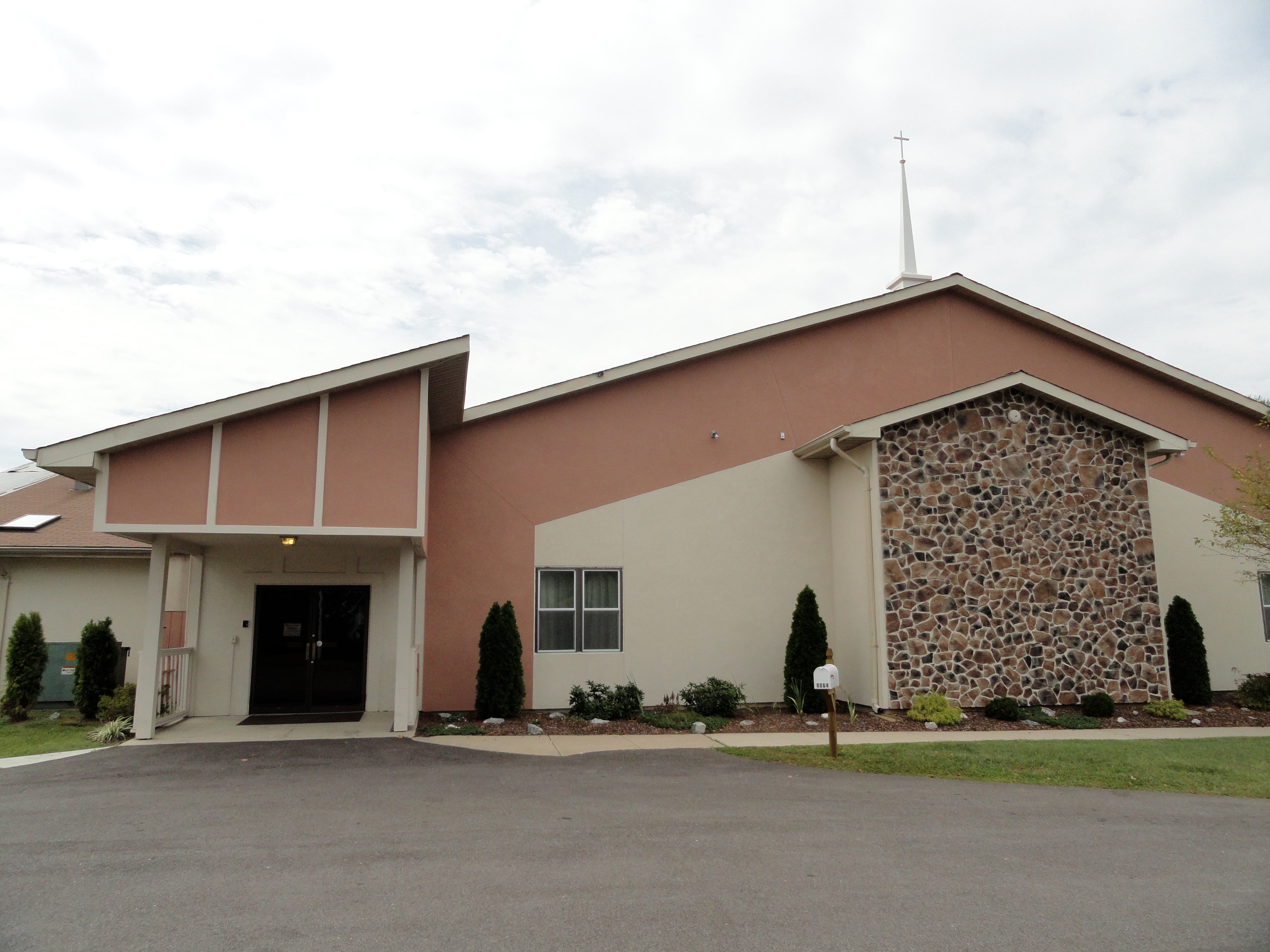
Many Christian authors, speakers, and so forth lament the growing godlessness of contemporary America. Attacks on the vaguely Deist slogans of the Pledge of Allegiance or the national currency or public recognition of Christmas are esteemed as the very voice of Sodom.
Personally I am not so worried about godlessness, because -- while atheism and agnosticism may, statistically, be up, those who decline absolutely to accept any notion of the divine will, right or wrong, always be a minority. The human soul is made for meaning, and if it can't find any it makes things up. This may not be a good philosophic argument against atheism; but it is a practical fact about human nature. In any case, this is peripheral to the topic.
What does seem worth comment is not so much the attitude evinced by many Americans towards God as their attitude towards institutional religion. According to this study by the Pew Forum, the various non-denominational and otherwise anti-institutional Christian churches together amount to a larger segment of the population than self-identified Baptists -- and this is without even considering the growing number of Christians (especially young adults) whose connection to the faith comes entirely through parachurch groups like Campus Crusade for Christ or InterVarsity, and does not involve church attendance or participation in sacraments.
Find out what's happening in Odenton-Severnfor free with the latest updates from Patch.
This seems to fit in with the general pattern of the culture; even among those who are religiously unaffiliated, close to half 'freestyle' their spirituality. Nor is syncretism, even among Christians, at all uncommon: according to a Pew Forum survey from 2009, the percentage of Christians who had consulted a psychic was nearly identical to the rate of the general population, while those who believed in astrology, reincarnation, etc., barely lagged behind.
Now, many people regard all institutions whatever with suspicion; and when that is compounded with the aura of religious authority that any church, and especially the Catholic Church, claims in matters of conscience, and both these factors combined with crimes religiously motivated or religiously disguised, imagined or quite horribly real -- well, one can see why the DIY mindset about faith becomes attractive. Many Protestants are quite comfortable in such an environment, younger adults particularly. A popular watchword is that the church -- the spiritual church, that is, known only to God, composed of souls rather than buldings or hierarchs -- is an organism, not an organization.
Find out what's happening in Odenton-Severnfor free with the latest updates from Patch.
Well. But an astute biologist might be inclined to comment that organisms have a very great deal of structure, some of it quite rigid -- bones, for instance. The image of a body (that is, an organism) for the Church is quite common in the New Testament; but if we stop and consider its implications, that rather rules out the notion that structure is unimportant. A body without structure is a blob, and one vulnerable to predators.
G. K. Chesterton put the matter well in a discussion of excessive asceticism:
"The ordinary modern critic ... is apt to say, 'This is the result of Authority; it would be better to have Religion without Authority.' But in truth, a wider experience ... would reveal the mistake. It is rare to find a fasting alderman or a Trappist politician, but it is still more rare to see nuns suspended in the air on hooks or spikes ... a stranger calling at an ordinary presbytery [i.e., rectory] will seldom find the parish priest lying on the floor with a fire lighted on his chest and scorching him while he utters spiritual ejaculations. Yet all these things are done all over Asia, for instance, by voluntary enthusiasts acting solely on the great impulse of Religion; of Religion, in their case, not commonly imposed by any immediate Authority; and certainly not by this particular Authority. In short a real knowledge of mankind will tell anybody that Religion is a very terrible thing; that it truly is a raging fire, and that Authority is often quite as much needed to restrain it as to impose it." (St Thomas Aquinas, p. 59)