Kids & Family
Odenton History: A Summer Escape at 'Happyland'
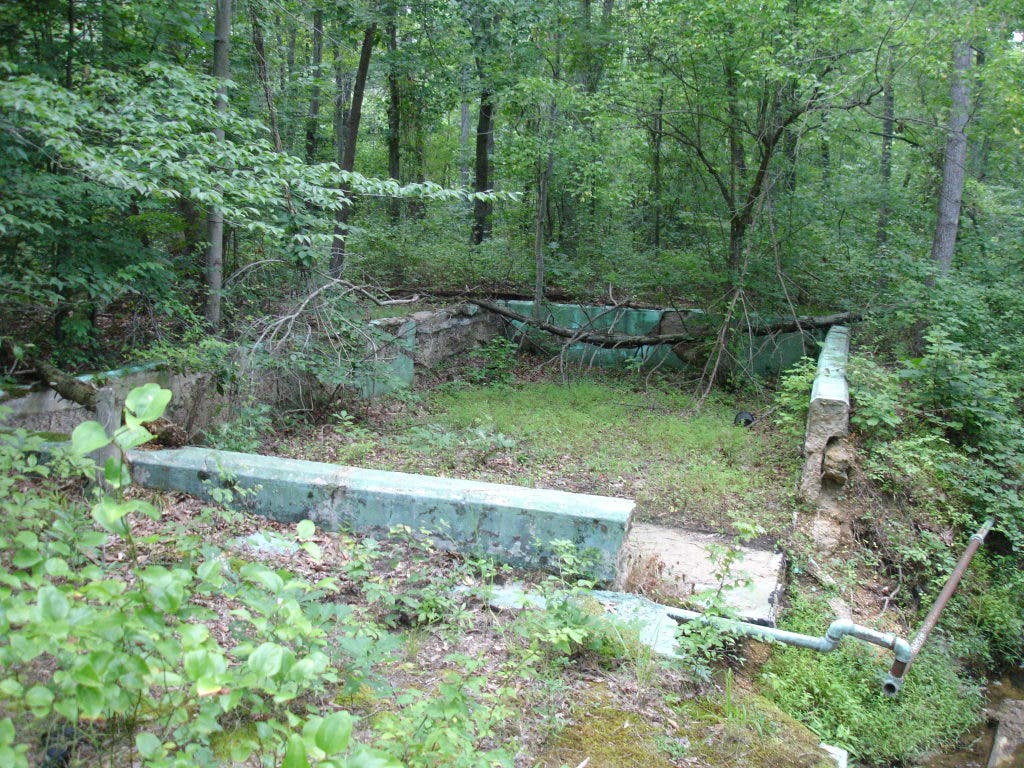
The Salvation Army once operated a fresh air camp in Woodwardville for low-income children living in Washington, DC. Today, only a shell of a swimming pool remains.
This article has been reprinted with permission from Heritage Times, news journal of the Odenton Heritage Society
From the 1920s to the 1950s, the Salvation Army maintained a fresh air summer camp near Woodwardville for low income women and children who lived in Washington. The camp, named Happyland, was located north of the Little Patuxent River on the west side of Patuxent Road between the road and the Pennsylvania Railroad tracks (now Amtrak). There were numerous permanent wooden buildings, including dormitories, cottages, a recreation hall, cafeteria, and kitchen.
Residents of Washington’s poorest areas escaped crowded conditions and sweltering heat and enjoyed a wooded area beside the Little Patuxent River, nourishing food, and exercise. Among the many recreational opportunities were a swimming pool, playground, baseball field, volleyball court, and “various drills and games.” In the late 1920s, groups of 75 to 90 girls and boys and their mothers arrived by train and enjoyed a free, 10-day vacation. Salvation Army workers tried to accommodate five shifts of this size during July and August. The Salvation Army hoped that these measures would “send them back rebuilt in body and spirit and much more able to face the problems which confront them for the balance of the summer.”
Find out what's happening in Odenton-Severnfor free with the latest updates from Patch.
During the Depression, charitable donations to support the camp were fewer. Happyland did not open in 1933, but it reopened the following year. By the late 1930s, only children came to Happyland. Groups of 100 boys and girls arrived in buses and stayed one month.
OHS member Elaine Lloyd remembers Happyland in the 1930s. Her father, Samuel Crawford, was a home builder employed by the A.D. Riden lumber and hardware business in Woodwardville. The Salvation Army hired Crawford to replace broken windows and make other repairs at the camp.
Find out what's happening in Odenton-Severnfor free with the latest updates from Patch.
There were other forms of contact between the camp and the community. The late Therese Savoy, a longtime OHS member who grew up near Francis Station, was allowed to swim in the pool as an adult in the 1930s. The Salvation Army provided entertainment for the children and often invited adults and children in the area to attend the skits, one-person acts, and other performances. Elaine Crawford Lloyd lived in Woodwardville, and sometimes she attended shows. One time, she recalls, a hypnotist requested a volunteer, and he hypnotized Frank Riden on stage.
After World War II, the Salvation Army operated two fresh air camps in the Washington area. A new Camp Happyland in rural Virginia operated for the benefit of white children. The property at Woodwardville, renamed Camp Patuxent, served African-American children. In 1952, the two camps were integrated at the Virginia location.
Camp Happyland in Virginia still welcomes inner city children. Nothing remains of the original Happyland near Woodwardville except the remains of the swimming pool. Anyone who has photographs of the camp is encouraged to contact the Odenton Heritage Society at P. O. Box 282, Odenton, MD 21113 or odentonheritage@verizon.net
Roger White is the president of the Odenton Heritage Society.