Politics & Government
Pentagon Wants Cyberweapons Faster
Patch's latest roundup of cyber news examines new efforts to get weapons more quickly and addresses concerns about recent cybersecurity legislation.


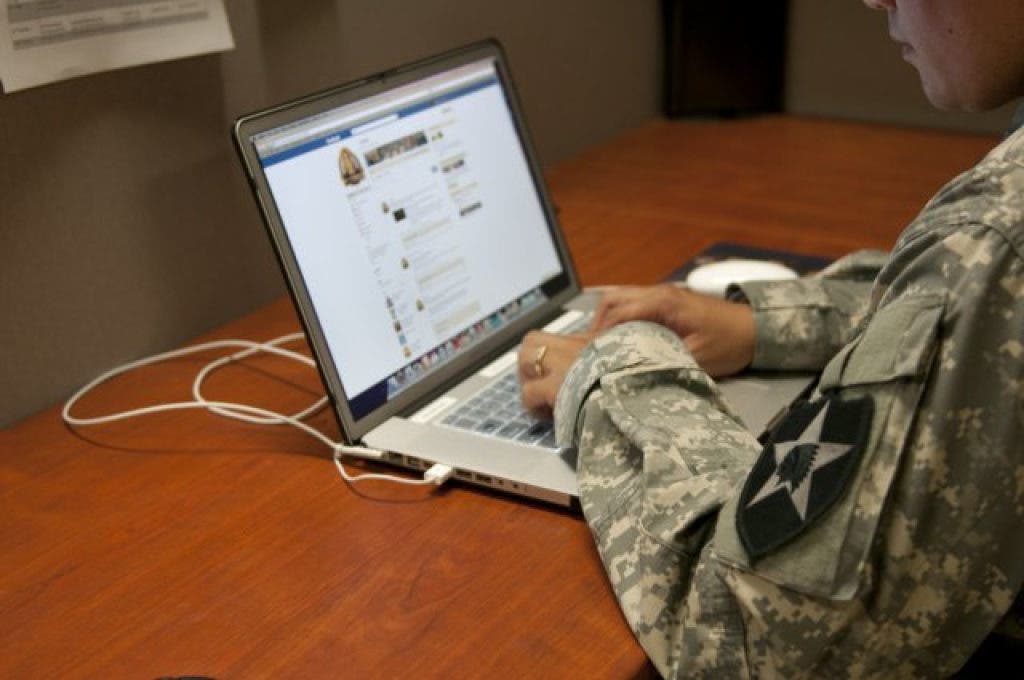
This is the latest in a periodic roundup of news involving U.S. Cyber Command at Fort Meade and general issues involving cybersecurity. For more updates on cyber news, follow Odenton Patch on Facebook and Twitter.
The Pentagon is planning to speed its acquisition of cyberweapons and will place U.S. Cyber Command in charge of a new registry of tools to help in computer warfare.
Find out what's happening in Odenton-Severnfor free with the latest updates from Patch.
The Washington Post reported Tuesday on a new 16-page document outlining how cyberweapons should be developed and acquired.
According to the report, the government is hoping to remove cyberweapons from the traditional weapons acquisition process. The faster process will allow the U.S. Cyber Command to respond quickly to “urgent, mission-critical needs,” the Post reported.
Find out what's happening in Odenton-Severnfor free with the latest updates from Patch.
From the Post:
The new framework sets up two systems for cyberweapons development: rapid and deliberate. The rapid process will take advantage of existing or nearly completed hardware and software developed by industry and government laboratories. This approach could take several months in some cases, or a few days in others.
The deliberate process is designed for weapons whose use carries greater risks. It would be for projects expected to take longer than nine months—still short compared with the years-long process to develop most Pentagon weapon systems.
CISPA Just Another SOPA?
Legislation designed to address cyber threats is making its way through Congress, but has some detractors, according to several reports this week.
An article in Forbes published Monday analyzes the Cyber Intelligence Sharing and Protection Act of 2011 (CISPA), which seeks to help companies defend themselves against cyber attacks. But according to some observers, the bill is too similar to another bill that was tabled due to concerns over digital freedom.
The author of the Forbes report cites concerns from the Electronic Freedom Foundation, which has claimed that the bill would reach far beyond stopping cyber threats. The EFF compared the bill to the Stop Online Piracy Act (SOPA) which was wildly unpopular among digital freedom advocates.
From Forbes:
Not deterred by SOPA’s recent defeat, the new bill aims to do much the same thing but focuses on “cyber threats” rather than piracy. Thanks to overly broad language and an absurd definition of what constitutes a cybersecurity threat, piracy can remain a focus of the bill without the political ramifications.
The Los Angeles Times also weighed in this week, pointing to references to “intellectual property” in the bill that have some Internet activists concerned.
Many fear that CISPA is essentially a retooled version of SOPA, which was taken off the table in Congress after a concentrated effort by Internet giants such as Google, Wikipedia and Reddit, which either supported or held blackouts in protest of the bill.
The cyber bill has garnered considerable support from major corporations, who have submitted letters of support. It is co-sponsored by Rep. C.A. “Dutch” Ruppersberger (D-MD).
Companies Can Help With Cyber Standards, CEO Says
The top executive of a major defense contractor said this week that companies should work with the government on creating cybersecurity standards.
Northrop Grumman CEO Wes Bush said in an interview with Bloomberg News that standards will help companies develop defense systems that work. He also said companies and the government should share information.
“Sharing threat information between businesses and of course between government and business is absolutely necessary in the fight to defend a company’s digital information,” Bush told Bloomberg News.
Army Secretary Stops by Cyber Headquarters
The secretary of the Army stopped by the headquarters of U.S. Army Cyber Command at Fort Meade on April 2 to learn about the agency’s mission and meet soldiers and civilians employed there.
According to an Army press release, Secretary John McHugh met with Lt. Gen. Rhett Hernandez, the commanding general of Army Cyber, and got updates about the command’s effort to defend Army computer networks.
"This is one exciting opportunity to develop an opportunity for the future as we work on defining it today," McHugh said, according to the press release. "You are providing a great service to the Army and to your country."
Get more local news delivered straight to your inbox. Sign up for free Patch newsletters and alerts.