Community Corner
Behind Bomb Squads and Hostage Negotiations
Baltimore County police sometimes live dangerously.



The life of a bomb technician boils down to this reality—he or she does what few others are willing to do.
"When everyone is going the other way, we're going towards the device," said Det. Steve Byrd of the Baltimore County Hazardous Devices team.
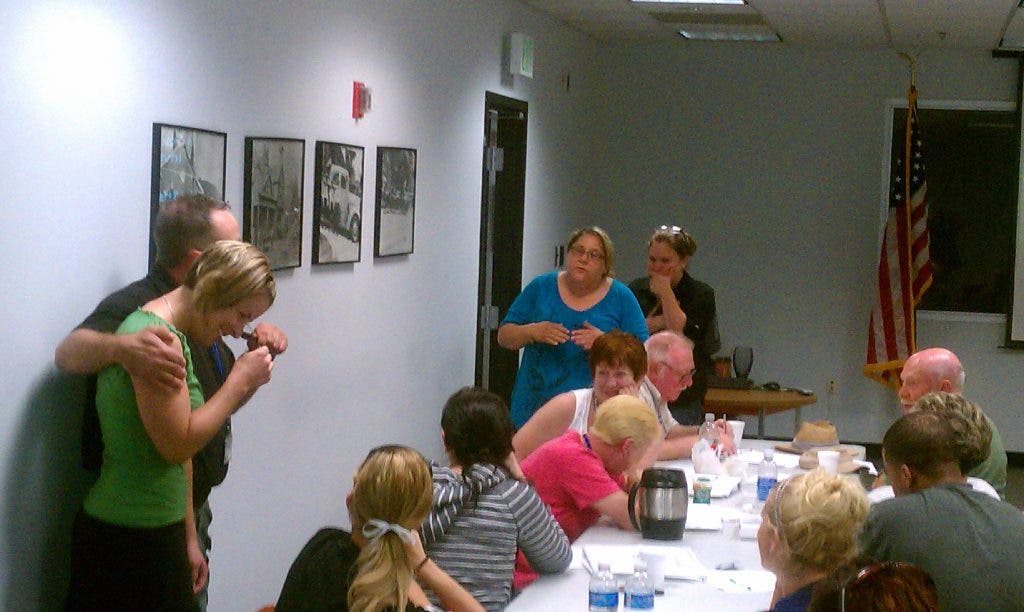
Byrd was with us for the first half of the 13th class of this year's Citizens Academy. He looked like someone whom I would want to handle a high-stress, bomb-related situation. His stout, muscular build and crew cut matched his demeanor, which stayed serious while he described the duties of the four full-time bomb technicians in the county police department.
Find out what's happening in Owings Mills-Reisterstownfor free with the latest updates from Patch.
Well, except when he mentioned the time one of his fellow technicians had to walk backwards from a device in the bomb suit in 30 inches of snow.
"He was doing snow angels trying to get back up," Byrd laughed. "I had to prop him up on a tree."
Find out what's happening in Owings Mills-Reisterstownfor free with the latest updates from Patch.
Here are samples of what I took away from the lecture:
- Baltimore County is home to the only full-time bomb squad in Maryland; the squad was founded in 1970. There are six more, including in Annapolis and Howard County.
- Things not to do if you suspect you've discovered a bomb: Block the path to it, return to the scene, fight a fire if it's ignited. Of course, don't TOUCH it.
- Bomb technicians wear a protective suit that can weigh up to 80 pounds. During 90-degree summer weather, the inside cooks to almost 115 degrees. Hydration is very important to the technician.
- The county also houses the only clandestine lab, or meth lab, in Maryland. This fact is partially because Maryland was the last state in the country to report a methamphetamine problem.
- Fireworks are illegal in Maryland, aside from ground-based sparklers. Basically, don't expect to create any of your own action come the Fourth of July unless you want to get arrested.
- One of the things an interviewee must do in order to have a shot at becoming a bomb technician in the county is climb a 100-foot ladder and then crawl through a small, dark space. Count me out.
Meanwhile, Ofc. Chuck Hart talked to us about the demands of the hostage negotiation team, which is as stressful as it sounds. Hostage negotiation first arose as a practice after the 1972 Munch Olympics, where officers famously approached the situation with tactical force, eventually leading to the deaths of 11 Israeli athletes, he said.
Negotiating is a big operation because of the nerves one officer must masterfully soothe without knowing more than what he or she can learn about the individual in a mere 20 minutes, Hart said.
"We take over a neighborhood, don't we?" he said. "It almost looks like the Ringling Bros. are coming to town."
Stay tuned. In our second-to-last lecture of the year, we'll be covering the mobile crisis team and narcotics identification and investigation.
Get more local news delivered straight to your inbox. Sign up for free Patch newsletters and alerts.