Health & Fitness
Potty Problems in Public
Unisex bathrooms should be a family value, and not just because dad doesn't want to go in the ladies' room with his daughter.
Recently, while I was out doing errands, a young father approached me as I was about to enter the ladies room. His eyes searched mine, looking for an affirmation he was about to speak to a good person.
“My daughter needs to go to the bathroom. I’m here by myself with her. Could you take her with you?”
The tip-toe dancing girl holding his hand, looking longingly at the open doorway, confirmed his story.
“She doesn’t need help. I just don’t want her in the men’s room,” the dad explained.
Looking to be around 5-years old, I could appreciate dad’s dilemma. Sensing the urgency, we did quick introductions as we walked into the ladies’ room to take care of business.
I stood outside the cleanest stall we found, reminded my little charge to use toilet paper, helped her get soap from the dispenser, and returned her to her father, who was standing vigilantly outside the door.
“Thank you so much,” dad repeated. “We haven’t been out long and I didn’t know what I was going to do.”
Having been a single parent of two boys when they were much younger, I understood this dad’s situation. Once my boys reached the age of six or seven, they were mortified if I made them go into the ladies’ room with me.
Which restroom they used depended upon where we were when nature called. At the mall, I willingly accepted the moans and mean-mom indictments as I escorted them into the ladies’ room with me. At an art museum, on the other hand, I would knock on the men’s room door and, if no one responded, I sent them in together.
Now, I know full well that most pedophiles do not lurk in restrooms. Kids have greater risk from bathroom germs than from molestation.
Urban legends circulating on the Internet since at least 1999 exhort parents to be ware of kidnapping attempts. One scenario tells of kids taken to public restrooms, having their hair cut and dyed, and never being seen, again. Snopes.com, a rumor debunking website, traced the origin of this myth to around World War II and have shown the various emails to be false.
Yet, I still find myself bothered by bathrooms.
The issue goes beyond little girls walking with their fathers past men at urinals so they can sit in a stall. Or, moms giving the hairy eyeball to every man walking into a public restroom where her son may be trying to “go potty”.
Two weeks ago, Baltimore County garnered national attention over the use of a McDonald’s bathroom. In that incident, a woman, born male but who transitioned to female, was brutally beaten by two teenagers after she used the ladies’ room at the fast food restaurant.
Regardless of your thoughts on transgender people and what motivated this particular crime, I think we can agree that every individual has the right to pee in peace. Even the International Code Council, an organization that creates building code guidelines adopted by most states, believes “access to required public and employee toilet facilities should not be restricted in any way.”
A national debate has ensued on the topic of toilets since the McDonald’s bathroom beating. Interestingly, the easiest answer for transgender public accommodation rights provide more benefits to families and heterosexuals than to the gay community.
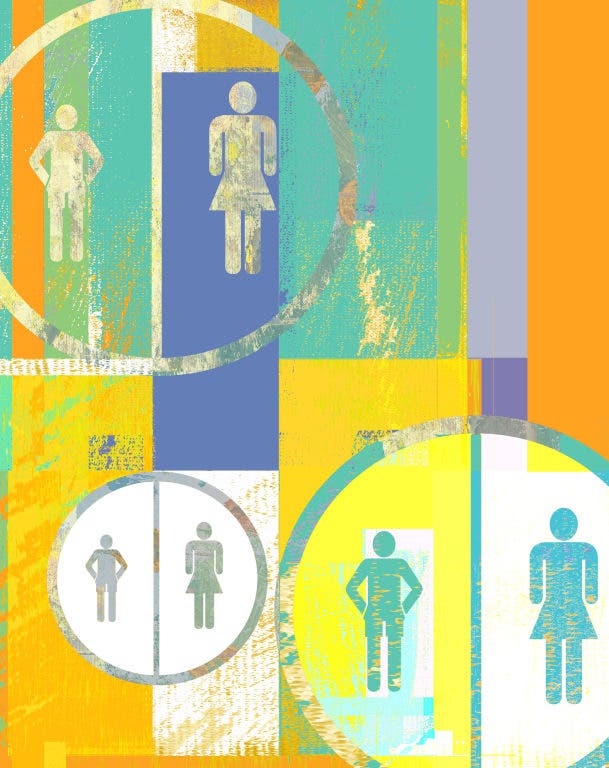
Taking the binary out of bathrooms and creating more unisex bathrooms give people of any sexual orientation, gender identity, or parenting status the opportunity to enter a public restroom without fear of reprisal or embarrassment. Any opposite sex caregiver, such as a wife taking her husband suffering from dementia out to lunch, for example, would be able to comfortably assist their charge with using a public restroom with respect and dignity.
Baltimore has very few gender-neutral bathrooms. We could easily increase that number by re-designating single stall restrooms for disabled people into universal gender-neutral bathrooms.
The question remains, however, would the public use them?