Politics & Government
'Serial' Star Adnan Syed Petitions Supreme Court To Take His Case
The man whose case gained national attention through the Podcast "Serial" has petitioned the Supreme Court.


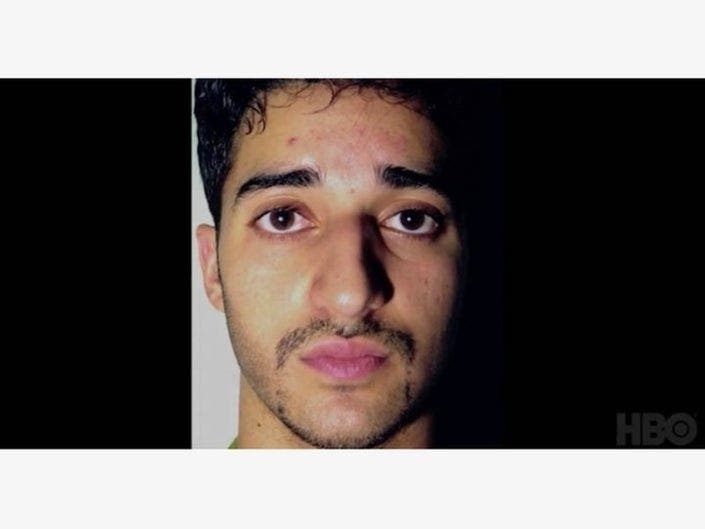

The Baltimore County man serving a life sentence for the murder of his ex-girlfriend when they were students at Woodlawn High School in 1999 has asked the Supreme Court to take his case. Adnan Syed, whose murder trial was publicized through the podcast "Serial," has petitioned the court to overturn a ruling the Maryland Court of Appeals made in March.
His attorney filed the appeal on Monday, Aug. 19, which he said was the deadline.
Find out what's happening in Owings Mills-Reisterstownfor free with the latest updates from Patch.
Syed was found guilty at trial in 2000 of murdering his ex-girlfriend Hae Min Lee on Jan. 13, 1999. She died by strangulation, and her body was found in Leakin Park after she was reported missing. Prosecutors alleged Syed drove her from school to a nearby Best Buy and killed her in the parking lot, put her body in the trunk and later buried her with a friend at the Baltimore City park.
The popular podcast "Serial" featured the case in 2014, bringing to light an alibi witness never called to the stand and unreliable cell phone data used as evidence to place him near Leakin Park.
Find out what's happening in Owings Mills-Reisterstownfor free with the latest updates from Patch.
Syed petitioned his case and was granted an appeal in 2015. Judge Martin P. Welch vacated Syed's conviction in June 2016. However, he denied Syed's request to be released on bail, saying that among other factors, he believed the man would be a flight risk since he would face a life sentence for murder if retried.
The Maryland Court of Special Appeals ordered a new trial in March 2018 based on the violation of Syed's Sixth Amendment right, specifically the part guaranteeing "the assistance of counsel" for his defense. To be in violation, the court had to determine two requirements were met: The attorney made errors that deemed the counsel deficient, and the attorney prejudiced the defense.
Syed's attorney failed to speak with Asia (Chapman) McClain, a classmate whose testimony could have exonerated him, the court said. McClain swore in March 2000 and January 2015 affidavits that she had seen Syed at the Woodlawn library from approximately 2:20 to 2:40 p.m. on Jan. 13, 1999. At trial, where McClain was never called as a witness, prosecutors said the murder took place between 2:15 and 2:45 p.m. near Best Buy off Security Boulevard, about 1.5 miles from the library.
"It is our opinion that, if McClain's testimony had been presented to the jury, it would have 'alter[ed] the entire evidentiary picture,' because her testimony would have placed Syed at the Woodlawn Public Library at the time the State claimed that Syed murdered Hae," according to the 2018 opinion issued by the Maryland Court of Special Appeals. "The Court, therefore, held that the jury was deprived of the [opportunity] to hear testimony that [would or] could have supplied 'reasonable doubt' in at least one juror's mind leading to a different outcome."
This past March, the Maryland Court of Appeals voted not to reopen the case, 4-3. Several judges said they believed that the testimony of McLain, the alibi witness, would not have changed the outcome of the trial, and one said it may have been harmful to Syed.
The judges hypothesized that the timeline that prosecutors presented at trial may have been incorrect.
"Had the jury heard Ms. McClain’s alibi, her testimony...does little more than to call into question the time that the State claimed Ms. Lee was killed and does nothing to rebut the evidence establishing Mr. Syed’s motive and opportunity to kill Ms. Lee," wrote Judge Greene in an opinion that three other judges co-signed. "Thus, the jury could have disbelieved that Mr. Syed killed Ms. Lee by 2:36 p.m., as the State’s timeline suggested, yet still believed that Mr. Syed had the opportunity to kill Ms. Lee after 2:40 p.m."
In making this statement, the judges issued their an opinion based on something other than the case itself and what was presented at trial, which is what they were tasked with evaluating, Syed's attorney, Justin Brown, wrote in his petition filed Aug. 19. That was part of the grounds on which he asked the Supreme Court to review Syed's case.
"It instead sketched an entirely different evidentiary picture where the jury rejected the State’s case in favor of an alternate time of death. But that is not the case that the State presented, and it is not the case that Syed’s counsel was tasked with rebutting," Brown wrote. "By ignoring the case actually presented by the State in favor of a hypothetical case that neatly sidestepped Syed’s alibi, the Maryland Court of Appeals erred."
Get more local news delivered straight to your inbox. Sign up for free Patch newsletters and alerts.