Sports
Stevenson Football Coach Builds Program from Scratch
New Stevenson head football coach Ed Hottle answered questions on the challenges of building a program from the ground up.


The face and identity of any college football program starts with the head coach. For the brand-new Stevenson Mustangs, that comes in the form of coach Ed Hottle.
Hottle was hired in November 2009 as the first head football coach in school history after serving five years as the head coach of Gallaudet University in Washington, D.C., where he turned the Bison into a Division III powerhouse.
As Stevenson's first game approaches against Shenandoah, Hottle continues to make final preparations for the inaugural season.
Find out what's happening in Owings Mills-Reisterstownfor free with the latest updates from Patch.
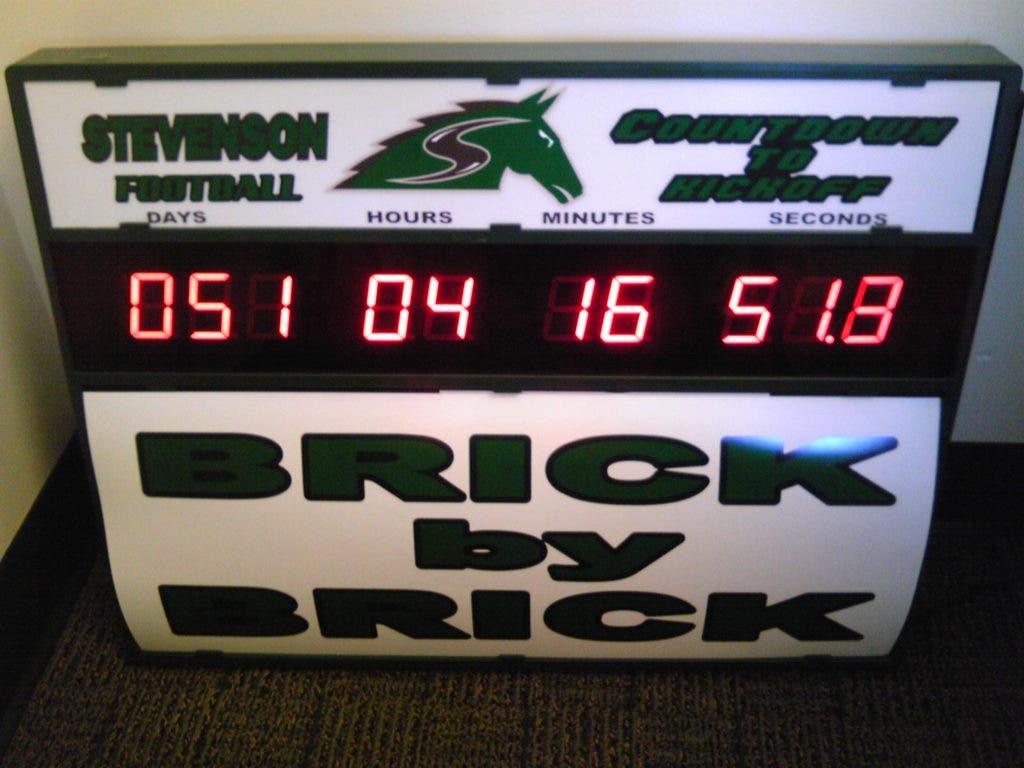
He has given every player a wristband with the date—Sept. 3, 2011—in honor of the first game, and also has a clock in his office counting down to kickoff.
Patch caught up with Hottle to understand just a little bit of what it’s like trying to start a football program from scratch.
Find out what's happening in Owings Mills-Reisterstownfor free with the latest updates from Patch.
Patch: What’s it like starting a football program?
Ed Hottle: It’s challenging to say the least, but we’ve got a real supportive group of people and administrators here, and they’ve done a great job making my life easier. It’s a big job and a difficult task, but all of them have been very supportive and made it smooth.
How were you hired as the head coach at Stevenson?
Hottle: They did a national search. I had had a relationship with [athletic director] Brett Adams through the Capital Athletic Conference, and I went through the process.
How does building a program at Gallaudet help you build one here at Stevenson?
Hottle: It’s basically very similar jobs, but very different jobs. Knowing the process, and having gone through it before; realizing that it’s a marathon, not a sprint; looking at building it for the long-term success; and not necessarily winning tomorrow but winning consistently down the road I think is the approach that we take. I tell people all the time that I’m a build-through-the-draft guy, not a free agent signer. I want guys that are committed to their education—I want guys that want to be here for four years and contribute to the community. And that’s how we’re going to build this thing.
How have you gone about recruiting players?
Hottle: Recruiting never stops. You’ve got to do something involved with recruiting every day, and we do that. It’s a 365-day-a-year task. It never stops, and we’ve already started junior recruiting for next year. So you end one but you can’t sit back and relax and not keep an eye on the next one.
Does a brand-new football program make it easier or more difficult to recruit?
Hottle: It’s hard to tell; I think we did fairly well. I think I had one kid express concern about it being a first-year program, so one out of 50 or 60 isn’t too bad, I guess.
What does it mean to be the first football coach in the program's history?
Hottle: It’s exciting. To be honest, I don’t think about it a whole lot—don’t have a whole lot of time to think about that. It’s an honor to be first and kind of build things and get things established, but again, I don’t put a whole lot of thought into it. The job is the job and our job is to educate and to win, in that order, and that’s where our priorities are. And that’s where the thinking lays, so I don’t spend a whole lot of time worrying about those things.
What are your expectations for the team in its inaugural season?
Hottle: We want to get better every day—that’s job number one, and the expectation is to win 10 games. Does experience tell me that we’re going to face some adversity over the course of the year? Absolutely it does. However, our goal is to win every single game. And every time we put the pads on and go out wearing the green, that we get better and that we improve as a program and as a team. Those are our primary goals looking at the 2011 season.
What was the developmental season like last year, and what did you try to get out of that?
Hottle: We wanted to get guys indoctrinated into what it takes to be a college football player, and I think we were pretty successful at doing that. It is a balance of academics and athletics, being able to prioritize one over the other, and we had some guys that struggled with that concept early on.
It was challenging from the perspective of there were no games. However, I think guys got better and better. So, I think that’s where the small rewards were—being able to take that time to focus on the fundamental aspect of things, really growing as a football player in that first-time college setting.
So, I think looking forward to 2011, it’s going to prove that it was the right way to do it. Hopefully the road map for other programs down the road allows our guys to get bigger, stronger, faster and kind of navigate the system a little bit.
What type of defense are you planning to run?
Hottle: We’re a multiple of the 4-4. We’ll have the ability to play a three-deep shell, a little Cover-2. We’re going to be aggressive up front and control the line of scrimmage. That’ll be our goal going in, and to be fundamentally sound, great tacklers, great pursuit to the football, and have some fun playing defense.
You are using the Ravens old training facility—I hear you have some former Ravens helping you.
Hottle: Yeah, Jason Thomas has joined the staff and we’re real excited to have him. The Ravens' lockers are now part of our locker room so there are some pretty neat things.
How have you worked with the administration to get the program up and running?
Hottle: I couldn’t ask for more support, to be honest with you. They’ve been fantastic. I cannot tell you how much of a difference that’s been. Every day could be like a death march, but here every day truly is exciting because they are so supportive. They’ve made a significant commitment to football and that’s very exciting from my seat to have that support.
What are you most looking forward to in the upcoming season?
Hottle: The process—getting better, winning the first game. If you don’t love the process, then you can’t be a college football coach. You’ve got to love taking a high school senior through the recruiting process, and then through camp. Watching them have those individual successes that lead to our team successes is pretty exciting.