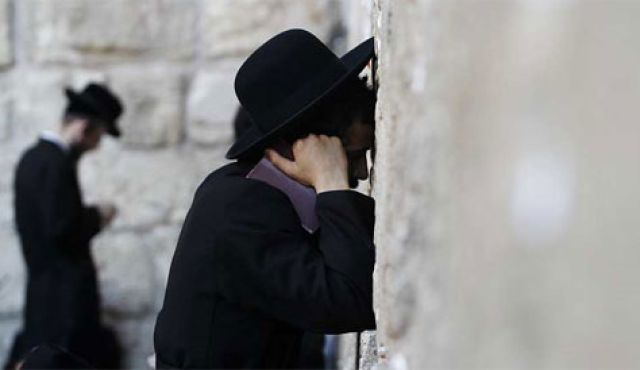
Tisha B'Av (Jewish Year 5773: sunset, July 15, 2013 – nightfall, July 16, 2013)
Tisha B'Av is a full day of fasting and mourning and is considered to be the saddest day in the lunar-based Jewish calendar, the Ninth of Av. By comparison this falls in the month of July or August in the Gregorian calendar. The fast and mourning commemorates the destruction of both Temples in Jerusalem, the first on the seventh or the tenth of Av in 586 BCE by Nebuchadnezzar and the second one on the tenth of Av in 70 CE (Michaelson). Other tragic associations “. . . include the capture of Bethar, which marked the final defeat of Bar Kokhba's rebellion against the Romans, and the razing of Jerusalem by the Romans. The edict of King Edward I compelling the Jews of England to leave the country was signed on the ninth of Av in 1290, the Jews were expelled from Spain on that day in 1492, and World War I broke out in 1914” (Miller).
Rabbi Isaac Klein, a Conservative authority on Jewish law, notes that the events of Tisha B'Av cannot be undone, and it is necessary to remember the tragedies to establish continuity with the past and as a constant reminder to focus on repentance and good deeds for the future. Others believe that Tisha B'Av is essential to help Jews focus on religious rebirth, ethical living, and to emphasize the universal aspects of messianic hope, reminding us of our sacrifices and the suffering of exile. Exile is essentially the exile of Jews from their homeland, from wherever they live, or from the spiritual association with divine, which is seen through the destruction of the Temple. The Temple serves as the connecting point between heaven and earth and the dwelling of the divine, geographically, politically, and spiritually and subsequently the center of the Jewish people and their faith (Michaelson).
Find out what's happening in Owings Mills-Reisterstownfor free with the latest updates from Patch.
Tisha B'Av is the culmination of a three-week period of increasing mourning, beginning with the fast of the seventeenth of Tammuz, which is observant of the first breach in the walls of Jerusalem, before the First Temple was destroyed. During this three week period, weddings and other parties are not permitted, and people refrain from cutting their hair. From the first to the ninth of Av, it is customary to refrain from eating meat or drinking wine (except on Shabbat) and from wearing new clothing. Tisha B'Av observances are similar to those on Yom Kippur: to refrain from eating and drinking; washing, bathing, shaving or wearing cosmetics; wearing leather shoes; engaging in sexual relations; and studying Torah. Work in the ordinary sense of the word [rather than the Shabbat sense] is also restricted. People refrain from smiles, laughter and idle conversation, and sit on low stools (Judasim).
Tisha B'Av is never observed on Shabbat, rather, it is postponed until the tenth of Av. In synagogue, the book of Lamentations is read and mourning prayers are recited and the ark is draped in black or adornments are removed.
Find out what's happening in Owings Mills-Reisterstownfor free with the latest updates from Patch.
In honor of Tisha B’Av, programs and events at the JCC are restrained in order to pay homage to the pain and suffering of our Jewish forefathers. For more information or for concerns, contact Phil Miller, Vice President at pmiller@jcc.org.
Judaism 101. Web.
Michaelson, Jay. Fasting From a Functional Perspective: Recovering the benefits of denial. MyJewishLearning.com. July 3, 2013. Web.Mill, Phil. Email Communication. July 3, 2013. Web.