Community Corner
Uncanny: Natural Resources Police Free Raccoon From Metal Can
Neighbors noticed the mammal wandering around Randallstown with its head stuck. Reports of entangled wildlife are common, the NRP said.


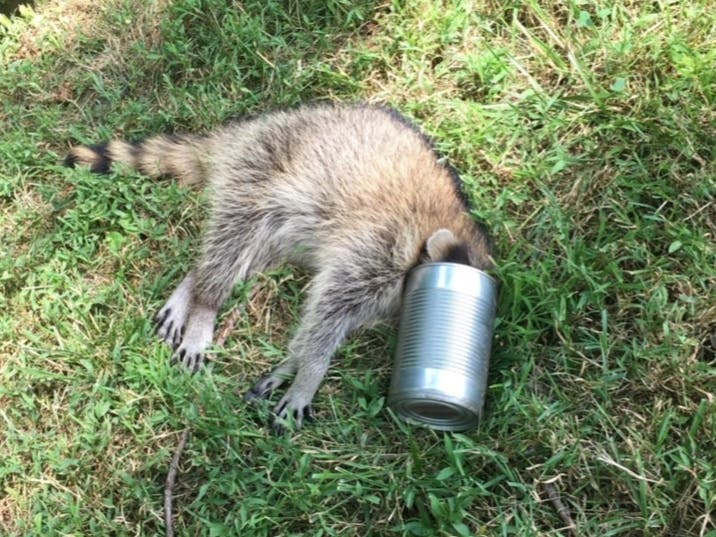
BALTIMORE COUNTY, MD – While raccoons may be a common sighting for some local residents living in suburban areas, one such viewing on Monday provided a little bit of a different twist.
Neighbors living in unincorporated Randallstown noticed a raccoon with its head stuck in a metal can wandering around the Baltimore County neighborhood Monday. Officers from the Maryland Natural Resources Police were dispatched to the area where Officer First Class Andrew Brayman located the racoon, characterized on social media as “tired and lethargic”, and was able to pry the mammal’s head from the can with a gardening tool.
Officers can only speculate how the raccoon's head became lodged in the small can, but one way or another, the mammal's curiosity took over, which led to the can conundrum, officials said Tuesday.
Find out what's happening in Owings Mills-Reisterstownfor free with the latest updates from Patch.
Yesterday, Officer First Class Brayman responded to a neighborhood in Baltimore Co. after residents reported that a raccoon had been wandering with a metal can stuck on its head. After locating the tired and lethargic raccoon, OFC Brayman used gardening tools to free the animal. pic.twitter.com/6lS6nt2ScT
— Maryland NRP (@MDNRPolice) July 13, 2020
Animals becoming entangled in various ways is actually quite common, according to Lauren Moses, spokeswoman for the NRP. Other reports have included ducklings becoming caught in a storm drains and other cases involving wildlife, but Monday’s call was the first raccoon-related alert that Moses can remember.
Residents are urged to call NRP if they come across animals rather than try to assist wildlife themselves. Because animals may be in pain or may need assistance, officers from the agency are better equipped to assist.
Find out what's happening in Owings Mills-Reisterstownfor free with the latest updates from Patch.
According to the Maryland Department of Natural Resources, raccoons are normally found near streams, marshes and swamps, but can adapt to suburban – and even urban – neighborhood as long as they can find adequate food, water and shelter.
They can also get into houses, attics and basements and can often be found rooting through trash cans and pet food left outdoors to locate food. The DNR reports that racoons are responsible for 60 percent of the rabies cases in Maryland.
The canned racoon has drawn plenty of social media attention. Since being posted, the photo has garnered more than 400 likes on Facebook.
“It’s just one of those feel-good stories,” Moses said Tuesday. “We were able to free the racoon and send him on his way. Everything is good to go.”
Get more local news delivered straight to your inbox. Sign up for free Patch newsletters and alerts.