Arts & Entertainment
Historian Discusses African-Americans' Struggles in Gaining Public Education
Baltimore County Alliance of Black School Administrators hosts presentation featuring Louis Diggs.



The Civil Rights Movement and some of its major players were in Baltimore.
Frederick Douglass worked the docks in Fells Point while learning to read and write, and Thurgood Marshall fought for African-Americans to have equal rights in the Baltimore legal system.
However, there are also untold stories about lesser-known African-American citizens who struggled for equal rights.
Find out what's happening in Pikesvillefor free with the latest updates from Patch.
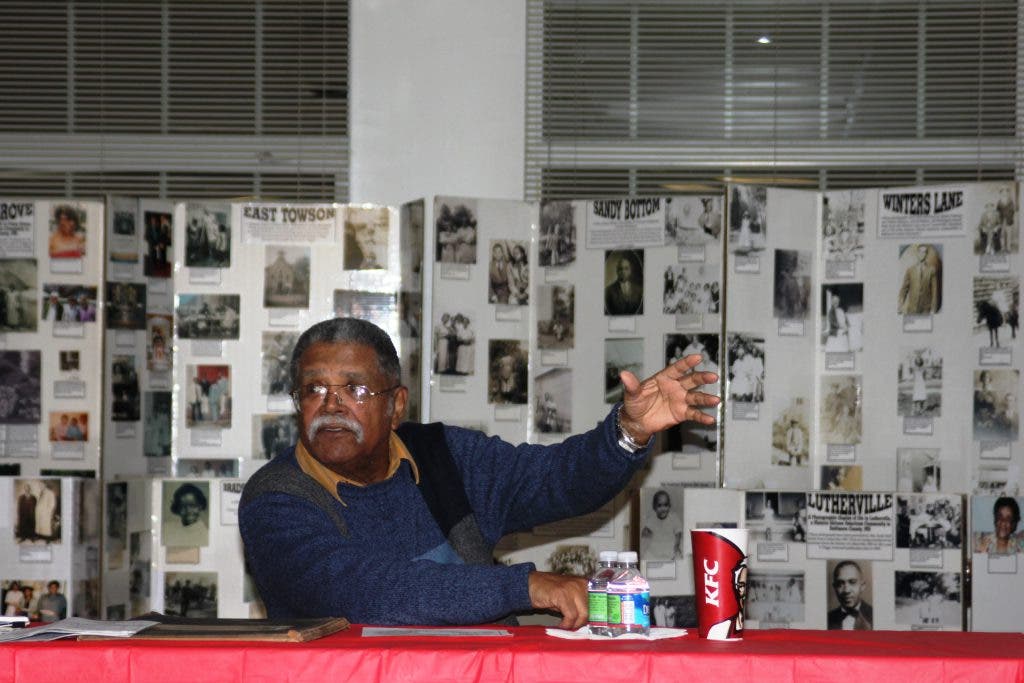
In honor of Black History Month, the Baltimore County Alliance of Black School Educators (BCABSE) hosted “Early History of African American Education in Baltimore County” last week at the Carver Community Center in Towson.
The program featured local historian Louis Diggs, who has published nine books examining original black communities in Baltimore County.
Find out what's happening in Pikesvillefor free with the latest updates from Patch.
At the presentation, large poster boards were filled with old photographs of early African-Americans in Baltimore County. They are Diggs’ personal collection, which he’s been building for 20 years.
The focus was African-American's struggles to gain equal access to the public school system. From slavery through the Civil War to the Civil Rights Movement and integration of the school systems, every one of the challenges these communities faced has been met with creative solutions and an unwavering desire for knowledge.
Dr. Brian Morrison, president of the alliance, gave background information on how changing social conditions have helped African-American education evolve.
“Most of the public schools were established from existing institutions that black people were already running,” he said.
Although some public funding was available to black students as early as 1872, it was not until 1958—when the school system was completely integrated—that African-American students had a fair chance at receiving an education, he said.
Diggs discussed pre-integration schooling, when many churches, clubs and lodges owned by African-Americans were often used as schoolhouses for area children.
Providing teachers for these students required creative solutions and dedicated people. Teachers in these schools were often a mix of educated professionals, mothers and grandmothers who were devoted to educating the community’s children, Diggs said.
Both presenters emphasized that despite segregation and unequal access to public education, African-Americans in Baltimore County sought to educate themselves, independently if necessary. And they were successful.
Diggs tells the story of a young student named Margaret Williams.
In the early 20th century, Baltimore County began funding education for some black students, provided they passed an eighth-grade entrance exam.
After Williams completed her seventh-grade education at an independent schoolhouse, she took the entrance exam to the all-white Catonsville High School, only to fail by a few points. The school system refused to fund her education until she could pass the test.
As a result, her father hired a lawyer to help her gain access to public education funding. The lawyer appealed to the NAACP for help to overturn the school's decision.
Although the decision was never overturned, Williams eventually received education from a private school. Soon, Baltimore County began offering high school curricula to African-American students at three local elementary schools.
Diggs suspects this step forward was a direct result of the work of this young lawyer working on Williams' behalf. That lawyer happened to be a young Thurgood Marshall.
“That was the most significant piece of history that I’ve encountered,” he said.
History nearby
After the program, Diggs sat down with Patch to talk about black history in the Reisterstown area. His second book, Holding on to Their Heritage, was written about the Bond Avenue-area African-American communities.
He found that in the early 19th century, an all-white church—where the Reisterstown United Methodist Church now stands—welcomed slaves into their congregation despite social norms of the time.
“They allowed 40 slaves to come into the church and practice their religion, and that is so unique,” he said. “I have never run across anything like that. It was highly significant.”
Another surprise Diggs found in northern Baltimore County was that from Bond Avenue in Reisterstown to the northern areas of the county, several African-American men worked and competed as horse trainers.
Preserving history
Diggs hopes the stories about the county’s African-American history are preserved, but he thinks children need more access to these stories.
“They can find heroes and ‘sheroes’ right here in Baltimore County,” he said.
On Diggs' bucket list are passing these stories down to children and having his books more readily available to kids. He said he feels fortunate to have captured these moments in Baltimore County history.
“I feel blessed to have had the privilege of doing that, and it was all because of the children,” he said.
Get more local news delivered straight to your inbox. Sign up for free Patch newsletters and alerts.