Community Corner
The Plants That Keep On Giving
Patch gardening columnist Leigh Barnes reviews three of her favorite annuals to keep your garden


One of the joys of gardening is to discover "free" plants in my garden each year.
I am here today to sing the praises of impatiens, violas and the old fashion flowering tobacco plant. Each of these plants is an annual – each blooms, sets seed and dies in one season. But these (and many other) annuals leave behind each year a mass of seeds that settle in for the winter. If the ground is not raked or plowed, they will produce many seedlings–in some cases hundreds that will appear in the following spring.
Busy Lizzie, Impatiens walleriana, is native to East Africa and the most commonly available type of impatiens in our garden centers. When the seed pods are ripe they explode (yes! like little catapults) and fire tiny little black seeds into the garden bed. When the ground warms in the spring, tiny seedlings appear.
Find out what's happening in Lutherville-Timoniumfor free with the latest updates from Patch.
Look carefully in the areas where you grew impatiens the previous years. It won't be long before you will recognize the leaves. You can let them develop in place or gently free them up with the tip of a trowel or a spoon will do. With enough soil surrounding the unearthed roots you can transplant these babies into garden or container spaces where you want them to grow.
The only down side to these sturdy little freebies is you won't know their color until they start to bloom. But they are easy to move if done with care and watering once in new ground.
Find out what's happening in Lutherville-Timoniumfor free with the latest updates from Patch.
Instead of pansies this year, why not plant little violas instead? When I was a little girl my grandmother grew Johnny Jump Ups – the only form of viola available – with a mix of purple and yellow blooms. But now there are beautiful clear yellows, blues, blue and yellow mixes, pale purples, rich deep purples and clear, bright whites.
They are much more heat tolerant than pansies and, like impatiens, will produce multitudes of little seeds that, unlike impatiens seeds that can land in far-flung parts of your garden, will drop near the mother plant and begin the process of creating a new plant for the spring season to come.
I always take particular joy when I discover these tough little sprouts growing up in unexpected crevices in my patio, in my containers or in the front of a garden bed. I can move them if I want, but I usually let them grow where they decide they want to show off.
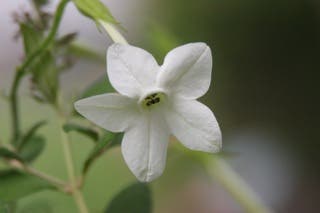
And last, my most favorite plant of all: Nicotiana alata or Jasmine Tobacco. This is one of the most fragrant plants I have ever grown. I always plant it close to a path or outdoor seating area. Nicotiana releases its scent late in the afternoon (a strategy to attract pollinators I have read). It reminds me of the smell of gardenias from my North Carolina childhood.
Now, the interesting (frustrating) thing about Nicotiana alata is that it's very hard to find. Most garden centers only carry hybrids that are much smaller and more colorful, but without that lovely smell. This old fashion type has large leaves and I would not call it "showy." I have only seen blooms that are creamy white or dusty pink but it blooms for a long time mid to late summer and for its fragrance alone it is worth the search for a source.
One caution: this member of the Solanaceae family is poisonous if ingested. I must include that disclaimer, but I have been growing this plant all my adult life, have never had an urge to eat it and I am not dead yet.
The seeds of this flowering tobacco ripen in the base of the bloom as it matures. The spent flowers fall off into the garden and scatter tiny black seeds somewhat like poppy seeds on rolls, but even smaller.
The following spring you will see these familiar leaves – tiny at first – and then growing to impressive size from the tiniest little crack in a stone terrace. On my stone patio I leave most of them to grow in place, but there are always enough to carefully pry out of their tight spaces and move to whatever spot in my garden I want them to flourish.
The moral of this story: Please don't be too quick to clean up your spring garden. Look carefully – there are all sorts of free gifts in your soil waiting to be appreciated.
Happy Gardening!