

It is hard to be a passionate gardener when the summer temperatures hover in the high 90s and spike into the 100s. When it is that hot I hope the plants can make it on their own because I don't want to be outside messing with them.
But now that we are having some cooler temperatures and rain (hooray) I hate to see the gardening season end.
This is a good time to think about what you want to use in your flowerbeds next year. Walk around your garden, public plantings and friends' gardens. See what still looks good. Many perennials have finished their bloom cycle, but there are annuals that will keep going until hard frost. And they have been blooming since early summer. You can't ask for more than that.
Find out what's happening in Lutherville-Timoniumfor free with the latest updates from Patch.
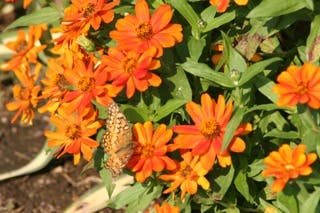
Geraniums take on new life when the temperatures cool down. Petunias will continue to bloom happily into the cold weather. But there are two plants in particular that have been stars in my garden all summer long. They are Profusion and Zahara zinnias.
Most zinnias—those big, gorgeous bloomers that look so great in the beginning—are subject to leaf spot and nasty mildew that discolors the blooms and covers the leaves in a powdery grayish-white haze.
Find out what's happening in Lutherville-Timoniumfor free with the latest updates from Patch.
But Profusion zinnias have been bred for mildew resistance, compact, mounding habit, heat-tolerance and long lasting bloom time.
They grow on short 12 to 18 inch narrow stems that hold the flower heads erect and form 12 t0 18 inch wide mounds. These flowers are smaller than traditional ones, but they make up in numbers what they lack in size. They can be used singly or in large sweeps in a garden bed. They also look great all alone in a container or combined with other sun loving plants.
Profusion zinnias require very little attention. Some water during the hot days and fertile, well drained soil will give them what they need to produce hundreds of bright orange, cherry or white blooms from early summer until killing frost. Two newer introductions are colors fire and apricot. These flowers do not require dead heading, but I am picky, so I like to remove the old blooms to give lots of light and air for the new arrivals.
The other strain of these low growing, mounding zinnias is called Zahara. This group claims flowers that are 20 percent larger than their cousins and come in a wide range of colors like coral rose, double cherry, double fire, fire, scarlet, starlight rose (white with a star-shaped deep pink center), white and yellow (a soft shade).
Look for packets of seeds or started plants in garden centers next spring. Look for their name on the plastic plant tags or printed on the seed package.
Both Profusion and Zaraha plants are in full bloom in my garden as of this posting. When hard frost takes them down I will take them to my compost pile, but until then will continue to enjoy the riot of color they provide all around my back yard.
Happy Gardening