By Bethany Pace on February 16, 2020
Find out what's happening in Towsonfor free with the latest updates from Patch.
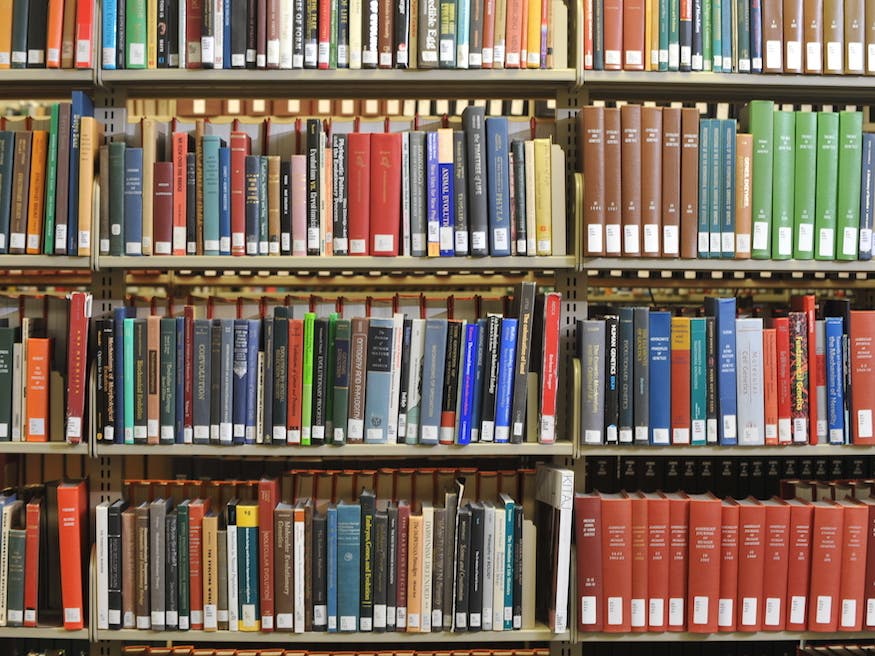
Beyond curating cultural displays, acquiring research databases and helping student podcasters navigate the university’s archives, the librarians at Albert S. Cook Library are immersing themselves in critical topics
such as information literacy, virtual reality and social justice.
Many of TU’s librarians have pursued unique content and disciplinary specializations
for years, generously leveraging their expertise for students, faculty and even parents
and families as part of a Faculty Talk program held during Family Weekend in 2018.
Find out what's happening in Towsonfor free with the latest updates from Patch.
Clare Kuntz Balcer, librarian for outreach and marketing, is the first of four librarians
who will part of this series. You’ll find these members of our campus community are
experts on topics far beyond what you might imagine.
What is your educational background?
I received my bachelor’s in history, with minors in book studies and religion, from
Goucher College. I was a student worker at the library there, which is what initially
got me thinking about becoming a librarian. I took several classes in the special
collections and archives there for my major. Toward the end of college, I wanted to
be either a historian or an archivist, but I wasn’t sure, so I worked as a server
for a few years while interning at the library and archive at the Baltimore Museum
of Art. Ultimately, I began my master’s in library (at the University of Maryland,
College Park) and information science to become an archivist, but along the way I
realized I really loved teaching and working with undergraduate students, so I focused
on academic librarianship.
How long have you been at TU?
August 14, 2020, was my one-year anniversary at Towson. It’s been a crazy year, to
say the least!
What is the focus of your research?
I’m particularly interested in exploring how academic libraries can support incarcerated
students pursuing their college educations in prison. More broadly, I’m interested
in investigating how the academic library can become an organization that centers
the voices and needs of the most vulnerable or marginalized folks in our community
through tangible action.
How did you get interested in this area of research?
My interest in higher education in prison began when I volunteered as a tutor for
the Goucher Prison Education Partnership. I was a writing tutor for women incarcerated
at the Maryland Correctional Institution for Women in Jessup. As a library student
worker and avid user of the library during my undergraduate career, it always struck
me how difficult it was for incarcerated students because they didn’t have direct
access to the library or any access to the internet. Once I started my graduate work
in an academic library, I naturally brought that along with me.
What accomplishments have you achieved in this field?
This is my first job as a librarian and I’ve only been here a year, but I have accomplished
a lot! The most momentous achievement was my article in “College and Research Libraries
News” about my work on information literacy with incarcerated students.
How has your field evolved recently?
I can’t speak to the long-term evolution of the field, but I will say it has definitely
changed in recent months, as we’ve moved to all virtual because of the COVID-19 pandemic.
I think the hardest change for many of us is feeling disconnected from our users.
Librarians tend to be people focused, and we value creating connections with students
and faculty. The good news is we do have alternative ways to connect. While folks
tend to think of the library as very physical —books, study spaces— the services we
were already been providing online have come front and center. For instance, we still
meet one-on-one with folks, but we do that virtually. Librarians are only a click
away if you use the chat feature on the library website. We are also focusing a lot
on our digital collection of journals and books and helping folks find quality, free
resources online.
How has your research intersected with your work at TU?
I’m fortunate to be a part of a working group, led by Elyshia Aseltine, Ph.D., establishing the Fair Chance Higher Education Center, which aims to support
criminal-justice-system-impacted people in their pursuit of higher education at TU.
In terms of my broader interest in social justice, I try to incorporate that into
everything I do, from which events we’re holding to who we’re partnering with on campus
to how we hire for our A-LIST student leadership program. As I move forward in this
position, I’m really interested in doing more research about what our community’s
needs are, with an emphasis how we can better serve BIPOC students.
Are there any misconceptions about librarians’ role in your field? If so, what are
they?
I think the biggest misconception about librarians is that all we do all day is check
out and read books! It’s funny because I have actually never checked out a book to
anyone at Cook. I think my role as outreach and marketing librarian is confusing to
folks, even those in the library field, because this is a relatively new role in academic
libraries. My No. 1 priority is to connect students, staff, faculty and the larger
community to the resources and services we provide in a setting (physical or virtual)
where folks feel comfortable and safe engaging intellectually.
What do you think librarians’ role in your field will be in the coming years?
There are so many things librarians do, I think there is a lot of room for growth.
On my end, I see librarians and teaching faculty working much more collaboratively
to achieve student learning outcomes related to critical thinking and research skills.
Towson University faculty and staff experts can provide commentary and analysis on
topics in the news. For help finding a faculty expert email Matt Palmer at mpalmer@towson.edu.
This press release was produced by Towson University. The views expressed here are the author’s own.