Health & Fitness
Who was Thomas Kelso?
Research on the founder of the Towson Kelso Home (now the Board of Childcare in Millford Mill).


Thomas Kelso was born in Clonis, Ireland, August 28, 1784. He died July 26, 1878 at his home on East Baltimore St. in Baltimore.
His parents died when he was a child so he and his older brother moved to Baltimore when he was 7. After they reunited with their oldest brother, they began a sucessful butchering business in the (Hill) Lexington and Center markets and became known for their integrity and observance of the sabbath.
The Kelsos also earned a reputation for charity and a common saying was that "the Kelsos gave away more meat than the other butchers sold". After his brother retired in 1807, he was the most extensive buyer of live stock brought to the Baltimore market.
It was a principle with him to give during his lifetime rather than postpone charity to a last will and testament. He was a major contributor to the Mt. Vernon Methodist Church. When he was director of the Franklin Bank he was known to discount the notes of "men of moderate circumstances:" mechanics, artisans, etc.
Find out what's happening in Towsonfor free with the latest updates from Patch.
His obituary says he regularly gave pennies to kids on the street which he called his "patrons" and to widows while he was alive.
During the War of 1812 the British invaded Baltimore twice, and in both cases Thomas Kelso was there. When they invaded in 1813, he was among those who guarded the mile long earthen breastworks stretching across Laudenslager's (Butcher's) Hill. Later in 1814, he was one of the defenders of Baltimore at the Battle of North Point when the British were driven back, while also failing at Fort McHenry.
Find out what's happening in Towsonfor free with the latest updates from Patch.
His business education, it was said, "though entirely self-attained, was very complete."
His investments were usually in corporations which were just starting, and which he considered would advance the public interest. In almost every instance they paid large dividends. His reputation for integrity in Maryland and Virginia became so well known that it was said "that his check passed as freely in business transactions as bank bills."
Thomas Kelso was a contemporary and associate of Enoch Pratt (benefactor of his namesake Baltimore library and the hospital). The men served together on the boards of the the Philadelphia, Wilmington and Baltimore Railroad company and in leadership roles for several rail and steamship companies. Mr. Kelso was principal Director and the largest Stockholder in the Baltimore Steam Packet Company and the Seaboard and Roanoke Railroad Company. For thirty-seven years he was a Director in the Philadelphia, Wilmington and Baltimore Railroad Company. He was President of the Equitable Fire Insurance Company, and Vice President and Director in the First National Bank of Baltimore.
During Reconstruction, Thomas Kelso worked for and was one of the seven original signators to a 1867 document insisting freed slaves must be provided rights and education comparable to other citizens and when the 15th Amendment was ratified, he spoke at the celebration in Baltimore. Thomas Kelso worked for education as Baltimore President of the Board of Directors of the Male Free School and Colored Institute; an institution that became Morgan State University.
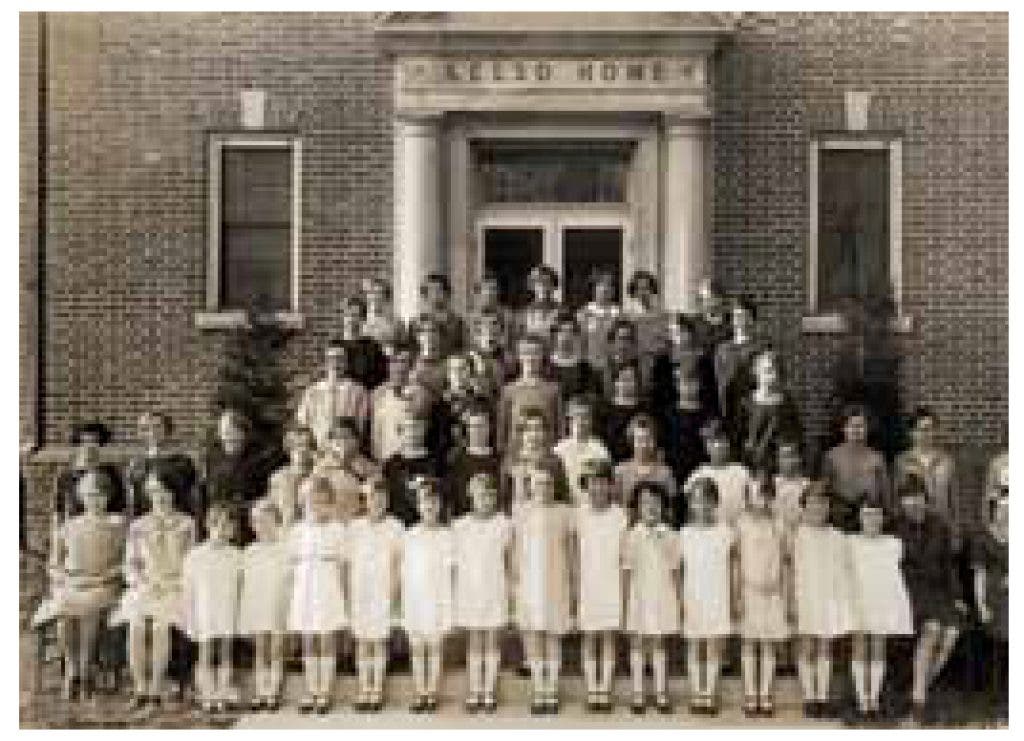
He began the Kelso Home organization in 1874—at age 90—"as a safe and caring place for vulnerable children to live." It evolved into the Methodist Board of Child Care when it merged with the Swartzell home (est. 1912) and Strawbridge home (est. 1924). He began Kelso Home in a building almost across the street from his house and on his death, his will provided generously ($120,000) toward it's perpetuity. The Kelso Home moved from downtown to a large house in Forest Hill before moving to the Towson campus September 27, 1925.
Baltimore area newspapers reported widespread fundraising for the charity for over a year before the move. Dedication reporting, said it had had space for 80 girls as well as an assembly hall, infirmary, play rooms, and other features. The facility created in Towson was not just another city mansion made into a dormitory, it was designed for the children of Kelso Home—for their enrichment and safety—and was thought to be exactly what Mr. Kelso intended. The charity sold the property to the Towson YMCA in 1958 and came to be known as the Methodist Board of Childcare when it moved to Millford Mill.