Neighbor News
Manage diabetes with medical nutrition therapy
Learn about the nutrition-based approach that complements the treatment plan every health care professional has for diabetic patients.
Understanding diabetes and keeping up with all the updates and developments in the field can be challenging for many patients. One would expect physicians to provide the latest news and advice to patients. But health care professionals don’t always have time to provide comprehensive health advice during routine visits, and many patients either don’t know what to ask or hesitate to ask the questions they might have.
An important area of diabetes management that both physicians and patients should be aware of is Medical Nutrition Therapy, or MNT, a nutrition-based approach that complements the treatment plan every health care professional has for their patients living with diabetes.
The concept of MNT was articulated in 1994 by the American Dietetic Association (now the Academy of Nutrition and Dietetics, eatright.org) to describe how specific nutrition services can be used to treatment an illness or injury. In the years since, MNT has proved its value.
Find out what's happening in Upper Marlborofor free with the latest updates from Patch.
Newly diagnosed diabetics in particular can benefit from MNT by learning better dietary habits, including simplified meal planning for busy patients.
MNT isn’t simply a matter of making a few changes to one’s diet and reaping the benefits of blood-sugar control and weight loss. Rather, MNT is a multistep process that requires assessment of the patient’s condition, an individually tailored diet, counseling in how to permanently change dietary habits, and evaluation of results. After all, we need to show that MNT is producing positive health outcomes for patients.
Find out what's happening in Upper Marlborofor free with the latest updates from Patch.
A 2002 study in the American Diabetes Association’s “Diabetes Care” showed that MNT is “most beneficial at initial diagnosis, but is effective at any time during the disease process, and that ongoing evaluation and intervention are essential.”
And a 2010 paper in “Clinical Diabetes” offered further support for MNT, finding that in six of seven studies reviewed, “lifestyle interventions were more effective than pharmacotherapy at reducing incidence” of type 2 diabetes.
Many insurers cover MNT, recognizing that it confers health improvements and reduces cost of care. Unfortunately, the rates of diagnosed diabetes in the U.S. (and worldwide) have continued to steadily increase. Where 13.5 million Americans were diagnosed as diabetic in 2002, that figure now stands at more than 22.3 million, just over 7 percent of the population. (In 1958, it was just 1 percent.)
As challenging as that trend is to our health, our medical system and our wallets, it also emphasizes the growing importance of nutrition in developing solutions.
That effort should begin with sound dietary advice that emphasizes the central role of a balanced and wholesome diet. Many patients can benefit from dietary supplements because persistent high blood sugar can increase the excretion of water-soluble vitamins and some minerals, and may also lead to deficiencies of certain nutrients that might not be detected through routine blood work. Supplements recommended by a nutrition-trained medical professional are very important.
Diabetes, the seventh-leading cause of death for Americans, remains a huge challenge for our nation. Managing this disease requires all the resources we have – including physicians, patients and pharmacists who understand and properly employ MNT.
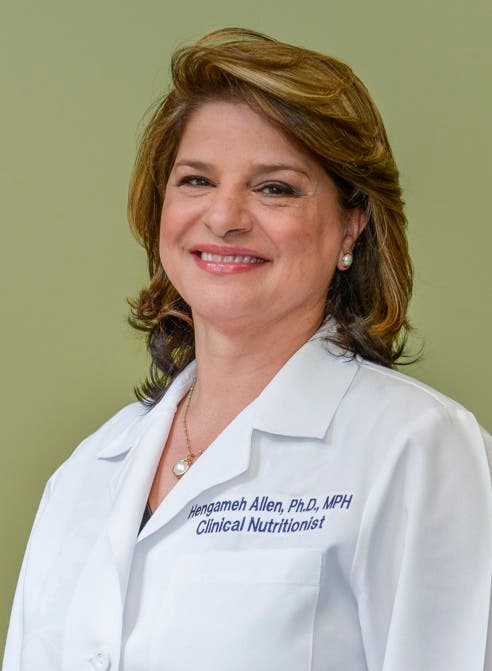
Hengameh (Heggie) Allen-Schaal, Ph.D., MPH, MT(ASCP) is a resident of Upper Marlboro and a Clinical Nutritionist at Access Compounding Pharmacy in McLean, VA and Alexandria Compounding Pharmacy in Alexandria, VA.