Politics & Government
Behind the Door: From an Eyesore to Casa Ceballo-Familia
In our second story on condemned houses, with some expertise and a lot of time, a Glenmont family remakes a house from the bottom up.

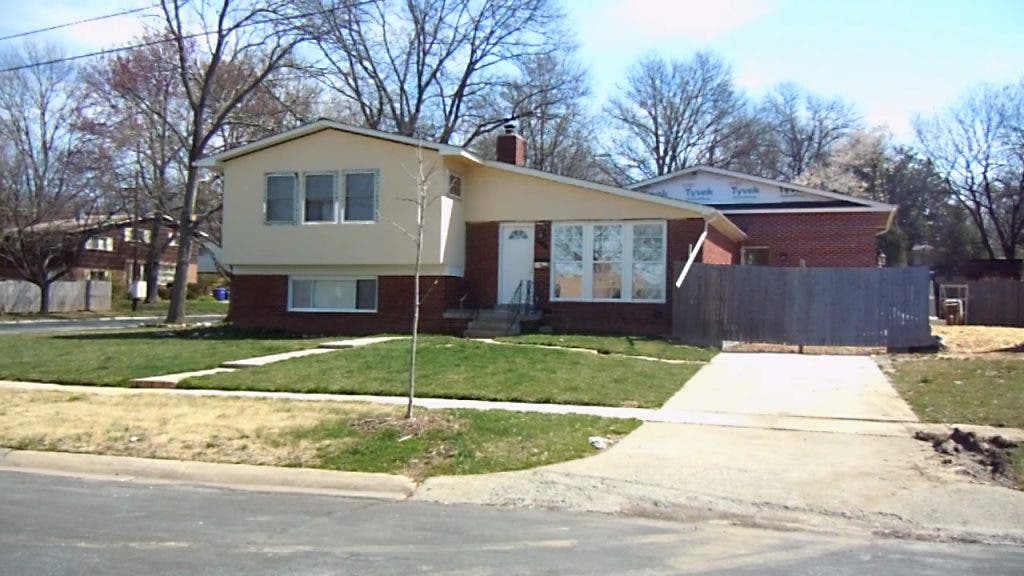

This week, Wheaton Patch is looking behind the doors of houses in the area that have been condemned. Today, we see a condemned house transformed into a home, but only after a lot of work. Tomorrow, we look at the story of a house fire that condemned a property on Claridge Road. For the entire series, .
When Jackie Familia and her husband Rafael Ceballo decided to move into his cousin’s basement in order to start saving money for their own house, they didn’t expect to buy the one across the street.
For starters, the place was a mess. The house’s pool was filled with muddy water and debris and didn’t have a fence around it. Neighbors feared that someone would fall and drown in the 10-foot pit. Graffiti was plastered on the side of the garage, and all of the trees in the front yard were infested with termites.
Find out what's happening in Wheatonfor free with the latest updates from Patch.
But they hadn’t seen inside yet.
When the house was foreclosed on, after being condemned because of the open pool, the couple saw an opportunity to buy it cheaply and to renovate it to their wishes. Rafael, a plumber and a contractor by trade, was already thinking through what it would take to build a second-story master suite.
Find out what's happening in Wheatonfor free with the latest updates from Patch.
On March 31, 2008, the couple paid $290,000 for a house on Holdridge Road in Glenmont. That month, the average sale price for a detached, single-family home in that ZIP code was $356,000, and $664,000 in Montgomery County.
Cleaning up the Damage
“When I started demolishing the pool with a backhoe, the inspector came over,” Ceballo said. “He said, ‘I won’t bother you, I’ve had problems with this house for five years, so I won’t bother you. Thank you.’”
While Ceballo started on the pool, he also moved to replace the windows. Three years later, the house still has several building permits posted in new, wider windows on the front of the house.
The county was glad to have someone who was interested in cleaning up the place. But convincing a bank to approve the mortgage for a house that was leaking on the inside was another matter.
“The house had to look like it was livable in order for our bank to approve the loan,” Familia said.
So Ceballo set to work adding “makeup”: wood paneling to cover holes in the walls, carting a refrigerator over from their cousin’s house to serve as a working appliance and other small, but ultimately temporary, fixes.
Once the loan was approved, Rafael got to work on repairing the bottom level of the house. Mold covered corners of the floor, the water heater was completely busted. And the main sewage line under the house leading out to the street was cracked in two, exposing the inside of the house to sewage.
“I don’t understand how people lived here,” Jackie said again and again in disbelief. The photos of the repair work show a rusting, rotting basement and a sunken exit out into the backyard.
It took more than four months to make the first level habitable. Since he had to gut the rooms down to the foundation, Rafael took the opportunity to add radiant heat underneath the floor, pouring new concrete for the lowest floor in the house.
Familia and Ceballo moved into that first level in August of 2008, with a smaller kitchen, as well as a renovated laundry room and basement.
Then they got to work on the rest of the house.
Looking Good, Saving Money
The three-year process has been slow. Familia and Ceballo are proud of the money they’ve saved by buying items on Craigslist and finding other items for free.
“My oven, my dishwasher, hood and cooktop, I got for $100,” Familia said in the downstairs, temporary kitchen recently. The full kitchen is the last part of the house under construction right now.
“We're big on reusing or refurbishing that looks good and saves us money,” she said.
But the renovation costs have still reached $80,000, and the house is now valued through tax assessments at $278, 000, lower than the original sale price, and down from its high assessment of $421,000 in July of 2010. Familia said they thought they’d bought the house at the bottom of its price, “but we were sadly mistaken.”
This isn’t a house flip, though. Rafael has already had architectural plans drawn up for another level, which will hold a master bedroom suite and a full laundry room. The plans are titled “Casa Ceballo-Familia.”
“Even though I’m losing money on the house, I don’t care,” Ceballo said.
“It’s about making the house comfortable for us. It’s the value of the house for my family to live in.”
Get more local news delivered straight to your inbox. Sign up for free Patch newsletters and alerts.