Community Corner
July MA Skywatching: 1st Of 4 Supermoons; Perseids, More Meteors Fly
It will be an active month for watching the skies over Massachusetts.


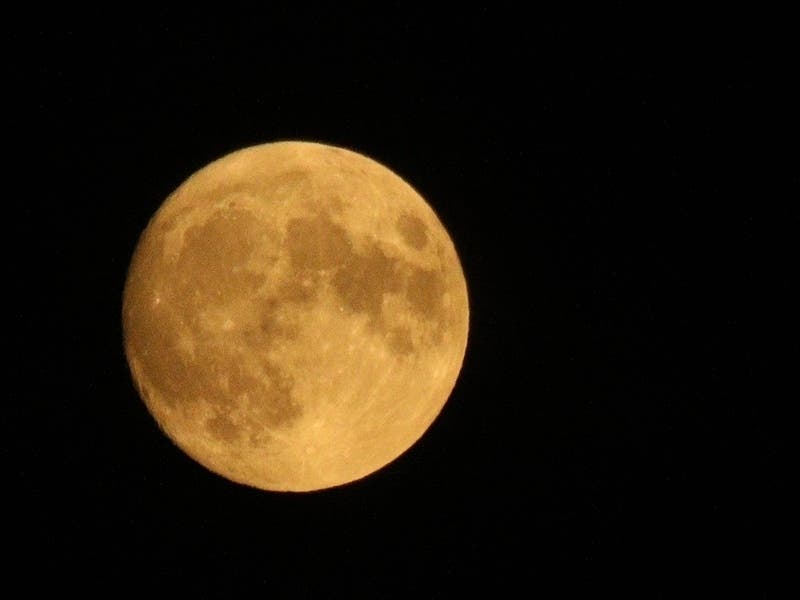
MASSACHUSETTS — The full buck moon on Monday, the first of four consecutive supermoons, ushers in an active month for watching the skies over Massachusetts.
But before the moon turns full, head out and check out the conjunction of Venus and Mars, which will pass within 3 ½ degrees of one another around 3:48 a.m. EDT on Saturday, July 1. You’ll be able to see both planets with the naked eye, weather permitting.
The National Weather Service forecast through Tuesday calls for a slight chance of showers Thursday evening before 9 p.m. Friday and Saturday nights will be partly cloudy. There's a 50 percent chance of showers Sunday night and another chance of showers Monday night. Temperatures will be comfortable in the evenings with lows in the upper 60s.
Find out what's happening in Across Massachusettsfor free with the latest updates from Patch.
The moon reaches peak illumination at 7:39 a.m. EDT on Monday. But it will reach perigee, its closest approach to Earth in its elliptical orbit, more than 24 hours later, at 6 p.m. EDT Tuesday, when it’s 223,786 miles away.
What is a supermoon?
Find out what's happening in Across Massachusettsfor free with the latest updates from Patch.
When the close approach coincides with the full moon cycle, our natural satellite looks bigger, brighter and closer, earning the supermoon moniker. This is a great summer for supermoons. The July supermoon is just a warm up for August, with the full sturgeon supermoon on the 1st and a second full moon on the 31st, a blue supermoon. And the harvest moon on Sept. 29 is also a supermoon.
Meteors also start flying in July
The Southern Delta Aquariids run from July 18-Aug. 21 and peak July 29-31. The shower produces about 20 meteors an hour at the peak, but the moon will be about 95 percent full, and that may make all but the brightest shooting stars too faint to see. The Aquariids are produced by debris left behind by the comets Marsden and Kracht.
The Alpha Capricornids run from July 7-Aug. 13, peaking July 30-31 with what’s called a “plateau-like” maximum. It isn’t a particularly strong shower and rarely produces more than five shooting stars an hour, but what is notable is the number of bright fireballs produced during the peak. The moon will be about 95 percent full at the peak, so the show could be a washout.
Perseid meteors start flying July 14 and continue through Sept. 1, producing about 100 shooting stars an hour at the Aug. 12-13 peak. Famous for producing numerous fireballs, the Perseids meteor shower is regarded as one of the best of the year. The shower, discovered in 1862, is produced by the comet 109/P Swift-Tuttle. 2023 could be a good year to plan something around the peak; the moon will be about 10 percent full, so it shouldn’t interfere much with the sky show.
Get more local news delivered straight to your inbox. Sign up for free Patch newsletters and alerts.