Schools
When Do You Stop For A School Bus? Know The Law In Massachusetts
With a new school year just around the corner, it's time to freshen up on what to do when you see a school bus on the road in Massachusetts.


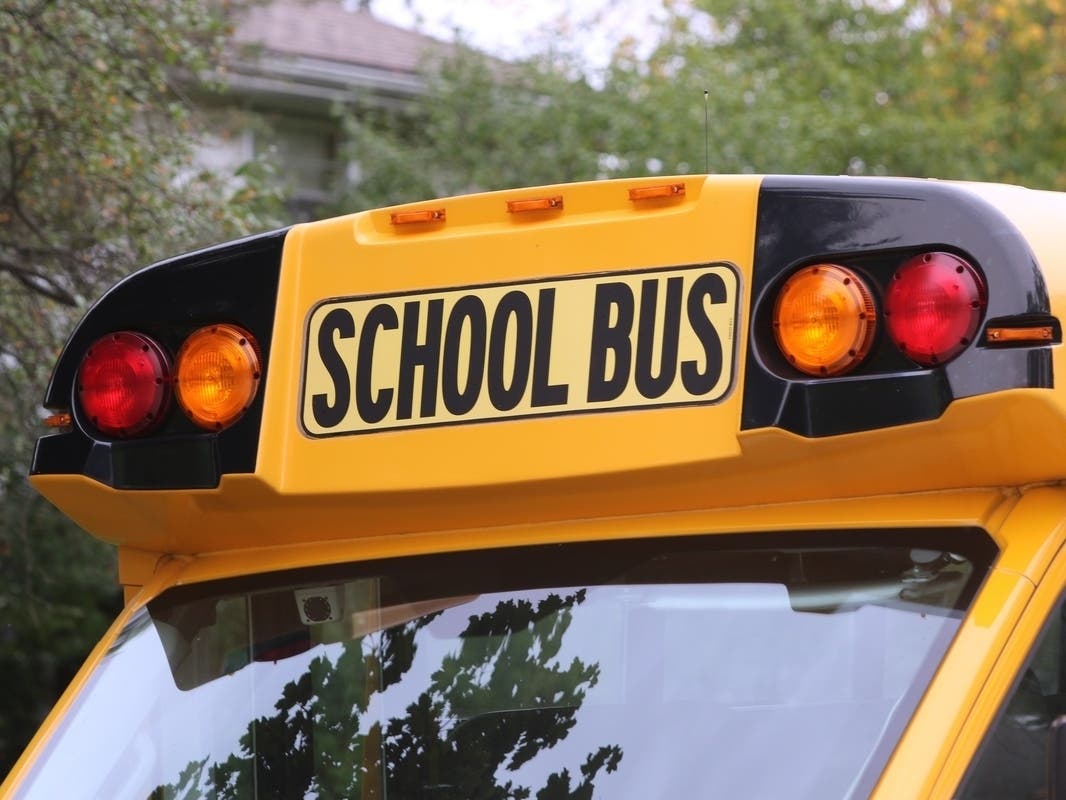
MASSACHUSETTS — When Massachusetts schools open, motorists may be a bit rusty about what to do when encountering a stopped school bus. Knowing stop arm laws, and following them, can save the lives of dozens of children killed every year in America getting on or off the school bus, transportation safety officials say.
In Massachusetts, the law requires drivers to stop their vehicle when a school bus has its red signal lamps flashing and has made a stop to let students out. Not doing so can be punishable by fines, according to the state law.
The law also states that drivers cannot operate their vehicle within a distance of 100 feet behind a school bus. Every school bus in Massachusetts is required to have the words ''keep back 100 feet'' displayed on the back of the bus "in type large and dark enough so that the words are legible at a distance of 100 feet," the law states.
Find out what's happening in Across Massachusettsfor free with the latest updates from Patch.
Every year, nearly 500,000 school buses take about 25 million elementary through high school students to and from school, traveling about 5.7 million miles in a single school year. These kids are 70 times more likely to arrive at school alive than those students who get to school by other means, according to the National Highway Traffic Safety Administration.
However, the National Transportation Safety Board noted on its website, “Far too many drivers simply choose to ignore the law for their own convenience and put children at risk.”
Find out what's happening in Across Massachusettsfor free with the latest updates from Patch.
In the 2022-23 school year, the latest period for which data is available, there were 104 school bus-related deaths, including one in Massachusetts, according to the National Safety Council.
Those fatal crashes aren’t included in National Transportation Safety Board data from 2011 to 2020. It shows 1,009 fatal school transportation-related crashes during the period. Other findings:
- 52 percent of school-age pedestrians killed in school transportation-related crashes were 5- to 10-year-olds.
- 1.6 times more fatalities occurred among pedestrians (183) than occupants of school buses (113) in school-transportation-related crashes.
In most cases when children are injured or killed, it’s when the bus is stopped, the lights are flashing and the stop arm is extended, according to safety experts. It’s illegal in all 50 states to pass a stopped school bus under those conditions.
A survey by the National Association of State Directors of Pupil Transportation released in July estimated that illegal passing of stopped school buses increased by about 4 percent in the 2023-24 school year to about 45.2 million. The estimate is based on a one-day count by school bus drivers in 35 states, adjusted for all school buses operating nationwide.
Such violations continue to be “the greatest safety danger to children,” the group’s president, Mike Stier, said in a statement.
That was tragically illustrated in an illegal school bus passing in 2018 that resulted in the deaths of three young Indiana siblings while they were crossing the road to get on the school bus.
That led the NTSB, an independent agency within the U.S. Department of Transportation, to recommend that states allow stop arm cameras as an enforcement tool. The agency also recommended that school districts minimize the number of school bus stops that require children to cross a roadway.
So far, 25 states have adopted stop arm camera laws.
Increasingly in recent years, state legislatures have adopted policies to improve bus safety. Along with the camera push, a requirement for seat belt use on school buses are keystone policies.
NHTSA data also shows that an average of six student passengers die a year in school bus crashes. The agency recommended in 2018 that states adopt legislation requiring passenger lap and shoulder belts on all new large school bus purchases.
Get more local news delivered straight to your inbox. Sign up for free Patch newsletters and alerts.