Politics & Government
Minuteman High School Proposes Changes to Capital Funding
School's proposal to shift some burden of capital project expenses to non-member schools could reduce cost to Acton taxpayers.
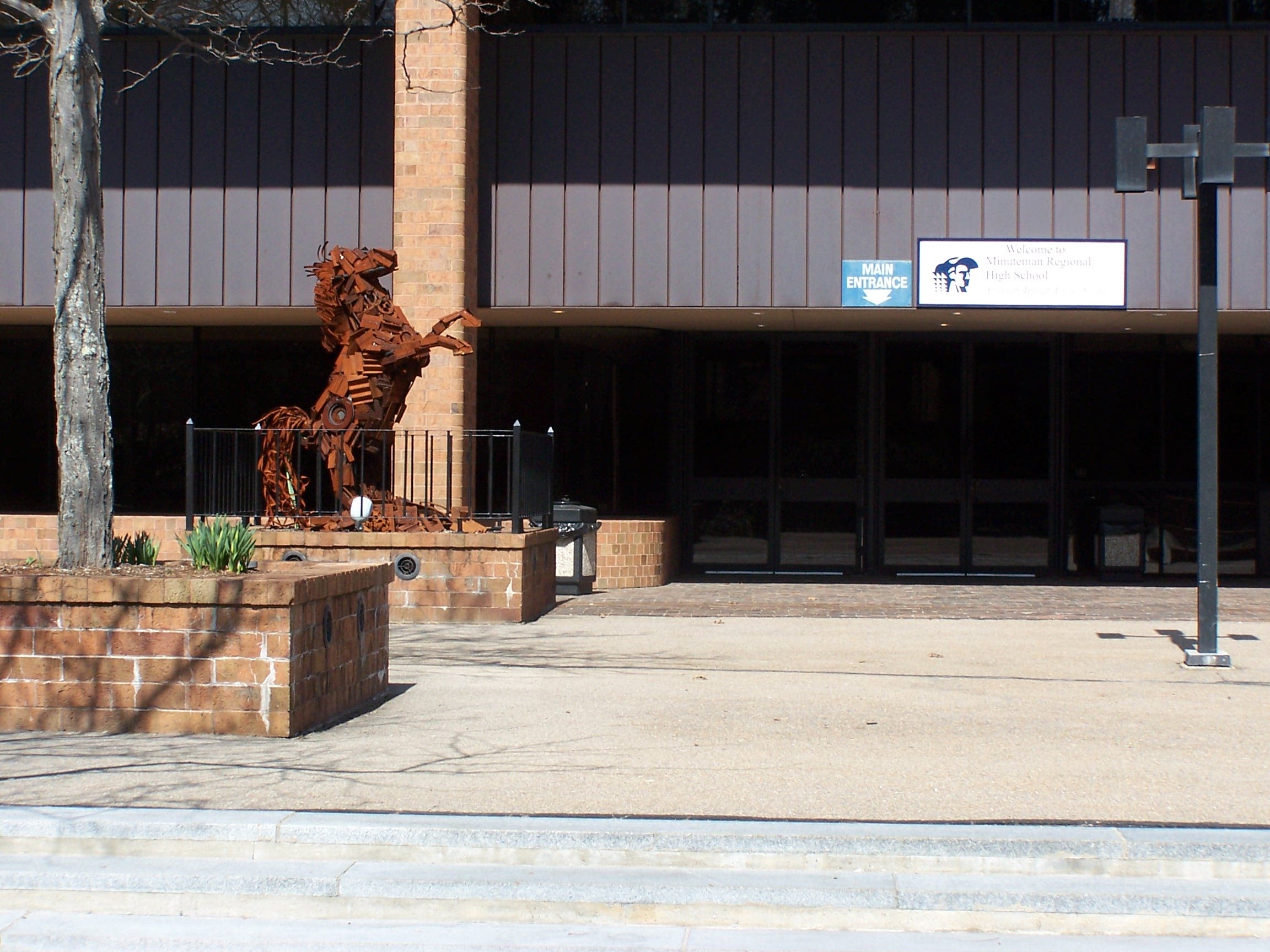

Proposed changes to capital expense funding at Minuteman High School could mean a significant reduction in the cost of capital projects for taxpayers in the school's member towns, including Acton.
In a March 7 presentation to the Sudbury Board of Selectmen, Minuteman Superintendent Ed Bouquillon and Minuteman School Committee members discussed a potential shift in capital project costs for out-of-district students, who currently comprise 43 percent of the student body — but whose towns currently bear none of the expense for capital projects.
“We've been talking about this for a long time,” said Sudbury Selectman Bob Haarde. “There are a high percentage of Minuteman (students) who are not in the district which is a concern moving forward with capital projects” — in particular, a potential large-scale renovation for a building that Bouquillon described as “being in serious disrepair.”
Find out what's happening in Actonfor free with the latest updates from Patch.
“There is no issue greater issue” than that of securing capital funding from out-of-district towns, Bouquillon said, adding that the school has done “tremendous work” making governing bodies, particularly the state Dept. of Education, aware of the issue.
Under the current formula, capital costs are assessed by enrollment based on numbers from the previous Oct. 1 from the school's 16 member towns, which include Sudbury, Acton, Wayland and Weston. As of last Oct. 1, 30 students from Acton were enrolled at Minuteman.
Find out what's happening in Actonfor free with the latest updates from Patch.
The proposed shift of burden would call for each non-district town to pay a surcharge, estimated at 20 percent, of the flat-fee base tuition rate assessed for each town for capital expenses.
“For member towns, this would be a big step once it's approved (by the DoE) in some manner,” he said. “It's my educated guess that this would more than solve the problem for capital projects' funding.”
What's more, he said, “It could be an incentive for (non-member) towns to join. With a flat fee plus the 20 percent surcharge, we could seriously imagine some tuitions reaching $29,000, $30,000 while towns within the Minuteman region would pay $9-10,000 less.”
The issue of unequal funding between member and non-member towns is particularly paramount, he said, as the school is readying for a feasibility study for the renovation this summer.
In the selectmen's meeting, he told participants the building was in serious disrepair and that last summer, for instance, administrators were given a four-day deadline to make some urgent electrical repairs.
Bouquillon said he hopes to receive word about the proposed changes from the Dept. of Education by May 1, with any approved changes to go into effect for the 2013-14 school year.