Arts & Entertainment
Haiti Peace Quilts Visits Hyannis
A Martha's Vineyard-based humanitarian organization brings its story of hope to Barnstable.
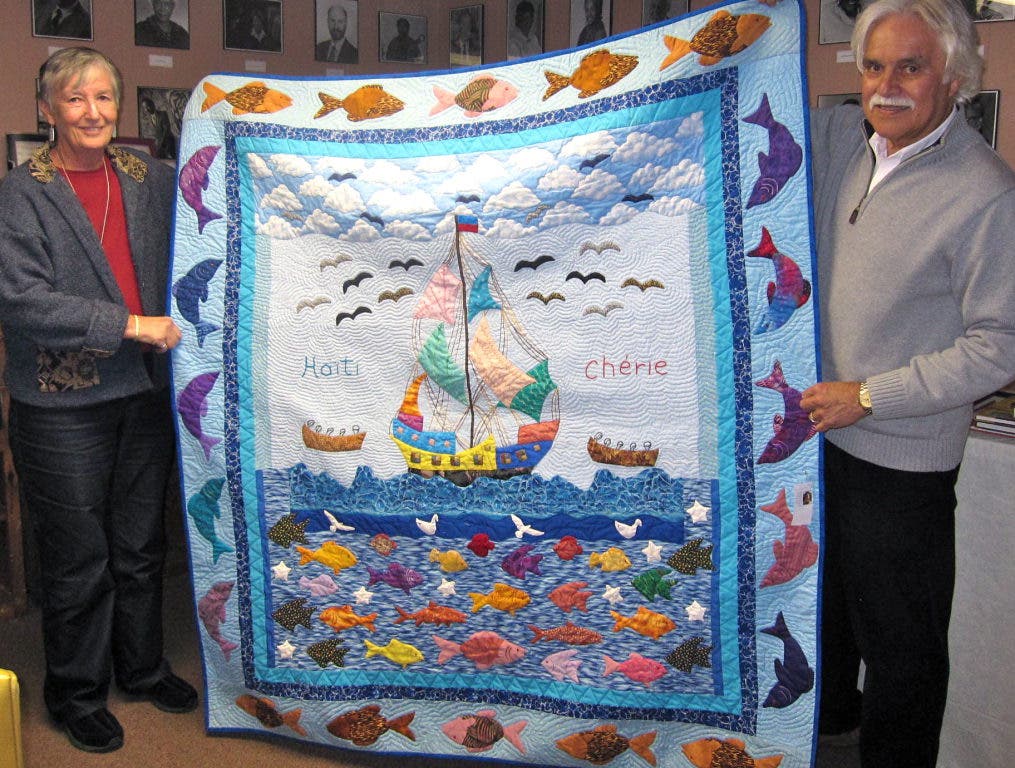

When random acts of kindness create a multiplier effect, it looks something like Haiti Peace Quilts, a poverty-reducing network of quilting cooperatives staffed by Haitians and supported by a small group of committed and kind hearts.
On Saturday at the in Hyannis, Harvey John Beth invited town residents to an exhibit of colorful quilts made by Haitian women and to a discussion of this uniquely successful grass roots project.
What might residents of a Caribbean hothouse be doing making quilts, you might ask? A Creole word for quilt does not even exist.
Find out what's happening in Barnstable-Hyannisfor free with the latest updates from Patch.
When Peace Quilts founder and director Jeanne Staples arrived in Haiti many Haitian women were embroidering white linen tablecloths to sell to the rare tourist.
Needless to say, business was slow.
Find out what's happening in Barnstable-Hyannisfor free with the latest updates from Patch.
Staples, a Martha’s Vineyard artist and avid sewer, spotted the inherent artistry in these embroidered goods produced by students of the Centre Ménager, a Home Economics-like job-training program at the school of Marie Reine Immaculée in Lilavois.
Staples suggested to the students’ teacher, Sister Angela Belizaire, that perhaps quilts might be more marketable. Sister Angela handpicked seven of her best students and in under a twenty-five minutes, the girls had mastered the basics. Staples offered to take back what they were able to produce and try to sell them in the US.
On Staples next visit about six or seven months later, the girls had completed an amazing 20 quilts, dubbed “patchworks” in Creole.
Since that first day in 2007, Haiti Peace Quilts has sold about 40 quilts with a market value of from $250 to $4,500.
One hundred per cent of the income generated through sales goes back to the cooperative. The proceeds are divided among the women according to their time contribution to the sold quilt.
Thanks to donations, Haiti Peace Quilts is also able to pay each member of the cooperative a generous $3 per day (factory workers earn $2) for their time, plus an advance of 50 percent of the market price of the quilt once it is completed.
Not surprisingly, word spread, and Haiti Peace Quilts now supports around 100 co-ops around the country.
But there are obstacles, not least of which is the sad truth that because Haiti has nothing (less, even, after the earthquake), all of the materials must be “imported.”
Beth says that 75 percent of the organization’s shipments into Haiti disappears en route. As a result, on a recent trip, Beth and his colleagues arrived laden with the maximum allowable luggage: two suitcases each with supplies totaling 500 pounds of fabrics, embroidery thread and other essentials.
In addition, each member of the team carried a knapsack for his or her personal items. On the trip out they carted 500 pounds of quilts to market and sell stateside.
The quilts are getting noticed.
The Bennington Museum in Vermont launched a traveling exhibit, Patience to Raise the Sun, currently installed at the African American Museum in Philadelphia and is heading to the Textile Museum in Lowell, MA in October. Last Christmas, Macy’s included quilted accessories in its “Heart of Haiti” shop set up in 20 locations around the country. Haiti Peace Quilts is now in talks with Anthropologie to carry a line of specially made quilted items.
As for organizational costs, each of the project’s staff pays his/her own way. When asked where he sees this project going, Beth replied the team would like to see the cooperatives become self-sustaining so the organization can focus its work on creating new cooperatives.
"I’d also like to see these cooperatives spread out into more of the art," he said, "enthusiastic over the extreme talent and exuberant vitality of the Haitian people."
For more information on Haiti Peace Quilts, to make a purchase or to donate, visit www.haitipeacequilts.org.