Health & Fitness
Greater Beverly YMCA After School Program Partners with Endicott College to Create "Lending Lab"
Greater Beverly YMCA After School Program Partners with Endicott College to Create "Lending Lab"
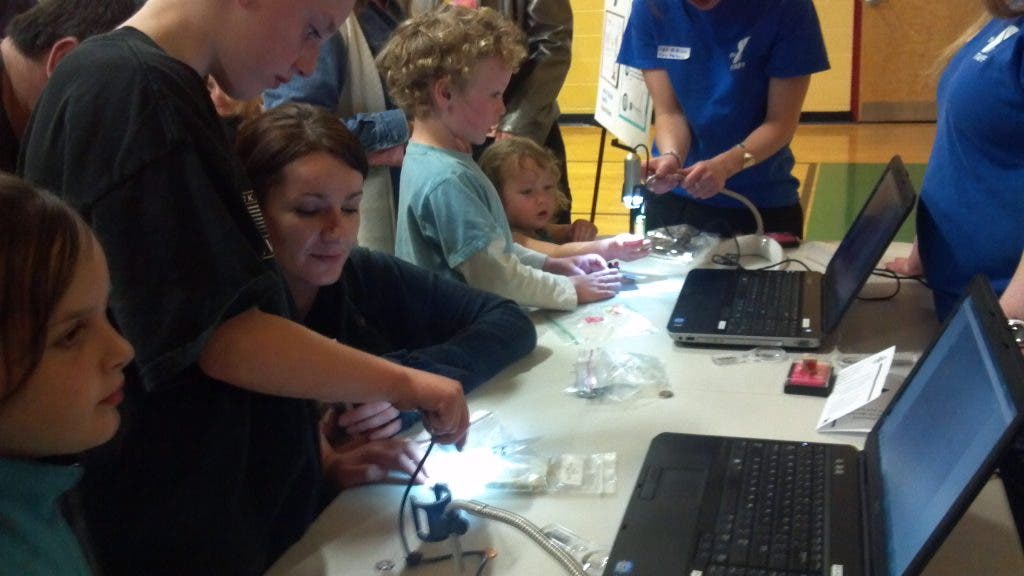
With great advances in technology and a growing emphasis on STEM curriculum (Science, Technology, Engineering and Math) the Greater Beverly YMCA’s After School program launched a new initiative recently with Endicott College to address these disciplines.
Through a grant from Cell Signaling Technology of Danvers, the Y and Endicott were able to create a digital microscope "Lending Lab” complete with microscopes and laptops. The idea for the program came from Anne Curry, Curriculum Specialist at the Greater Beverly YMCA and Dr. Mary Hatton, a professor of Science Education at Endicott College. Together they wrote the grant that funded the program.
Hatton infused the digital microscope technology in her lessons and trained her teacher candidates (pre-service teachers) on the lab equipment. Then the pre-service teachers created lab lessons for their science methods course and in class practicum.
“As part of the project, we surveyed the After School staff and pre-service teachers on various aspects of exposure to, integration of and comfort level with the Lab’s interactive technology,” said Curry. "After School staff (96%) and pre-service teachers (100%) both felt ‘highly motivated to integrate the Lab in teaching’ and ‘very comfortable’ with the lending lab technology after the training session, which we see as a huge success.”
The Lending Lab was brought to all six Greater Beverly YMCA After School sites, which impact over 550 children. “Children need more science experiences that engage them in learning how or what scientists do and how to use science,” says Curry. Both women found that children’s perceptions about science are sometimes inaccurate. For example, the Learning Lab project was not about memorizing facts. Some students could explain how they did science and yet they perceive the importance of science as memorizing facts. This technology will allow children to develop more positive experiences about scientists using microscopic technology in different ways.
With this technology in place, the After School program hosted its first STEM family event. The night highlighted the STEM programming that After School children participate in and gave parents an opportunity to explore and experience it, too.
The families discovered: Brick Lab, an educational LEGO engineering program; fingerprint classification; how tall they are in nanometers; constellations and star maps; employing "trial and error" with magnetic forces, and the incredible world of the microscopic using digital microscopes.
And the momentum of this program continues to grow. Curry plans to add a “CSI” type unit to the After School curriculum as well as integrate these lessons into arts and humanities camps the Y is offering this summer.
“The YMCA and Endicott College have been so pleased with the results of this project and the impact we are having on future scientists. We are dedicated to developing new ways to integrate the Lending Lab technology in both in-school and out-of-school time,” she says.