Politics & Government
Council, Residents Butt Heads on Proposed Tax Incentives for Downtown Development
The Tax Increment Financing (TIF) district is designed to increase the residential density of a downtown to encourage more retail stores.
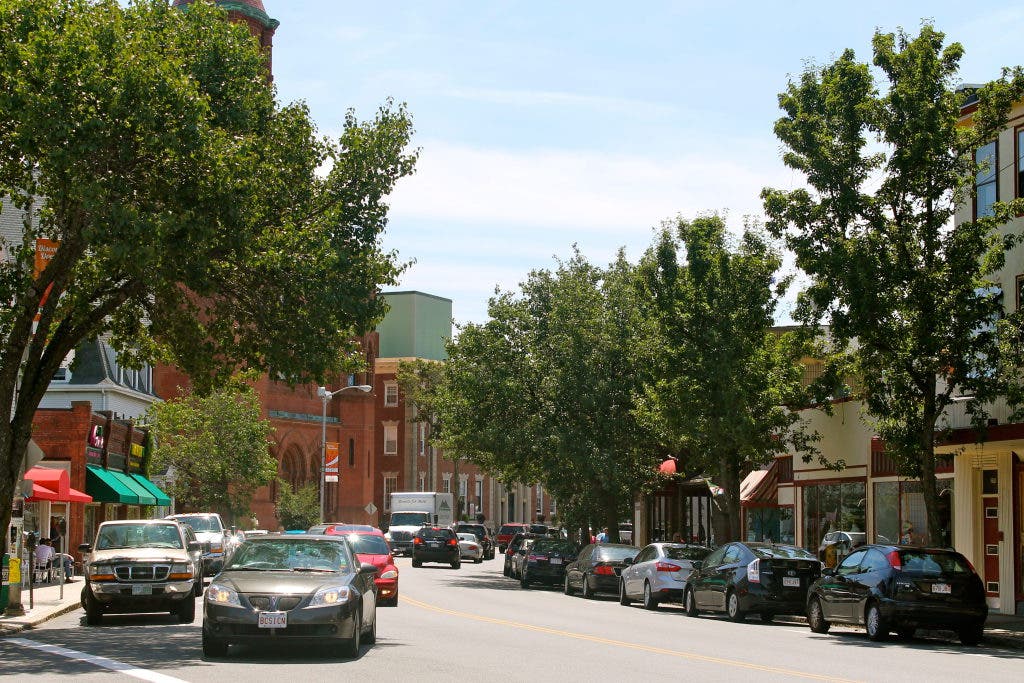
After more than three hours of heated discussion on the topic Tuesday night, Beverly city councilors finally decided to put a controversial proposal to create a Tax Increment Financing District (TIF) in the downtown into a subcommittee for further study.
The TIF, as proposed by , is designed to increase the residential density of downtown to encourage more retail stores to locate in downtown. The proposed measure would grant real estate developers a 50 percent tax reduction for up to 20 years on any improvements they make to properties.
The new district appeared to have wide support from Mayor William Scanlon, business leaders, real estate developers and several council members.
Find out what's happening in Beverlyfor free with the latest updates from Patch.
“We see (the TIF) as a way to give our downtown a competitive edge,” Mary Grant, co-president of Main Streets and former state representative, said.
In a formal presentation, Grant tried to counter arguments against the TIF. She pointed out that developers would receive a tax break only on improvements to the property, and the city would get additional revenues, although not as much as it would if a developer, like Windover Construction, improved a property without the TIF discount.
Find out what's happening in Beverlyfor free with the latest updates from Patch.
She also stressed that 75 percent of all new residents would be renting apartments at market rate. Only 25 percent of the new residents would be given a workforce discount and those renters would be policemen, teachers, bank tellers and lab technicians, she said.
Councilor at Large Jason Silva said that the lowest rent in the proposed new apartments would be $1,138 a month.
Andy Goldberg with Goldberg Properties and a Main Streets director told the council that from his experience managing properties in six downtown areas that the TIF is needed in Beverly to help attract more retailers.
He said Beverly has one of the lowest rates of retail stores among North Shore cities and towns. “Revitalizing downtown is not going to happen on its own,” Goldberg said.
About 10 speakers opposed the TIF, saying it would give developers “a windfall” of profits, cost the city money and burden the city services with a more dense population.
Resident Shawn Handlin said, “Beverly already has a lot of people. You can't swing a cat and not hit a multi-family unit.”
To attract retailers, the city should rebuild the sidewalk along Rantoul Street to attract shoppers, he said. Handlin also proposed that the city focus on developing its waterfront, which he described as Beverly's greatest asset. “What other community on the North Shore does not have a waterfront eatery?” he asked.
Council Chairman Paul Guanci repeatedly asked two of the opposing speakers to talk only about the TIF or after a lengthy speech to stop talking all together. When the speakers continued to speak, Guanci called for a vote to stop them from talking. Even after the vote, one speaker refused to quit after more than 15 minutes, so the council voted to recess for one minute and got up and left the room.
The councilors' frustration came not from the speakers' opposition to the TIF, as they were accused, but because of the length of the speeches and the failure to discuss issues relevant to the TIF.
Much of the opponents' criticism was focused on Windover Construction, which supports the TIF, but has decided to withdraw its 45-unit apartment complex at the old site from the new district.
Lee Dellicker, president of Windover, told the council that the tax break would have helped his company finance other projects. But he wanted to avoid being “a lightning rod” for opposition to the proposed TIF.
Dellicker said Windover has other properties in the TIF, which might benefit, if approved by the council.
The council will consider changing the Main Streets proposal. Among the items that may be different are shortening the length of time for the tax reduction from 20 years to 15 and lowering the tax break from 50 percent.
The council will also debate the issue of whether to require that the developers build retail and commercial space on the first level of each building.