Community Corner
Longfellow Bridge Reopens To Traffic Both Ways
Do we even know how to use it any more?


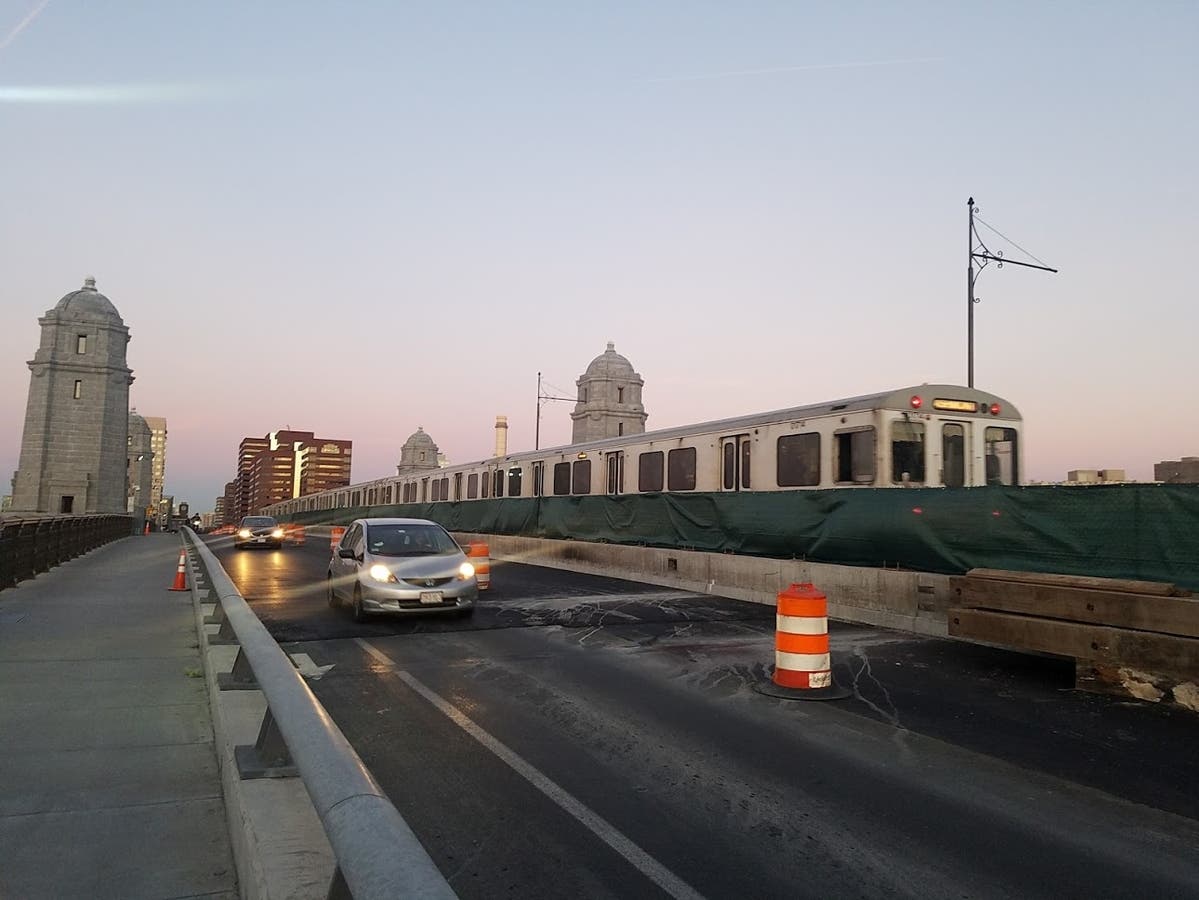


BOSTON, MA —Commuters have a bit of relief with the morning commute from Cambridge to Boston. What you say? Yes, the Longfellow Bridge, the bridge you might remember as being under construction since 2013, is finally open again. It's true.
All car travel lanes, separated bicycle lanes, and sidewalks on both sides of the bridge, as well as MBTA Red Line infrastructure are in working order as of 5 a.m. Thursday, MassDOT announced.
The roadwork on the Salt and Pepper Shaker Bridge (as it's also sometimes known) was supposed to be done in 2016 but there were delays.
Find out what's happening in Bostonfor free with the latest updates from Patch.
So for years, bridge access from Cambridge to Boston meant one lane only and no cars could pass the other way. Red Line riders were often bused across the Charles River on weekends. Runners had to go a different route.
But now, after five years and hundreds of millions of dollars it's back.
Find out what's happening in Bostonfor free with the latest updates from Patch.
The project got rid of a travel lane in the outbound direction, widened the sidewalks and bicycle lanes, and added a new MBTA Red Line track. MassDOT also updated the final design of the bridge this spring as a result of public feedback to widen the bicycle lane in the inbound direction and add new raised vertical stanchions to physically separate the bicycle lanes and speed feedback signs on both sides of the bridge.
The Longfellow Bridge, which opened in 1907 linking Boston and Cambridge and hasn't had a major update since 1959. The $300 million project took a while to finish because it needed extra time to preserve the bridge’s character with appropriate construction techniques, said officials.
“Our administration has been proud to work closely with Boston, Cambridge and key stakeholders to rehabilitate the Longfellow Bridge to increase accessibility while maintaining the historical significance and notable design of this structure,” said Lieutenant Governor Karyn Polito.
And though drivers, cyclists, and pedestrians can now use the bridge, there's still a bit of work to do and the project is slated to be finished this winter and finish work on the Frances Appleton Pedestrian Bridge, do some landscape and cleanup work.
Located on the site of the 1793 West Boston Bridge, this steel and granite structure was completed in 1907, and renamed to honor Henry Wadsworth Longfellow in 1927. The bridge was then extended in 1956 and rehabilitated in 1959.
The bridge consists of 11 original open-spandrel steel arch spans. The bridge has an overall length of 2,135 feet, and a deck width of 105 feet, which includes a 27-foot fenced median occupied by the Red Line. The bridge carries 28,000 motor vehicles, 90,000 transit users, as well as pedestrians and bicyclists per day.
“The Longfellow Bridge is not only a vital transportation connection for commuters, bicyclists and pedestrians across the Charles River, it is also a jewel of the Boston skyline,” said Congressman Capuano.
MassDOT undertook a comprehensive public outreach and stakeholder engagement process prior to the start of construction in order to help formulate the future design of the Longfellow Bridge. The decisions made through the Longfellow public process helped form MassDOT policies used today to provide safe, fair, and equitable sharing of limited space for public transit, non-motorized uses, and motorized uses.
Photos by Jenna Fisher/Patch
Get more local news delivered straight to your inbox. Sign up for free Patch newsletters and alerts.