Politics & Government
Real Estate Ind. Reps On Boston's Rent Stabilization Cmte.-Pt.1
Should Boston mayor's "Rent Stabilization Advisory Committee" actually be called "The Stalling Rent Control/Rent Regulation Committee"?
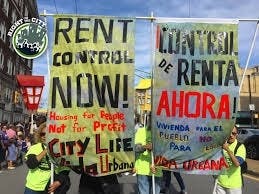
The majority of Boston residents are tenants who live in rental apartments—not real estate industry deal-makers, not “affordable” housing industry real estate deal-makers and property managers, not university professors, not foundation executives (or executives of the NGOs they fund) and not members of the Federal Reserve Bank of Boston’s board of directors.
Yet the “Rent Stabilization Advisory Committee” that Boston’s current mayor appointed in March 2022 includes, as one of its members for example, Related Beal President and Federal Reserve Bank of Boston Class B Director Kimberly Sherman. And, according to a Jan. 5, 2022 Federal Reserve Bank of Boston press release, “Kimberly Sherman Stamler, a Class B director, is president of Related Beal, an integrated real estate firm focused in Boston” who “joined Related Companies in 1999 and has experience in a variety of sectors within the real estate industry, including acquisitions, financing, development, leasing, marketing, operations, and sales across all asset classes..”
In addition, according to the same Federal Reserve Bank of Boston press release, Rent Stabilization Advisory Committee Member Sherman also “serves as co-chair of the Greater Boston Chamber of Commerce’s Regional Real Estate Development Leadership Council” and sits on the board of the Boston Municipal Research Bureau; which has a long history of opposing all rent control, rent rollbacks, rent freezes or rent stabilization laws that would protect Boston’s tenant majority from being overcharged by the real estate industry deal-makers and landlords who have profited most from Boston’s gentrification since rent control was undemocratically prohibited in Massachusetts in the 1990s—despite the majority of Boston’s residents now wanting to bring back rent regulation in 2022.
Find out what's happening in Bostonfor free with the latest updates from Patch.
And despite the current Boston mayor’s campaign pledge to be an advocate for Boston renters and for restoring rent regulation of residential units in the City of Boston in 2021, over 100 days after the November 2021 mayoral election, another board member of the Boston Municipal Research Bureau that has, organizationally, long opposed rent regulation, Boston Residential Group CEO and President Curtis Kemeny, was also named by Boston’s mayor to sit on the “Rent Stabilization Advisory Committee”.
As a Class B director, elected by member banks of the Federal Reserve Bank of Boston, Rent Stabilization Advisory Committee Member and Related Beal President Sherman sits next to 8 other directors of the Federal Reserve Bank of Boston; and, besides including Sherman, the Federal Reserve Bank of Boston board of directors also includes folks like the following individuals: Leader Bancorp, Inc. CEO, Massachusetts Growth Capital Corporation and Greater Boston Chamber of Commerce board member and former Massachusetts Mortgage Bankers Association Chair Sushil Tuli; Citizens Financial Group CEO and Moody’s Corporation board member Bruce Van Saun; MassMutual CEO Roger Crandall; and Brown University President and Association of American Universities board chair Christina Hull Paxson.
Find out what's happening in Bostonfor free with the latest updates from Patch.
And, not surprisingly, although “the Boston Fed extends credit to depository institutions” to “help relieve liquidity strains in the banking system,” to meet “unexpected liquidity needs” or “to meet seasonal funding needs,” according to its website, the Federal Reserve Bank of Boston apparently hasn’t been very eager to use its economic power in Boston to protect Boston’s tenant majority from being overcharged for the apartments they rent in Boston, in the decades since rent control was undemocratically eliminated in “The Athens of America.”
According to a March 9, 2016 GlobeStreet.com article, Rent Stabilization Advisory Committee Member Sherman worked on “the execution and management of Related Fund Management deals including The Arlington in the Back Bay” and “was the development executive on The Clarendon and One Back Bay in Boston, beginning her work on that project in 2003..”
And six years before Boston’s mayor appointed Related Beal’s president to be a member of City Hall’s “Stalling Rent Control and Rent Stabilization Advisory Committee,” the same March 9, 2016 article observed that Sherman would “work closely with Related Beal chairman Bruce Beal Sr. and will lead the company in its pursuit of new development and deal opportunities as well as financing activities across its Boston business units.”
“Meeting 1” of the Boston mayor’s Rent Stabilization Advisory Committee was scheduled to be held on March 15, 2022 and at this first meeting the following four things were originally planned to happen:
1.”Introductions” were to be made “and purposes of the advisory committee” were to be explained;
2. “City staff or other expert/s” were to “provide an update on rental conditions in Boston, including rents levels and trends, evictions, production and its impact on rent stabilization;”
3. An “introduction to different types of legislation—home rule, enabling, etc.” was to be presented; and
4. A “reading list on rent stabilization in other cities, states, and countries” was to be shared.
Yet not many Boston tenants were apparently invited to attend “Meeting 1” of the Rent Stabilization Advisory Committee to demand, for example, that during the six months in 2022 that the appointed members of this committee are chattering with each other about restoring rent regulation to Boston and sharing reading lists, a rent freeze for all Boston tenants should be declared.
Or that, in the interest of full disclosure, the City of Boston (or the Federal Reserve Bank of Boston) should mail (or email) every tenant living in a residential unit in Boston a full transcript of what is said by each individual member of the mayor’s Rent Stabilization Advisory Committee during its 5 scheduled meetings between March and October 2022, perhaps? (end of part 1)