Politics & Government
Real Estate Ind. Reps On Boston's Rent Stabilization Cmte.-Pt.6
Is Rent Stabilization Adv. Cmte.--that includes Colliers Int'l Capital VP--not protecting Boston's tenants from rent increases in 2022?
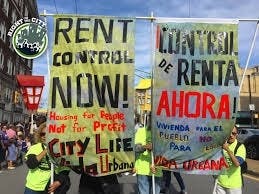
Between 2021 and 2022, the official number of homeless families in Boston increased from 843 to 929 on the night of Feb. 23, 2022, according to the City of Boston’s annual homeless census; and, on Feb. 23, 2022, at least 119 homeless individuals were still having to sleep on Boston’s streets at night.
In addition, although over 24,000 new residential units were constructed by Boston’s real estate deal-making industry between 2014 and 2019, on the night of Feb. 23, 2022, at least 1,545 homeless individuals were still having to spend their nights in emergency shelters--rather than being housed in individual studio or 1-bedroom apartments (as most individuals at risk of being homeless in Boston were housed, prior to 1980).
One reason why some tenants are still homeless in “The Cradle of Liberty” in 2022 is because the rents that private market-rate tenants were required to pay--after Massachusetts’s real estate industry firms succeeded in ending rent control in Boston in the 1990s--were no longer affordable for many now-homeless families and homeless individuals.
Find out what's happening in Bostonfor free with the latest updates from Patch.
Yet in addition to including the president of the Related Beal real estate deal-making firm, Kimberley Sherman, the CEO and President of the Boston Residential Group real estate deal-making firm, Curtis R. Kemeny, Housing Forward-MA Executive Director Josh Zakim (whose organization’s treasurer is Chestnut Hill Realty CEO President and former Greater Boston Real Estate Board Vice-President Ed Zuker), National Development Managing Director Brian Kavoogian and Accordia Partners, LLC Managing Director Kirk Sykes, the City of Boston’s secretive “Rent Stabilization Advisory Committee” also includes a sixth member with business ties to the real estate industry that has been profiting from the absence of regulation of market-rate apartment rents in the Greater Boston area since the 1990s.
Between 1998 and 2019, Rent Stabilization Advisory Committee Member Jeanne Pinado was the CEO of Madison Park Development, a multifamily real estate owner/developer with annual revenues of more than $20 million; and, according to the Madison Park Development Corporation’s Form 990 financial filing for 2019, between Jan. 1, 2019 and Dec. 31, 2019 Pinado was paid a total annual compensation of $236,714 by the “non-profit” affordable housing real estate deal-making firm.
Find out what's happening in Bostonfor free with the latest updates from Patch.
According to the Colliers International website, Rent Stabilization Advisory Committee Member Pinado also is “a savvy, entrepreneurial, and well-connected business leader within the Boston real estate community” who, as the Colliers International Capital Markets Vice-President, “joined Colliers in 2021 to serve as a strategic brokerage advisor in the Capital Markets service line.”
The Boston office of Colliers International has, historically, arranged millions of dollars of financing for Greater Boston area real estate deal-makers wishing to construct luxury apartment buildings, with non-rent-controlled market rate residential units that are unaffordable to the majority of Greater Boston area tenants. According to a March 21, 2021 Boston Real Estate Times article, titled “Colliers International Arranges $42 Million Loan for Luxury Apartment Community in South Shore,” for example, Colliers International arranged financing of Redbrook Apartments in Plymouth, Massachusetts; and ”the Colliers team” was selected “to secure refinancing” for a “184-unit apartment” complex of four buildings with “a resort-style pool.”
In addition, Rent Stabilization Advisory Committee Member Pinado is a member of the Real Estate Executive Council, the NeighborWorks Capital Corporation Board president and a board member of the Foley Hoag Foundation—that’s funded by a Foley Hoag law firm whose Real Estate & Development Group helps its Massachusetts real estate deal-making industry clients develop successful strategies, obtain government approvals and secure project financing for its projects.
The Real Estate Executive Council, that Rent Stabilization Advisory Committee Member Pinado has been a member of in recent years, is a professional trade association that was formed to promote the special economic interests of certain Greater Boston Area executives doing business in the commercial real estate industry; and, for a number of years during the last decade, another Rent Stabilization Advisory Committee Member, Accordia Partners Managing Director Kirk Sykes, was the chairman of the board of directors for the Real Estate Executive Council.
Coincidentally, a few weeks after Colliers International Capital Markets Vice-President Pinado was named by Boston’s current mayor to sit on the Rent Stabilization Advisory Committee, Massachusetts Governor Charlie Baker—who opposes enactment of a statewide rent regulation law to protect tenants in all Massachusetts localities from excessive rent increases—swore Pinado in as chair of the board of directors of the Massachusetts Housing Finance Agency [Mass Housing ]—a quasi-public agency that lends money to “affordable” housing industry real estate deal-makers in Massachusetts to construct mixed-income rental units, that are often unaffordable for low-income Massachusetts tenants.
Over 8 months after Boston’s November 2021 mayoral election, market-rate rents being charged tenants who live in corporate-owned and privately-owned residential units of Boston apartment building are still being excessively increased by their landlords.
And 8 months after Boston’s November 2021 mayoral election, Boston’s “affordable housing” real estate deal-making industry firms have not been required to immediately provide affordable apartments in their recently-constructed buildings for Boston’s homeless families and homeless individuals in 2022.
Yet given the presence on the “Stalling Rent Stabilization Advisory Committee” of so many members with historic or current ties to a real estate industry that has been blocking enactment of a state-wide rent control law in Massachusetts for decades, don’t be surprised if this committee fails to recommend, for example, that rents charged Boston tenants in all private market-rate residential units be rolled back to their pre-2010 levels and that private market rate rents charged tenants in all post-2010-constructed new residential units in Boston be regulated, in 2022. (end of part 6)