Arts & Entertainment
Arrival VR: Ana Shares Her Immigration Story
Watch the newest interview from Arrival VR, a project highlighting immigration stories from around Boston/Brookline.
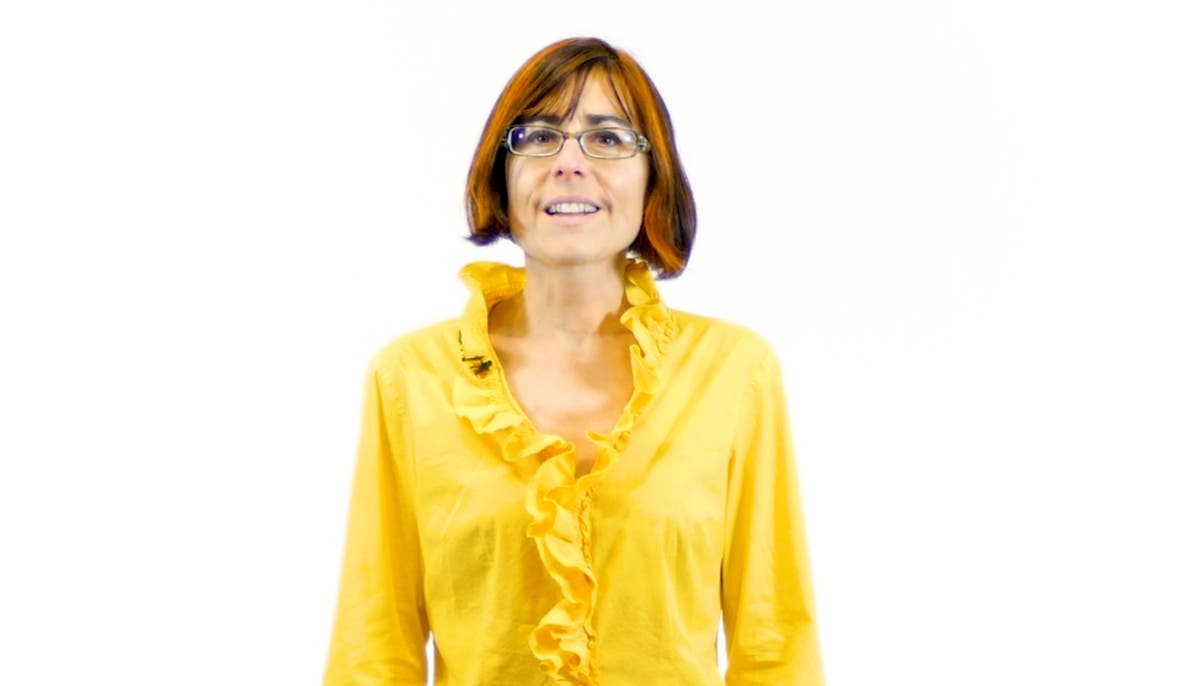
Brookline Interactive Group (BIG) and its project, the Public VR Lab, are proud to present the latest interview from Arrival VR. This co-created immersive storytelling project is the first national virtual reality (VR) filmmaking collaborative project curating immigration stories of Americans from pre-1620 through 2018 and incorporating them into a visual XR/VR timeline. The Brookline Community Foundation has awarded a generous grant to BIG to support their efforts to record immigration stories from the Brookline community to contribute to this project.
Members of the public are invited to participate in this project and share their family's immigration stories at BIG's studio in Brookline. We'll be holding the next interviews on January 22. To learn more, please visit http://immigrationvr.com.
-----------
Find out what's happening in Brooklinefor free with the latest updates from Patch.
Can you start by introducing yourself, and telling us where you migrated from?
“My name is Ana Otero Marcos and I [moved] here to the U.S. in 1999 and I am originally from Spain.”
Find out what's happening in Brooklinefor free with the latest updates from Patch.
What was your reason for migrating, or your hope for a new life when you moved here?
“Well, when I first came to the U.S I actually came to Memphis, Tennessee. I was a student, I was a graduate student, so I came for a short time to do like a research project for a few months with no intention of immigrating in the country or staying just for a short time, but I met the person who is now my husband. So, we fall in love with each other, so he's the reason why I'm here.”
Who did you move to the U.S. with, and who who did you leave behind? Did anyone come after you?
“I moved here alone, so my family members - my parents have visited twice - but none of my other extended family moved to the U.S. It was just me. Again, you know, I move here because of my husband now. It was easy for both of us to have a life and jobs here than back in Spain.”
As time has passed, how does your experience of living in the U.S. compare with your expectations prior to moving here?
“It's difficult to immigrate into a country. At first and you go through a period where everything is very exciting because it's new, and then you miss some things that you have in your home country, especially family - my parents, because they don't live here. But then as time goes by you start getting adjusted and something interesting happened to me, which is I no longer feel like I'm a citizen of either country. So there are so many things that I like about this country that I miss when I visit Spain and so many things that I find in Spain that I miss when I'm here. So the feeling of being able to appreciate both of the cultures and at the same time realizing that neither one of them is perfect.”
Migration can be difficult. Where did you find strength in the difficult times?
“I found a strength with my husband because he really ultimately was the reason why we were both here, so he was always very supportive and understanding of the cultural differences. He didn't spoke much Spanish when we first met and he made a tremendous effort to learn Spanish and he's actually fluent now and he can speak with my parents that don't speak any English. He also wanted to share the culture and we have raised our son bilingual. He actually spoke only Spanish to our son when he was little, which I really appreciated. We wanted to make sure that he learned Spanish because he was born here.”
Did you ever feel unwelcome during your early years in the U.S.?
“The only times I have felt unwelcome have been dealing with government officials through the immigration process, unfortunately. Perhaps things have changed already, I'm a US citizen now and this has been many years ago, but I didn't feel like I belonged. But the rest of the time I felt pretty comfortable, and everyone was always interested in where I was coming from, what it was like in the country where I was coming from.
“So now it's been so long that I've been here that sometimes I get a little annoyed when people ask me where I'm from. I know is part of my heritage and who I am, but sometimes I wish I could just be like anyone else here, go unnoticed without anyone necessarily ask where I'm from. But I understand that they are curious or they want to know more, or share a story if they visited my country.”
Are there any cultural traditions from Spain that you still share with your family at home?
“Yeah, I tried to preserve some of the traditions. Particularly during Christmas time in Spain, people celebrate the Three Kings, which is the Epiphany and thus the day where our children receive gifts, and that's the day where my son was receiving gifts. So I always told him about the Three Kings and all those stories.
“Also, the food culture is very important. So, I tried to cook Spanish food and make my son be able to appreciate those foods. It's important for me that not only he can speak the language, also he can know what are some other things that are important in the country.”
In what ways do you think migration has made you a stronger person, or changed you?
“Migration has definitely made me stronger and has definitely changed me, because I... really, before I came to the U.S I didn’t even go anywhere. I didn't really know much about what was happening in other places in the world. I didn't have an understanding of the variety of people and it has made me a more tolerant person. And that's the fact that I appreciate the most about being an immigrant, that I can look at others that perhaps have a different culture, way of behaving, accent, religion, beliefs, and still understand where they are coming from and be able to treat them with respect. I think that's something that probably all immigrants share, because they realize that there are different ways of doing the same thing and in the end we are all humans, and we all want the same things, and we want to be happy. We might look for that in different ways.”
What do you wish more people understood about immigrants and migrants?
“Well, I wish people understood that again, there are many reasons why people immigrate and it doesn't necessarily mean that they are worse off than them. So that's one aspect. Also, that's actually very important, is being tolerant as far as immigrants. They may do things different, but it doesn't mean that they are doing them bad in any way. And, you know, maybe [they] themselves could be more interested in seeing other places and other cultures, and being a little bit more exposed.”
------
About Arrival VR
Led by Brookline Interactive Group, and its project the Public VR Lab, Arrival VR is a nationwide collaborative curating immigration stories of Americans from pre-1620 through 2018 in a visual XR timeline. The project has fifteen partners across the United States, and will be shared online, in virtual reality, at film festivals and at arts and cultural organizations nationwide with a curriculum for engaging community dialogue about immigration. The project ponders a shared experience and visual timeline of the commonalities and complexities of American immigration throughout history using XR as a platform for a field-building strategy for emerging media.
About the Public VR Lab
The Public VR Lab is growing a field for Community XR that promotes accessibility, digital inclusion, and diversity. The Lab is disrupting traditional media communications in community-based civic media, journalism and arts, cultural and educational organizations by providing XR Toolkits, equipment, training, cohorts, artists residencies, fellowships and content in the public interest. The Lab is a project of Brookline Interactive Group, a next generation public access community media arts center. www.publicvrlab.com