Arts & Entertainment
Arrival VR: Maya Shares Her Family's Immigration Story
Watch the latest interview from Arrival VR, a project highlighting immigration stories from around Boston.
Brookline Interactive Group (BIG) and its project, the Public VR Lab, are proud to present the latest interview from Arrival VR. This co-created immersive storytelling project is the first national virtual reality (VR) filmmaking collaborative project curating immigration stories of Americans from pre-1620 through 2018 and incorporating them into a visual XR/VR timeline. The Brookline Community Foundation has awarded a generous grant to BIG to support their efforts to record immigration stories from the Brookline community to contribute to this project.
Members of the public are invited to participate in this project and share their family's immigration stories at BIG's studio in Brookline. We'll be holding the next interviews on November 19. To learn more, please visit http://immigrationvr.com.
-----------
Find out what's happening in Brooklinefor free with the latest updates from Patch.
There is a story behind every decision to migrate. What do you know about your family’s story?
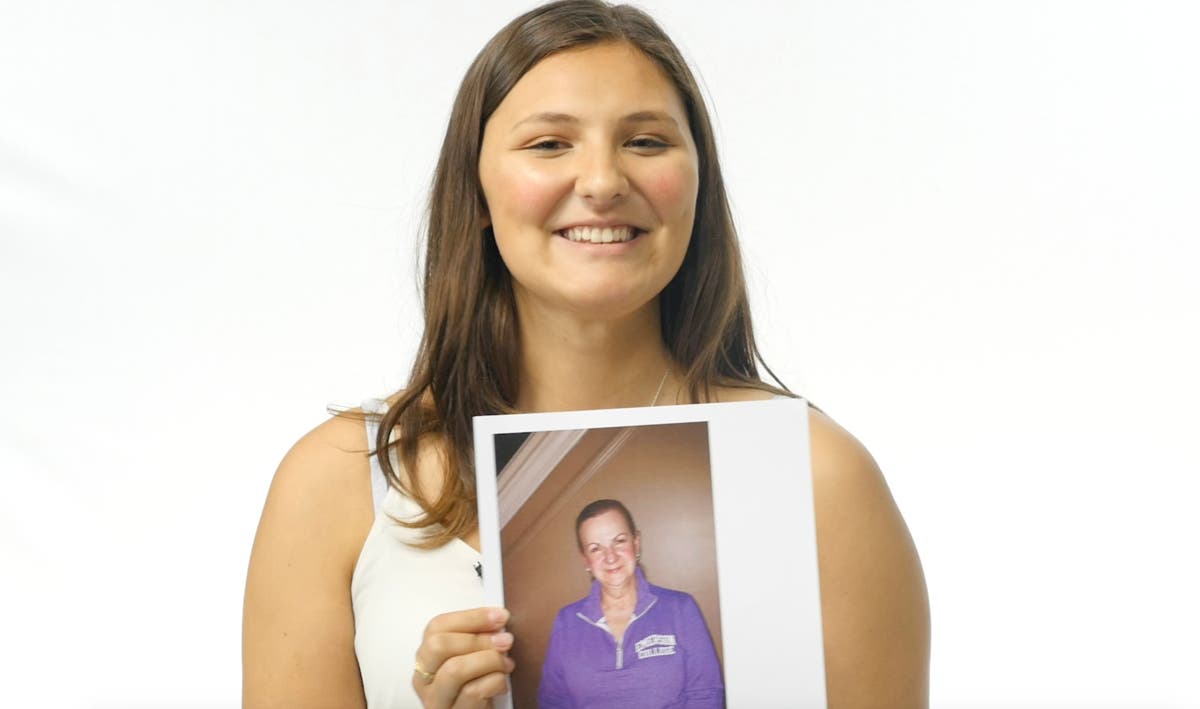
“Hi, my name is Maya. I'm half Italian and quarter Moroccan. My mom immigrated to the United States from Northern Italy in 1990 and my grandma immigrated from Marrakesh, Morocco in 1966.
Find out what's happening in Brooklinefor free with the latest updates from Patch.
“So, in my mom's case she had just finished her undergrad at university in Italy and she received an offer of a scholarship to do her graduate degree at the University of Oregon, so she took that and moved to Eugene, Oregon where my family lives now and was a grad student there. Then she intended on just doing her graduate degree and then going back to Italy for the rest of her life and career, but she ended up getting an extension offer on that scholarship to do her PhD, so she ended up staying. And then, in that time, she met my dad and the rest is history.
“In my grandma's case she grew up in a rather oppressive household with a very strict father. She was only allowed to go to school through eighth grade because girls at that time were not allowed to go to school in Morocco, and she wanted more. She wanted a career, she wanted a family outside of that… When she was 22 years old, she moved to Paris where she lived for two years. My grandpa was on a US Air Force base there in France, where they met at a ball and they fell in love, and then they ended up getting married. My dad was born in France in 1965 and then they moved to the U.S. in 1966.”
Which members of their family came with them to the U.S., and who was left behind?
“My mom is the only member of her family that has come to the United States. The rest of her family is all still in Torino, Italy. None of them have expressed any interest in coming over, she's the only one who's here. And similarly with my grandma, her decision to leave was entirely on her own and none of the rest of her family members came to the U.S. until much later. Her brother and some of her sisters live in the U.S. now… Some of them live in Florida, but they came after she did, probably around the 1970s.”
What was the most difficult thing for your family about arriving in the U.S.?
“For my mom... She said when she first arrived, she basically was lumped into this group of international students. She felt like she had great friends, but she never really felt like she was connected to American culture. So, she said she never really got to feel like she was actually included in American culture until she started meeting my dad's friends and whatnot. Also, the fact that she was on the other side of the world from the rest of her family and she basically was here completely alone, and didn't have the support of her family to lean on while she was here.
“For my grandma, her coming to the U.S. was definitely a much more difficult adjustment, just because of the fact that my grandpa was a government employee and he feared that his job could be on the line if people at his work knew that he was married to a Moroccan woman... He basically told everyone - all of their friends, and everyone at my grandpa's work - that she was from France... So she kind of had to lie about her identity her whole life, just to keep my grandpa's job safe, to keep herself safe.”
What have been your family’s biggest challenges, and what has been their biggest successes in their time here?
“So for my mom, her biggest challenge has certainly been being away from her family. You know, she had to always make that decision, because now that she had children in the United States and her job and her life is here, but her family's all still in Italy, she always had to make that decision of ‘do I stay here with my children, do I go home?' You know, it's expensive and long travel to be able to go home all the time. Also, raising children without the support of having her parents around, and her siblings... They were on the other side of the world.
“Their successes... You know, my mom has a graduate degree and a PhD, she has a successful career as a professor… So I think for her, that's definitely her biggest success, was being able to maintain her career, be that strong driven career-oriented person, but still be a mother - a very caring, loving mother - at the same time.
“For my grandma, she was able to have a great career despite the fact that she only went to school through eighth grade. She was able have a great career in the United States and I know that's something she's really really proud of. ”
What cultural traditions from your family’s home country do you still share at home?
“We spent most of my summers in Italy as a child, so kind of around the time period when I was learning to speak, like 2-3 years old. So when I came back to the U.S. after those summers, I would have to go to school and I didn't speak English anymore because I only spoke Italian. And for a few weeks or so, it would be really difficult for me because I'd kind of have my own made-up language where I'd speak a mix of both English and Italian, and nobody could understand me. And then slowly over time I stopped speaking Italian at home, and spoke less and less. We started switching over to English, which was not my mom's choice, that was entirely my choice. I completely regret that now, being older.
“Then, as far as for Moroccan, my grandma really wanted me to be able to speak French, so I ended up going to a French immersion school all the way from kindergarten through senior year of high school... I learned French primarily for her, but it also became something I was really passionate about.
“And then cultural traditions, I think the biggest ones that we carry on is just through food, you know. We have certain dishes that we eat at certain times. It's kind of cool in my house because my dad will make a lot of Moroccan food and my mom will make a lot of Italian food, so we kind of have two different cultures going on in there.”
What do you wish more people knew about immigrants and immigrant families?
“I wish people knew… immigrants are to be taken just as seriously as everyone else. I know this is something my mom struggles with in her career, and has struggled with, is the fact that just because she has an accent, people automatically assume that she may not understand, even though she has a PhD in comparative literature in English, so of course she speaks English perfectly.
“I think, you know, immigrants are just as strong, just as powerful, just as intelligent as anybody else and they deserve to be treated that way… And my mom is proof that you can come here, get a masters and PhD, and raise a family and be successful regardless of the fact that you're an immigrant - and I think that people need to be able to see that more.”
------
About Arrival VR
Led by Brookline Interactive Group, and its project the Public VR Lab, Arrival VR is a nationwide collaborative curating immigration stories of Americans from pre-1620 through 2018 in a visual XR timeline. The project has fifteen partners across the United States, and will be shared online, in virtual reality, at film festivals and at arts and cultural organizations nationwide with a curriculum for engaging community dialogue about immigration. The project ponders a shared experience and visual timeline of the commonalities and complexities of American immigration throughout history using XR as a platform for a field-building strategy for emerging media.
About the Public VR Lab
The Public VR Lab is growing a field for Community XR that promotes accessibility, digital inclusion, and diversity. The Lab is disrupting traditional media communications in community-based civic media, journalism and arts, cultural and educational organizations by providing XR Toolkits, equipment, training, cohorts, artists residencies, fellowships and content in the public interest. The Lab is a project of Brookline Interactive Group, a next generation public access community media arts center. www.publicvrlab.com