Politics & Government
Mass Politicians 101: A Quick Look at the Bay State's Best (and Worst)
With President Obama in town, here's a primer on the Massachusetts elected officials who fought for civil rights during the past 200 years.
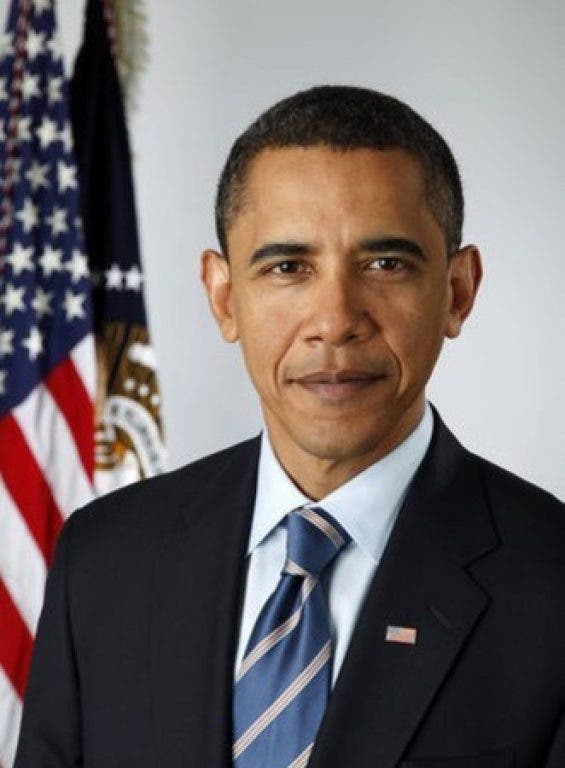
Earlier this week, President Barack Obama during a fundraising trip to Boston.
In light of this, I thought I’d provide some information on the men from the Bay State who have run or were nominated by their political parties for the country’s two highest offices. Interestingly, many either rose to prominence or were stifled in their ascent due to issues relating to race, segregation and slavery.
- John Adams, the second U.S. President, never owned a slave or used slave labor, but it seems he thought it was premature to push the issue, saying in 1777 that a bill to outlaw slavery in Massachusetts should “sleep for a time.” By 1783, however, slavery was abolished in the Commonwealth, ironically with Adams’ own Massachusetts Constitution being used to prove its illegality.
- Adams’ son, John Quincy Adams, was elected in 1824 as our sixth president. Although he didn’t live to see slavery abolished on a national level (contrary to what some people seem to believe), he spent much of his political life fighting against it.
- When it comes to local heroes in the fight for civil rights, Beacon Hill-born Charles Sumner is near the top of the list. Considered to be “a bit prickly” and a “radical”, he apparently didn’t know enough to keep his mouth shut when he should have. In denouncing the proposed Kansas-Nebraska Act in 1854, Sumner insulted fellow senator Andrew Butler, co-author of the Act. Sumner mocked the other senator’s manner of speech and physical mannerisms, somewhat cruelly, since Butler had suffered a stroke.
- Butler’s nephew, Representative Preston Brooks, was infuriated. Two days later, Brooks confronted Sumner on the floor of the Senate and beat him into unconsciousness, stopping only when his cane broke. Amazingly, Sumner eventually recovered and returned to the Senate, running for president in 1856.
- Seeing the slavery “debate” quite differently was Massachusetts senator Daniel Webster, who ran for president in 1836, 1848 and 1852. Although widely admired for his oratory skills, his support of the Compromise of 1850 (which required federal officials to capture and return runaway slaves) made him a mortal enemy to abolitionists.
- Calvin Coolidgemade headlines and came to national prominence while Governor of Massachusetts during the Police Strike of 1919. He won the 1920 Republican nomination for Vice President only after many ballots and backroom bargaining. His boss, Warren G. Harding, may very well have been America’s first “black” president; he was believed to have a great-great-grandfather of West Indian ancestry, a rumor that threatened to derail his presidential bid. (An excellent book about the campaign is ‘1920 - The Year of the Six Presidents’.) Coolidge elevated to the presidency with Harding’s death in 1923. [also not the person for whom ]
- Henry Cabot Lodge, Jr., U.S. Senator from Massachusetts and Ambassador to the UN was the Republican candidate for Vice President in 1960, under Richard Nixon. The intent was for Lodge to make Massachusetts more of a “toss-up” state, but Lodge made the questionable move of pledging, without Nixon's consent, that if elected, the President would appoint an African-American to a cabinet post.
- The winner of the 1960 presidential election was of course native son John F. Kennedy who, along with his brother, Robert F. Kennedy fought for equal rights for all Americans. As a result of both their efforts, the Civil Rights Act of 1964 became law.
- First, and so far, the only black U.S. Senator from Massachusetts (and first ever African-American senator elected by popular vote), Republican Ed Brooke received one vote for Vice President at the GOP convention in 1968 and was a rumored running mate to Richard Nixon in 1972.
- George H. W. Bush was born in Massachusetts. While running for President in 1988, the Bush campaign infamously tarred and feathered then-Governor and presidential candidate Michael Dukakis by running the “Willie Horton” TV advertisement, which painted the Democratic nominee as weak on crime. The ad was seen by many as being racist by design.
- Governor of Massachusetts for four years, Mitt Romney ran for president in 2008 and is running in 2012. Romney said in a 2007 speech that he “saw my father march with Martin Luther King,” a claim he was later forced to admit was a lie.
So, you can see, Massachusetts has at times been a leader in the fight against slavery and in the support of civil rights for African Americans. It almost makes you forget about all that other stuff we did.