Arts & Entertainment
New Brookline-Based Center Seeks to Foster Interest in Byzantine Art, Culture
Hellenic College to mark institute's launch with exhibit in October.
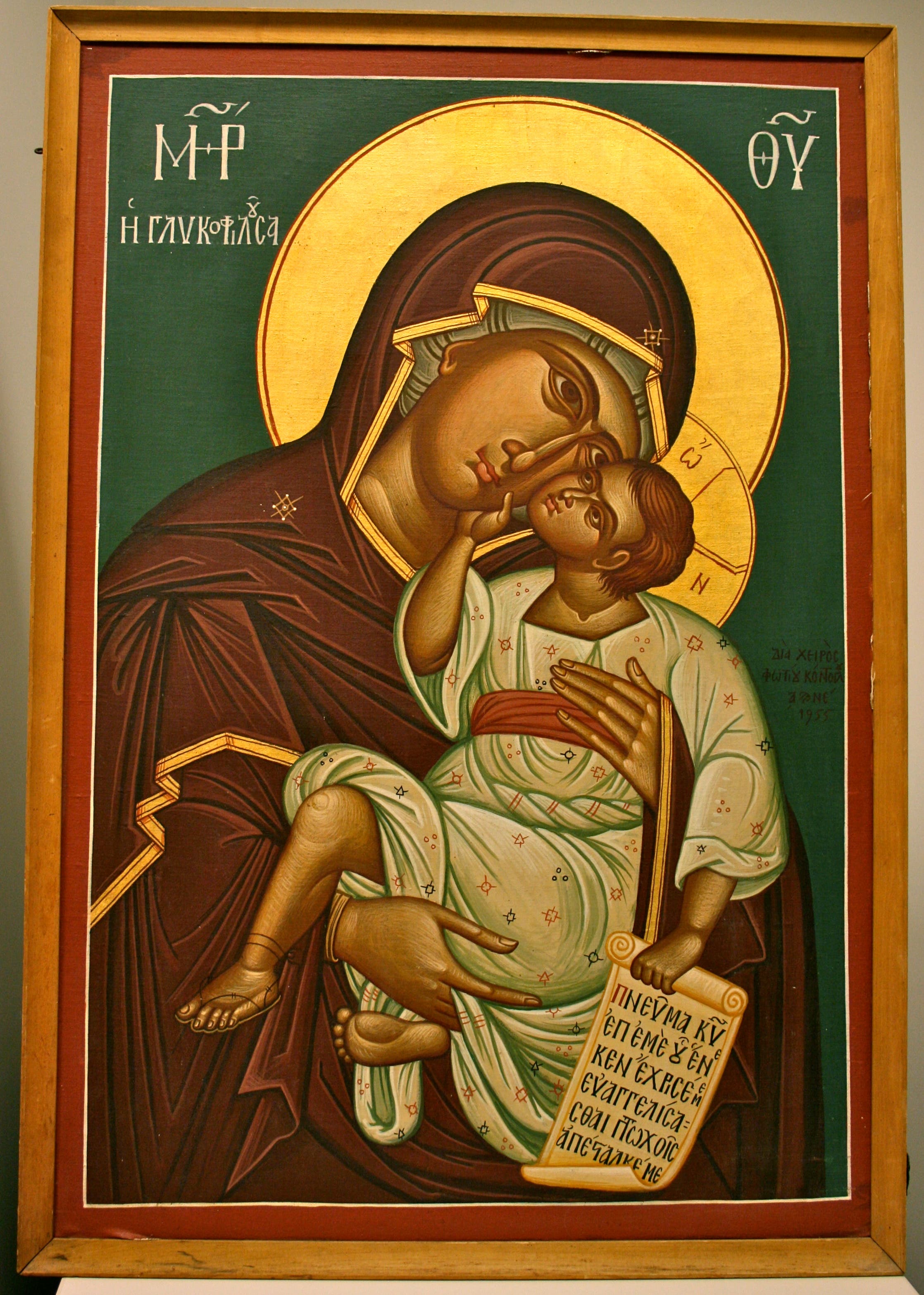
Brookline's Hellenic College is marking the launch of a new center aimed at sparking greater interest in Byzantine art and culture with an exhibit of work by the artist credited with single-handedly reviving the ancient art.
According to organizers, the new Mary Jaharis Center for Byzantine Art and Culture will offer intellectual opportunities for Brookline residents as well as students of the college, starting with an exhibition of icons from pioneering artist Photios Kontoglou in a little over a month.
The center will be directed by Maria Kouroumali, Ph.D., who came from Oxford University to head the center and take up an assistant professorship at Hellenic College. Kouroumali will teach classes in Byzantine art and culture, and plans to add graduate student courses and conferences to build the center into a regional and national hub for such research.
Find out what's happening in Brooklinefor free with the latest updates from Patch.
The center was funded by part of a multi-million-dollar donation from Orthodox benefactors Mary and Michael Jaharis and will be the only institution of its kind in the Northeast.
Kouroumali said she was honored to be chosen to head the new center, and that, even as a "relatively small institution" in a metropolitan area filled with titans of higher learning, Hellenic has "a very good starting point to set up an annual conference in Byzantine Art and Culture with internationally renowned scholars coming to give papers."
Find out what's happening in Brooklinefor free with the latest updates from Patch.
Byzantine art grows from a deep historical tradition, but also enjoys close ties to a modern world religion and its culture.
The Byzantine empire grew out of the eastern Roman empire in the fourth century, and flourished in modern-day Turkey and beyond until the fall of Constantinople—now Istanbul—in 1453.
Byzantine culture lived on, thanks to its links to the Orthodox Church. Its traditional art suffered a blow in 1832, Kouroumali said, when newly independent Greece chose a Bavarian monarch and its art took a turn for the Western style.
"The legacy of Byzantium was pushed to one side," she said.
The tradition lay dormant until after the first World War, when an artist named Photios Kontoglou single-handedly brought Byzantine-style art back. Kontoglou died in 1965, but the artistic revival he ignited has spread throughout the Orthodox world, and his tradition lives on through his students and through his definitive manual for Byzantine-style icon painters.
Very Reverend Dr. Joachim Cotsonis, director of the Archbishop Iakovos Library and curator of the exhibit, will also teach classes on Byzantine art history at the center.
The exhibit will consist of 11 icons, nine of them by Kontoglou himself, and two from one of his closest students. According to Cotsonis, four icons will come from the Greek Orthodox Metropolis of Boston, one comes from a church in South Carolina and the rest will come from private collections.
It's only the third American exhibition to feature the work of Kontoglou, and the first to focus exclusively on his work, Kouroumali said.
"Because Kontoglou was responsible for the revival of Byzantine art, it's an appropriate topic for the launch of this center," Cotsonis said. "He's an appropriate link between the Byzantine tradition of the past to the living continuation of the Orthodox Church."
Kouroumaili agreed.
"Kontoglou is balanced between the sort of sacred and secular, which is as the heart of Byzantine culture," she said.
Cotsonis said the new center will complement Hellenic College's twin theological and academic missions, and will be enhanced by the school's rich archive of Byzantine journals, rare books and manuscripts.
The center will launch at an inauguration ceremony on Oct. 2, and the doors to the exhibit will be thrown open to the public on Oct. 4. The exhibit will be open Monday through Friday, from 10 a.m. to 5 p.m., until Nov. 5. It will be found in the reading room at the Archbishop Iakovos Library on the Hellenic College campus, 50 Goddard Avenue.
Thanks to a few blockbuster exhibitions, Byzantine art has gained prominence in America during the last decade, Cotsonis said. He also expects the exhibit and center to benefit from growing interest in iconography and the Orthodox rite among other American Christian denominations.
In terms of the city's larger art community, "there are some early Byzantine pieces in the Museum of Fine Arts in Boston," Cotsonis said. "People who are familiar with those pieces can find the continuity of that tradition represented in these icons here."
He also expects the exhibit to draw the Orthodox faithful, as well as those interested in art revival.
In addition to the exhibit, Brookline residents will be able to attend scholarly presentations and introductory summer programs open to anybody interested in Byzantine studies. The summer programs may not be completely finalized in time for the end of this academic year, Kouroumali said.
"We're hoping to give the opportunity to members of the public who are interested in the history and culture of this period to attend talks which will not just be geared to specialists," she said.