Politics & Government
Danvers Public Meeting Comment Up For Debate In Wake Of MA Supreme Court Ruling
The Select Board discussed what steps to take in the wake of a state Supreme Judicial Court ruling opening the door for "uncivil" discourse.


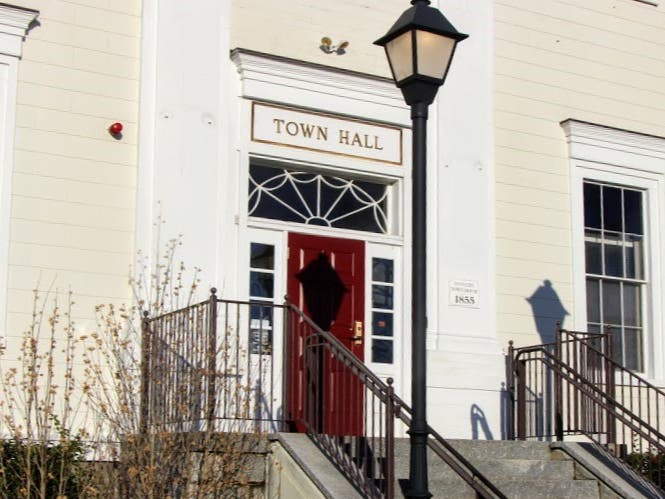
DANVERS, MA — The Danvers Select Board on Tuesday wrestled with the ramifications of a state Supreme Judicial Court ruling this spring that opened the door for harshly critical — even vulgar — public comment in open meetings as a matter of free speech.
The SJC ruling comes in the case of a Southborough woman who said she was unfairly silenced at a
2018 public hearing because the chair of the meeting said her comments violated the board's rules against saying something determined to be "slanderous" against the body.
The SJC ruled that elected officials must be open to criticism during public comment — respectful or otherwise.
Find out what's happening in Danversfor free with the latest updates from Patch.
"Although civility can and should be encouraged in political discourse, it cannot be required," the SJC said in handing down the ruling.
The Danvers Select Board at Tuesday night's meeting began to grapple with how to instruct town board chairs to allow that type of public comment, without putting board members and those in attendance in potentially abusive situations.
Find out what's happening in Danversfor free with the latest updates from Patch.
"That state Supreme Court decision created anxiety among a lot of people like me on how to run a public meeting according to the law," Danvers Select Board Chair David Mills, a lawyer and former judge, said. "What, if anything, should the Select Board do with respect to that court decision?
"There is a threat that a chair who rules on some language and behavior could be subject to litigation. And for the town that could mean money, risk and threat. Nobody is going to jail. But it's an uncomfortable thing."
At issue is whether Danvers should revamp its code of conduct for public meetings to reflect the new standard. The Salem City Council held a similar meeting this spring in which they removed the stipulation that public comment must be on a subject on that night's meeting and the one that expressly prohibited profanity.
"The only thing we can say is that (public comment) must be orderly and in a peaceable manner," Salem City Council Chair Megan Stott said in reading off the changes. "The use of vulgar and profane and disrespectful language (prohibition) — we're removing that.
"Although, we're hopeful that the public still follows that one, and us as well."
Town Manager Steve Bartha briefed the Select Board on the decision, saying that he and other town administrators were "dumbfounded" by the breadth of the decision.
"What I think was missed in that decision is that the court suggested the Southborough Select Board was trying to insulate itself from criticism," Bartha said. "I think that's absurd. I think the Southborough board was trying to insulate itself from being called Hitler and Nazis. I have never seen a Selecet Board anywhere that is not open to being criticized for the decisions that they make."
Select Board Matt Duggan said he felt like a victim of the policy himself when he was censured in May in a way he said: "violated my ability to speak freely."
While the Supreme Court ruling was more focused on members of the public speaking to officials than on officials policing their own boards, Select Board member Gardner Trask said it stands to reason there should be a difference between what elected officials are expected to endure compared to volunteer board members or town employees.
"I think there need to be published guidelines," he said. "Calling me a Nazi, calling me Hitler, as abusive as it is, and I wouldn't like it, but we give them a certain amount of time to make their case, and as long as it's not a criminal act — as long as they are not accusing me of being something criminal — there are guardrails. But simply being loud or boisterous, while an affront to the body, (should be allowed.)
"Our world had changed. We've had people in our town hall badgering and belittling our employees for doing their jobs and not responding in the manner that those people want them to respond. There should be guidelines for how you can respond and how you should not respond."
Mills asked Select Board members to refresh themselves on the protocols and to read a memo on the ruling from town counsel before tabling the discussion until the next meeting.
"I don't think there is an easy answer," Mills said. "I don't have an answer of what is safe and appropriate for the right of citizens to speak and for the rights of a presiding officer to keep the meeting focused on the public business — and not the toilet training of the speaker that never got to finish something earlier in life."
(Scott Souza is a Patch field editor covering Beverly, Danvers, Marblehead, Peabody, Salem and Swampscott. He can be reached at Scott.Souza@Patch.com. X/Twitter: @Scott_Souza.)
Get more local news delivered straight to your inbox. Sign up for free Patch newsletters and alerts.