Arts & Entertainment
Stonehill Arts Professor Paints Southern Story
Candace Walters says her childhood on tobacco farm has had a lifelong effect on her art.
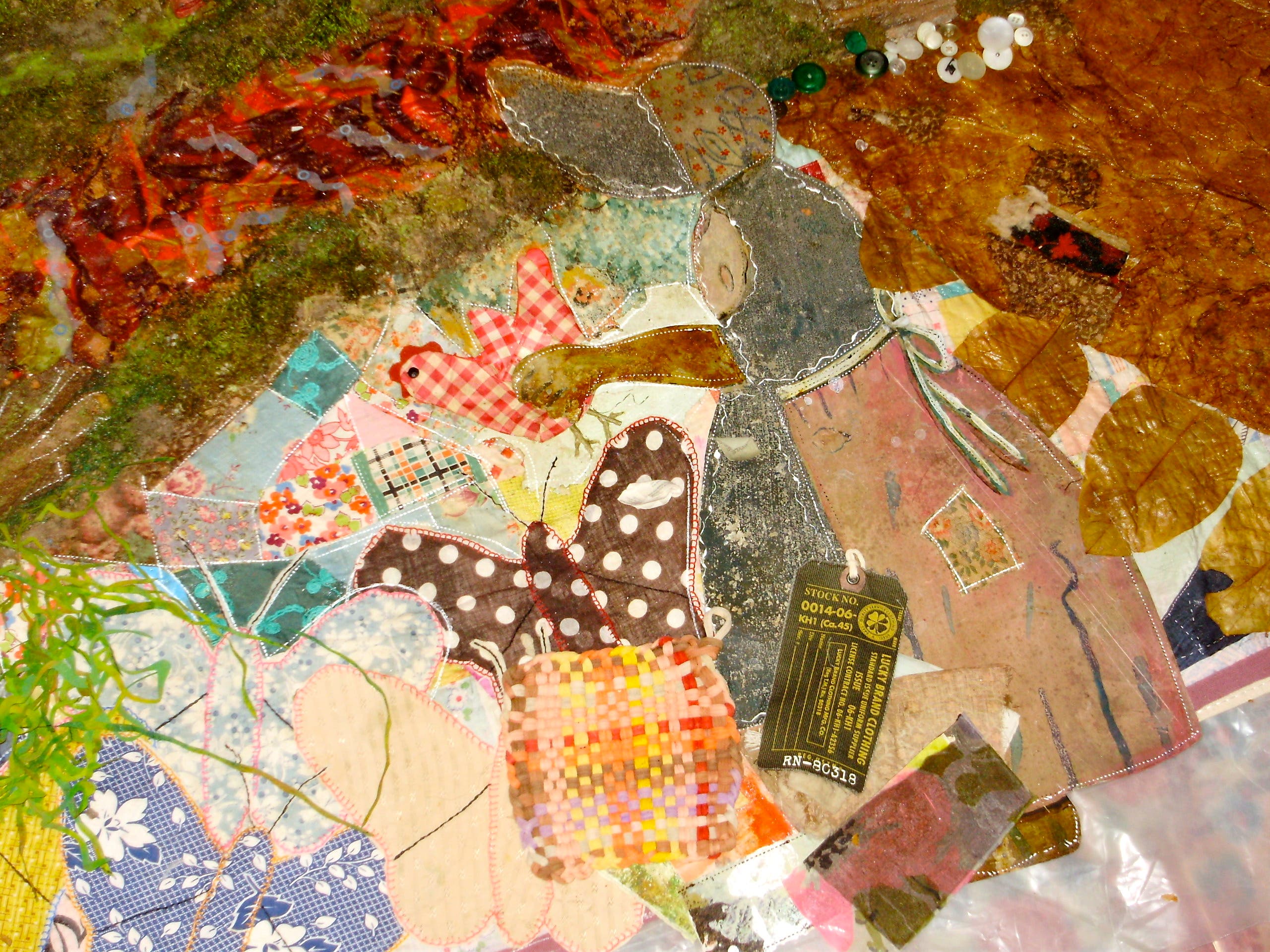


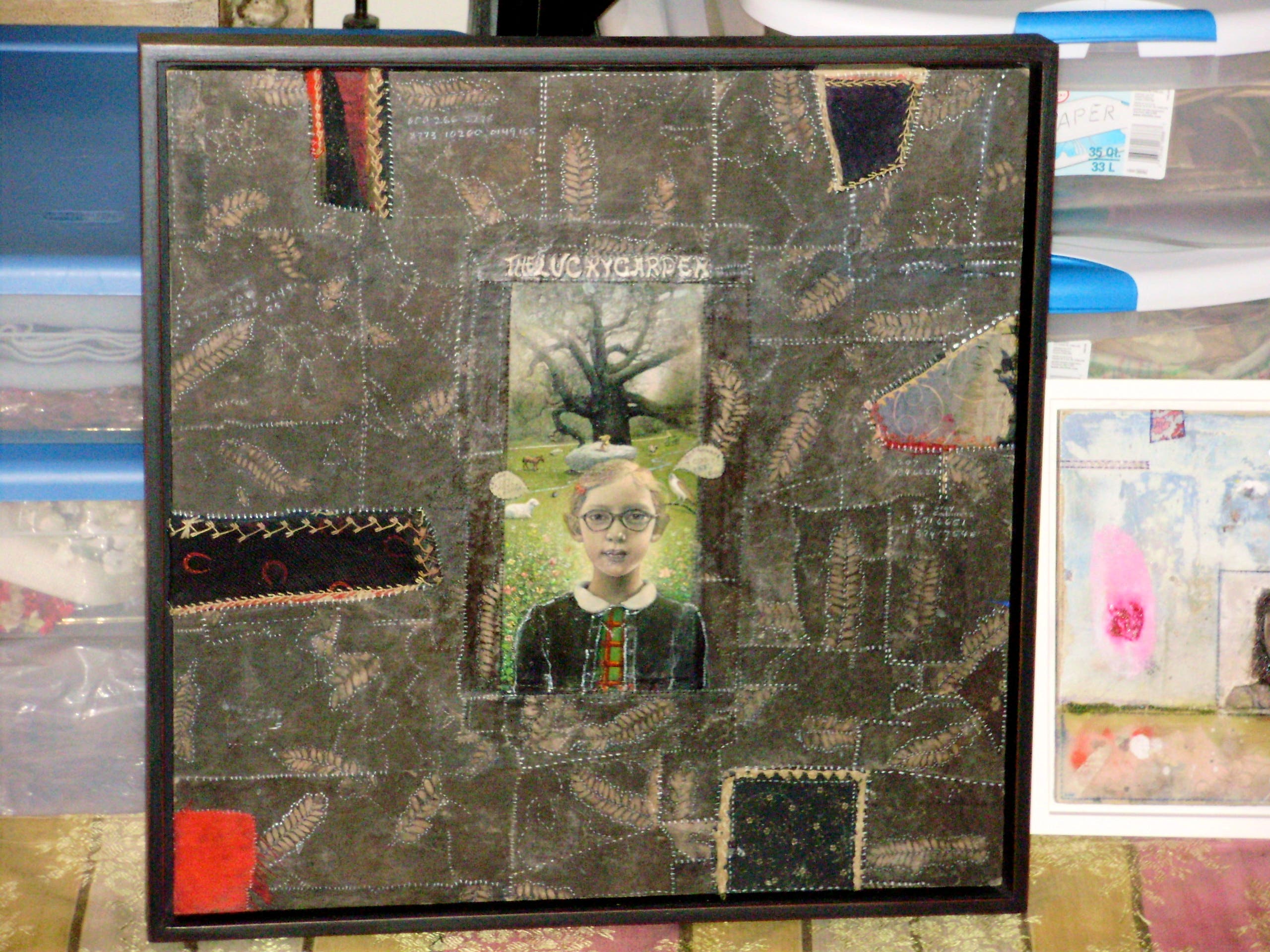


Candace Walters spent her childhood summers working on her family's tobacco farm in southern Virginia, and it is that experience those memories that are central to much of her work.
"Memory plays a huge part in my artwork," says Walters, 59, and an associate professor of painting and drawing at Stonehill College where she teaches painting, drawing, portrait, and landscape. "I'm so connected to my memories, I can just pull it up like a movie; it's so accessible."
Those memories were accessible to the public earlier this year when her most recent piece "Beyond the Triangle" was exhibited in Boston. The ensemble – including a large quilt flanked by two smaller quilts – was created by Walters and her long-time friend and colleague Brenda Atwood Pinardi and reflected Walters' African American South as well as Atwood-Pinardi's love for Bermuda.
Find out what's happening in Eastonfor free with the latest updates from Patch.
Atwood-Pinardi died in August, three months after being diagnosed with cancer.
Walters says she started making quilts with her Stonehill students after a young woman transferred to the college from Tulane University after Hurricane Katrina hit New Orleans. All students made a self-portrait to express their feelings about the hurricane's devastation by using found materials – much like Walters does in her personal work.
Find out what's happening in Eastonfor free with the latest updates from Patch.
The quilt was later taken to Tulane to exhibition, and can be seen on her website www.paintpapercloth.com
Walters' current piece was originally meant to be a collaboration with Atwood-Pinardi; Walters says she will finish it with her friend in mind.
"I'm determined to do this for her. Doing this piece is all about finishing what we started. Obviously, she's throughout, this is for her," says Walters, while standing over the piece that is taking over her living room floor. "She was a wonderful artist and friend."
The latest African-American quilt re-uses found materials and includes paintings of rural churches and houses, various textile designs and notions, African American dolls that were found or she made, paintings of "everyday" African-Americans as well as photographs of Martin Luther King, tobacco leaves, and includes a shrine to slavery.
"I hope nobody is offended because it means so much to me that I'm a white person trying to make a statement about how much the South affected me in my life, having so much exposure to it," says Walters.
Walters says she was determined to make it part of her life's work to use imagery to talk about life in the south during the 1950s and 1960s including the poverty, food, "making due," "common folk," social climate, segregation, and plantation living to name a few.
She hopes to finish the piece in time for a faculty show in January.
"I wanted to honor my experience because, after my generation, black and white, I don't know who is going to be able to tell the story because it's gone. That way of life doesn't exist anymore," says Walters. "It was such a culture that was so isolated and completely unaware of what was going on in urban areas and it's gone forever."
Walters says, "it is absolutely haunting" to go back and see the abandoned and dilapidated plantations, outbuildings and slave quarters.