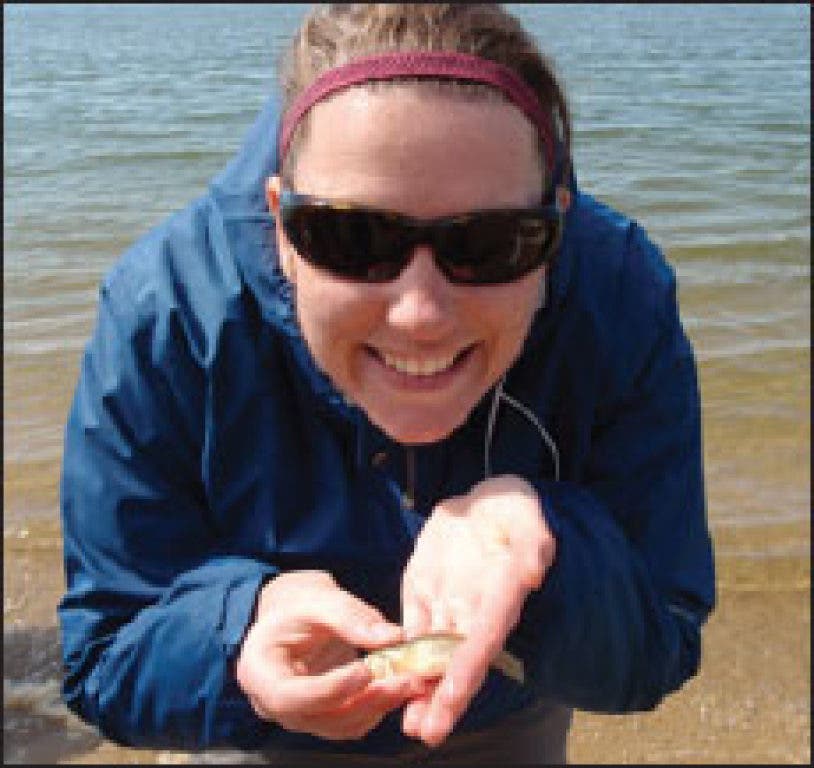
With Larissa Williams, Postdoctoral Fellow, Biology Department
Massachusetts’ New Bedford Harbor has been polluted since the mid 1800s when human waste from a growing population was disposed of into the estuary. In the early 1900s, the city of New Bedford recruited electrical component manufacturers to the city, who in turn polluted the Acushnet River estuary and adjoining harbor with polychlorinated biphenyls (PCBs). While most of the marine life in New Bedford Harbor died as a result of chronic exposure to PCBs, an estuarine minnow, Fundulus heteroclitus, has persisted and is now adapted to living in the contaminated site. Learn how researchers are using genetic techniques to better understand this minnow’s resistance to PCBs.