Neighbor News
Falmouth Lacks Ocean Turbine Onshore EMF Setback
Impact of Electromagnetic Fields from Undersea Ocean Wind Cables on Residential Homeowners
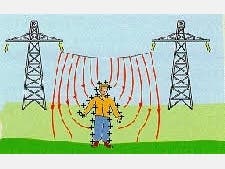
Falmouth, Massachusetts undoubtedly has two of the worst placed commercial wind turbines in the United States each generating 110 decibels of noise each for a total of 113 decibels.
The town ignored its own special permit process resulting in seven years in as many as eleven lawsuits. The courts shut down the nuisance turbines in June of 2017.
Find out what's happening in Falmouthfor free with the latest updates from Patch.
The purpose of zoning and bylaws including special permits is to promote the health, safety, convenience, and welfare of the inhabitants of Falmouth.
The Falmouth Select Board in early March met with offshore wind turbine contractors to discuss installing up to 100 offshore wind turbines with a capacity of over one gigawatt of power. A gigawatt equals one billion watts.
Find out what's happening in Falmouthfor free with the latest updates from Patch.
The 100 wind turbines will all be connected by electric cables to an ESP, electric service platform out in the ocean. The ESP equipment also includes high voltage switch gear to send the power onshore to its destination.
The Falmouth Select Board was informed the wind turbine company plans to build an onshore substation in Falmouth at an undisclosed location. The area needed to build the station is unknown and the population of Falmouth is over 30,000.
The Falmouth Board was told as usual the offshore green energy wind turbines will provide low-cost electric, improve the current infrastructure, and create jobs.
There apparently was no discussion of health and safety setbacks over the voltage of the electric cables as these type cables carry between 200,000 to 350,000 volts of electricity depending if they are direct current or alternating current.
The electric cables could go on a current right of way called a ROW or a new route passing by residential homes. In any case the setbacks should be taken into account.
Current residential homeowners are being handed the dice and folks get out of the way these electric cable proposals could make the housing market a "crap shoot."
The wind contractors did discuss local permits as the area needed for an electric substation is not known.
The issue for residential homeowners concerns the effects associated with the electric power industry's physical facilities, including, most recently, exposure to electromagnetic fields or what is called EMF.
The residents around the two town-owned wind turbines asserted the zoning authority more aggressively in court and shut down the nuisance wind turbines. The ocean wind turbine electric cables route could be another case of déjà vu with a host of new unknown residents concerned.
The Falmouth land-based wind turbine fiasco shows a critical assessment of the use of local zoning laws to regulate the activities of the electric power industry is imperative. In particular standards for safe human exposure to EMF at extremely high voltage.
Massachusetts has shown through various state agencies such as the Massachusetts Department of Environmental Protection that the state is willing to put the needs of the wind industry before the safety and health of local residents. MassDEP brokered a loan on the Town of Falmouth second wind turbine named Falmouth Wind II.
Massachusetts state government will attempt to completely preempt local zoning regulations for the wind turbine industry by calling residents along the electric right of way or around the substation location nimby, not in my back yard.
Massachusetts lacks a model bylaw for EMF, Electromagnetic Fields, through established residential locations.
Residential homes need safe EMF distances. There are currently examples of safe distances for example high voltage lines 700 feet and low power in neighborhoods 10 to 200 feet.
An electric route at up to 350,000 volts shows in epidemiologic research has rather consistently found associations between residential magnetic field exposure and cancer.
Symptoms of EMF exposure include sleep disturbances, headache, depression symptoms, tiredness, fatigue, lack of concentration. changes in memory and dizziness.M.jpg)
-------------------------------------------------------------------
Notes #
The recommended magnetic field exposure limit for members of the public (24-hour exposure) is 0.1 millitesla (mT) or 1,000 milligauss (mG), and for occupational exposure (whole working day) is 0.5 mT (5,000 mG)
The strength of the magnetic field is expressed in units of Tesla (T) or microtesla (µT). Another unit, which is commonly used is the Gauss (G) or milligauss (mG), where 1 G is equivalent to 10-4 T (or 1 mG = 0.1µT). There are a range of different instruments that can measure magnetic field strength.
The tesla is the SI unit of the magnetic field, The Earth's field ranges between approximately 25,000 and 65,000 nT (0.25–0.65 G). By comparison, a strong refrigerator magnet has a field of about 10,000,000 nanoteslas (100 G).
The official safety limit for power line fields is 100 microteslas. By comparison, a large power line 100 feet from a house might create a field of about 0.4 microteslas. The strength of Earth's natural magnetic field ranges from about 30 to 60 microteslas.