Neighbor News
Falmouth Renewable Energy Ethics Committee Needed
Renewable energy is solar, wind turbines, tidal power, geothermal and battery storage. Falmouth needs a Renewable Energy Ethics Board ASAP.
The Town of Falmouth has reached a point where a committee should be appointed to conduct a review of all the renewable energy programs.
Falmouth politics have become very aggressive, very tribal, and very partisan. Town politics is limited to a small number of people, but they happen to be the most politically active people in town.
Very rarely do you hear a Select Board member or other town board members recuse themselves from meetings involving renewable energy votes even though they advertise or work with renewable energy.
Find out what's happening in Falmouthfor free with the latest updates from Patch.
The Massachusetts Ethics Commission defines as a Selectman or other town board members, you are a “municipal employee” and are covered by the conflict of interest law.
The question is should board members who in private life work with renewable energy or represent developers and investors recuse themselves from voting on projects?
Find out what's happening in Falmouthfor free with the latest updates from Patch.
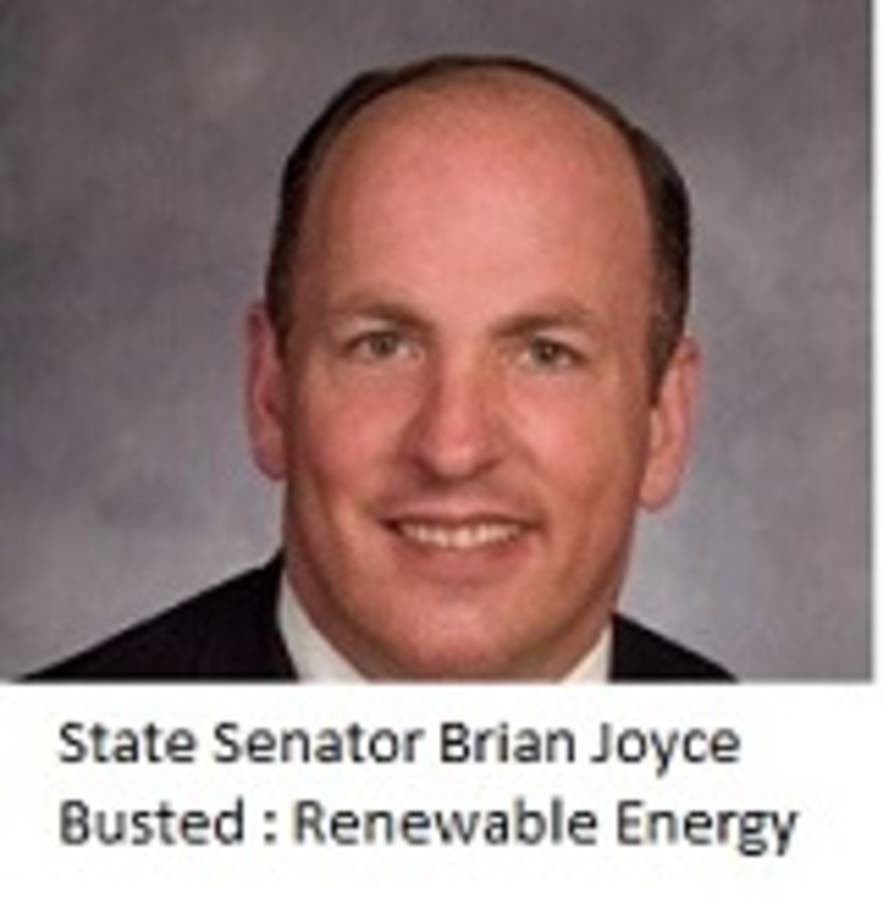
As an example of why Falmouth needs a renewable energy ethics committee: former Massachusetts State Senator Brian A. Joyce in December of 2017 was charged in a federal 113-count indictment some of which involve renewable energy and the insurance of energy projects. Brian Joyce also a longtime attorney “violated the public's trust” and “decided to take the path of greed” by using his political office for personal gain.
Former Senator Brian Joyce did not disclose his association to Energi even as he sponsored a bill promoted by the company, speeches at Energy-sponsored conferences, and he served on the legislative committee that oversees the industry that Energi insures. Energi of Peabody a private company sells insurance to the energy industry provided enough legal work to help the double the size of his law firm, Joyce Law Group.
Former Massachusetts Senate President Stan Rosenberg who recently stepped aside over corruption is a staunch supporter of Joyce. Rosenberg helped Joyce in attaining his position as assistant majority leader and on influential committees some of which included renewable energy.
Falmouth was one of the first towns to follow the former Governor Deval Patrick 2000 megawatts of land based wind turbines by the year 2020. That agenda ended with former Massachusetts Speaker of the House Sal Dimasi the author of the Green Communities Act being sentenced to eight years in federal prison.
The Massachusetts Ethics Commission says state law “prohibits a municipal employee from participating as such an employee in a particular matter in which, to his knowledge, he/she has a financial interest.”
The ethics commission looks at two reasons of how to violate the state’s conflict of interest laws.One, he/she votes to know that he/she had a financial interest in the matter. Two, his/her vote to approve “would cause a reasonable person to think that the municipal employee acted with favoritism toward his tenant in performing his/her town board duties.”
At some point in the near future, the registered voters of the Town of Falmouth should petition the town meeting to vote on an Article to vote on the following proposed Article:
To see if the Town shall vote to establish a renewable energy ethics committee which shall be elected by the town voters each year at the time of the Spring Election. This will be a three-member board and anyone serving on this board cannot have any dealings with the town from which they receive financial gain. Members of this board cannot serve on any other board elected or appointed.
The Renewable Energy Ethics Board will have the following responsibilities and powers. They can investigate any conduct which appears to be unethical or illegal. They can ask for the records from any town board which would include minutes of meetings, e-mails, letters, memos, maps and any other correspondence which is asked that pertains to their inquiry on renewable energy.
Furthermore, as representatives of the town, they can ask for the Attorney General to investigate any activity which through their inquiry they found to be illegal or in violation of the open meeting law. Furthermore, if they feel that a committee or member of a committee is operating in violation of the bylaws of the town they will contact that board and ask that immediate action to remedy the violation be taken.
Any citizen can file a complaint with the Renewable Energy Ethics Committee and if requested will be put on their agenda. The committee will determine within thirty days will determine what course of action if any will be taken regarding the complaint.
The Renewable Energy Ethics Committee will follow the rules of the State Ethics Commission.
The State Ethics Commission serves the public by fostering integrity in government. The independent agency provides free advice to all public employees on the conflict of interest law and civilly enforces this law.