Neighbor News
Massachusetts Offshore Wind Projects Imploding
Falmouth faces Article 97 by the state to bypass town wind turbine bylaws

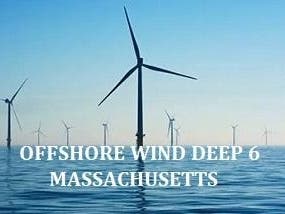
Massachusetts had a goal of 2,000 megawatts of wind energy installed in the state by 2020. Noise complaints in almost every community lead to nuisance lawsuits against wind turbines. The result is a massive failure of the land-based agenda costing taxpayers millions in legal fees and after twenty years a little over 100 megawatts of land-based wind power. The program undoubtedly was a catastrophic failure in which state officials turned the page taking no responsibility.
Massachusetts is going forward now with an offshore flawed ocean wind cable plan. The ocean plans appear again to be headed in the same downhill direction as the land-based projects.
Two years ago bids were awarded to multiple offshore wind LLCs, Limited Liability Companies. The companies collectively had a choice of two options for the electric transmission of power from the ocean to the major cities using the power. Those choices are first the least expensive "generator lead line” approach and second the more expensive “planned” approach.
Find out what's happening in Falmouthfor free with the latest updates from Patch.
The offshore wind LLCs selected the least expensive option the "generator lead line.” As each of the five offshore wind companies builds sections of their project they run their own sets of submarine cables to whatever land location to get to grid transformer locations along the coast of Massachusetts and Rhode Island. There could be up to 15 community landings that may require placing sets of 220,000 high voltage direct current buried under parks, and residential zoned locations including environmental justice communities and there are no health studies of high voltage direct current cables in the United States as this type of voltage is not used. This method will undoubtedly lead to multiple lawsuits similar to failed land-based projects.
The "planned" approach requires four large ocean submarine cables from an offshore wind platform 30 miles out to sea to locations Boston, Fall River Massachusetts, Providence RI, and Hartford Connecticut. As each wind company adds to its project they simply hook up to the wind platform negating the need for running up to 30 cables onshore.
Find out what's happening in Falmouthfor free with the latest updates from Patch.
This planned approach avoids residential vacation destinations and heavily congested residential neighborhoods. Yet one offshore wind company is asking the Massachusetts legislature to enact Article 97 to bypass the Falmouth, Massachusetts wind turbine bylaws to place their cables through the town. Article 97 requires that there are no other options. The wind company selected and optioned for the "generator lead line" had they optioned for the "planned" approach there would be no need for any cables into Falmouth. Only the courts could determine the outcome of this scenario.
Now the bad news. The offshore wind LLCs through a bidding process won the rights to build in the locations 30 miles off the coast of Massachusetts. The wind companies negotiated with various electric companies to sell their power at seven cents a kilowatt hour to the power companies. The PPA, power purchase agreement contracts were approved by the Massachusetts Attorney General and recently by the Massachusetts Department of Public Utilities.
The offshore wind companies at the last minute want a do-over because of inflation, supply chain issues, and the war in Ukraine. The electric utility companies are demanding that MassDPU uphold the contracts approved in full by the state.
The question now is who will finance a project selling electricity for seven cents per kilowatt hour if the projects are not built and have no approved land routes to get to the electrical grid?
Current proposed locations ;
Wianno in the Osterville section of Barnstable, Massachusetts a vacation destination.
Falmouth Heights Beach section in Falmouth, Massachusetts a vacation destination.
Boyds Lane Portsmouth, Rhode Island manufacture of electronic equipment, boat building, and tourism.
# For Massachusetts to enact Article 97 disposition no feasible and substantially equivalent alternatives exist for the onshore wind turbine cables.