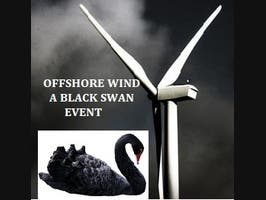
A black swan event is a rare and unpredictable event with an extremely shifting impact on the wider world. In this case, the model of offshore wind and the political agenda to reach clean energy goals by 2030 is failing.
Massachusetts had a black swan event in 2020. The state had an agenda of 2000 megawatts of land-based wind turbines by the year 2020. The turbines were placed in residential locations leading to lawsuits over noise and shadow flicker. New England onshore turbines suffered blade and gearbox drive units failing. The state land wind agenda was an absolute failure.
Portsmouth, Rhode Island suffered one of the first wind turbine gearbox drive train failures. The Portsmouth wind turbine gearbox had suffered a significant, premature failure in the first and second planetary stages. The failure occurred after 3 years of operation and was subsequently removed.
Find out what's happening in Falmouthfor free with the latest updates from Patch.
Falmouth, Massachusetts led the state in wind turbine failures with the removal of two town-owned wind turbines in 2022.
Offshore wind contractors have selected Portsmouth, Rhode Island, and Falmouth, Massachusetts to place onshore wind cables through residential sections of those towns. The power is rated higher than the output of the old Pilgrim nuclear power plant.
Find out what's happening in Falmouthfor free with the latest updates from Patch.
Offshore wind is suffering historic inflation, a domestic supply chain failure, a lack of ocean ships for construction, risky investments, stock price losses, and blade issues on large turbines over 8 megawatts.
Investors are abandoning alternative energy especially risky offshore wind.
States are renegotiating offshore signed power purchase agreements leaving electric ratepayers on the hook with payments that could look like second mortgages. How much more can cash-strapped electric ratepayers pay to make offshore wind viable has to be taken into account.
Commercial and residential electric ratepayers are realizing regulators, legislature and so-called environmental groups are omitting facts about the true cost of electricity from offshore wind.
Some states are asking the federal government to increase renewable energy credits for offshore wind projects. Falmouth, Massachusetts was given one million dollars in renewable energy credits to install one wind turbine. The project still failed.
Another big issue is Whale deaths have followed offshore wind construction from 2016 with the start of the Block Island, Rhode Island ocean turbines to New Jersey and New York today. They say a "deaf whale is a dead whale." Whales could be losing their hearing from wind turbine construction including sonar used for placing foundations. The whales can't communicate and search for food leading to ship strikes and anemia.
Finally, The U.S. commercial fishing industry provides over 100 billion-plus in annual sales, and offshore wind development represents a threat and those who work in the industry.