Neighbor News
Wind Turbine Failures To Continue Into 2024
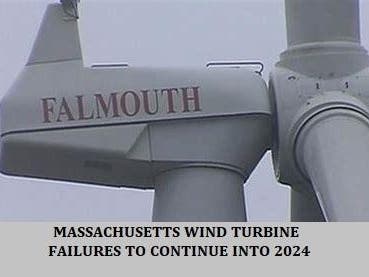
Falmouth Wind Turbines: All Had Gear Box Failures

The first US megawatt wind turbine was installed in Boone, North Carolina in 1979. By January 1981, the engine’s drive transmission failed (gearbox). Local residents complained for years about the wooshing and thumping sounds and blades disrupting line-of-sight television reception.
The Town of Falmouth in 2010 and 2012 purchased two wind turbines to last 25 years, known as Wind 1 and Wind 2 both wind turbines suffered gearbox problems and neighboring property owners filed up to eleven lawsuits to permanently shut them down over health and noise issues that had been known since 1981. The turbines were removed in 2022.
The Massachusetts wind agenda was to obtain 2000 megawatts of wind power by 2020. Today there are less than 100 megawatts of land-based wind power an absolute failure over maintenance and noise issues.
Find out what's happening in Falmouthfor free with the latest updates from Patch.
By 2020 Massachusetts despite the land-based failure passed legislation to solicit proposals to contract for 5,600 megawatts (MW) of offshore wind power by 2027.
The new ocean wind turbines no longer have gearboxes and have switched to direct drive transmissions but have become ten times the size at 8 megawatts and above leading to maintenance problems persisting with known problems with blades.
Find out what's happening in Falmouthfor free with the latest updates from Patch.
Whale deaths have followed the ocean wind construction along the coast bringing up the issue of wind turbine noise. The generation of excessive levels of infrasound and low-frequency noise still plague the wind industry.
Nearly 80 percent of offshore wind submarine cables are linked to cable failures leaving insurance companies exposed to high risks. This also raises the liability question of towns that partner with offshore Limited Liability Companies. Rhode Island electric ratepayers were charged 35 million to repair an offshore wind cable between Block Island and mainland Rhode Island.
Residential communities all along the coast are against the installation of ocean power cables buried through their neighborhoods with more power than the output of the old Plymouth nuclear plant outside their front doors.
Inflation has caused wind companies to cancel contracts and rebid at astronomical prices next year leading to massive hikes in residential electric rates.
Wind energy is not a cost-saving and continues to be a failed political agenda.
The alternative is safe small nuclear microreactor energy which is a zero-carbon electricity source.