Politics & Government
Deferred School Roof Work Costs Framingham Taxpayers a Pretty Penny
More than $60 million could have been saved with timely roof replacements.

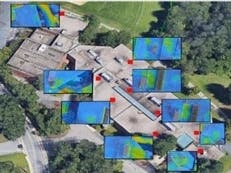
On September 20, 2021, the Framingham School Committee submitted an unusual mid-cycle capital appropriation request to the City Council for $3.1 million to fund the urgent replacement of the Farley School roof. A request for $1.8 million for roof replacement had been made in the prior capital cycle but was deferred even though the roof was beginning to fail and damage to the interior infrastructure of the building was occurring. The image above shows the failing condition of the Farley roof when that funding request was denied.
The warranty on the roof ended in 2018, so the repair future of the roof looked so expensive that its complete replacement had become an urgent necessity. The funding was approved, and the Farley roof is finally scheduled to be repaired this summer at an estimated cost of $5.3 million. A timely roof replacement for Farley could have saved roughly $3.5 million.
The question naturally arises as to whether the Farley School roof story is unique or the norm. It turns out to be the norm and school roof replacement deferral is a systemic and expensive problem in the city.
Find out what's happening in Framinghamfor free with the latest updates from Patch.
Here is the complete school roof story.
Two decades ago, all school roofs were replaced: a first wave of 8 in the period 1996-1999, and a second wave of 7 in the period 2001-2007, but no financial plans were created for the inevitable two waves of roof replacements needed 20-25 years later. In Fall 2017, it was realized that the first wave of school roofs were approaching their end of warranty period, so plans were made to extend their warranties for 5 years. As part of that planning effort, specific estimates were secured for both roof replacement costs and repair costs for bringing those roofs to good enough condition to enable warranty extension. The schools considered were Barbieri, Cameron, Dunning, Hemenway, Harmony Grove, King, and Potter Road. Except for Cameron, these schools were in the first wave from 1996-1999. The Cameron roof was simply deteriorating faster than expected. The total replacement cost for all the roofs was $12 million compared to the warranty extension cost of $300,000.
Find out what's happening in Framinghamfor free with the latest updates from Patch.
Framingham chose warranty extension out to 2023, over replacement. No doubt the rationale was to provide a 5-year window to marshal resources and get the roof replacement cycle well on its way. The problem with this was that in that 5-year period from 2018 to 2023, not a single school roof was replaced, due to a severe shortage of capital to fund any roof replacement projects.
The reason for this was that in 2018, the first year Framingham was a city, the City Council decided to impose a 0% annual property tax levy increase for 2018-2019. Typically, Massachusetts cities and towns increase the property tax levy by 2.5%, following Proposition 2 ½, to keep up with inflation. But not Framingham. Consequently, for FY19, the city had about $5.5 million/year less revenue than a 2.5% levy increase would have produced. That 0% annual property tax levy increase policy remained in place for all 4 years of the Spicer administration term. The city revenue losses each year were: FY19 - $5.5 million/year, FY20 - $3.5 million/year, FY21 - $9.5 million/year, FY22 - $5.8 million/year. These revenue losses accumulate, so after 4 years of 0% annual property tax levy increases, the total loss of city revenue climbed to $24.3 million/year. These revenue losses killed any hope of addressing roof replacements, as they choked off the capital project revenue stream.
In a normal revenue situation, with 2.5% annual property tax increases, starting in 2018, two school roofs could have been replaced each year. Further, during the first year of the pandemic, when school education went remote, advantage could have been taken of a huge opportunity to get roof replacements done even more rapidly when construction costs were low, and all the schools were empty for almost a year. Framingham could have had all first wave roofs, plus Farley, done by now at low cost and with solar installations as a further cost saving bonus.
In the meantime, the cost of these deferred roof replacements went up. In the latest report from the Framingham Public Schools, presented at the March 29, 2023, School Committee meeting:
the total cost of roof replacements for this first wave jumped from $12 million in 2018 to $42 million now. So, the cost of deferral is $30 million.
If you add in the second wave of roofs, the total cost to replace all remaining school roofs climbs to $88 million and the cost of deferral scales up to $63 million.
Yet, the City Council continues to give more tax breaks to property owners. In FY23, the additional city lost revenue was $2.9 million/year, and for FY24, the city plans a further tax cut of a similar scale.
The question then arises: How are the new, much more expensive school roofs going to be paid for?
After all, Farley is being done this summer for $5.3 million and Dunning and McCarthy are going to be done next year for a total of $11.1 million. The answer is that very large amounts of money are being shifted from education to capital infrastructure.
The Mayor is achieving this by cutting city funding of the school district operating budget. In FY23, he cut it by $5 million/year, and will increase that cut to $10 million/year in FY24. In just two years the city funded portion of the Framingham Public Schools budget will have dropped from $89.8 million/year to $80.0 million/year. This is a historic defunding of the school system.
The immediate effect of this is that the Mayor has siphoned off a total of $15 million in education funds to take care of 3 school roofs by the end of FY24. In the years beyond, the Mayor will have $10 million/year to fix all the remaining school roofs, and once they are done, he can apply that recurring money to all of the other infrastructure needs of the city. Education’s loss is infrastructure’s gain.
The tradeoff is that when such a large amount of education money is taken away to replace school roofs and other infrastructure, there is no money left to solve the 3 major problems the school district faces: the late school bus problem, the severe shortage of classroom aides for special needs and English language learner students, and the huge problem of lack of pre-K access for low income students, which has institutionalized systemic educational disadvantage for Latino and Hispanic youngsters in the city. That was all laid out in a prior article:
It's up to the Framingham community to figure out if all those tax cuts have been worth it.
Do we want to pay much more for infrastructure maintenance by constantly deferring it?
Do we want to block vital efforts to improve the school system by shifting city funding from education to infrastructure?