Arts & Entertainment
Civil War Music Endures in Historical Society Presentation
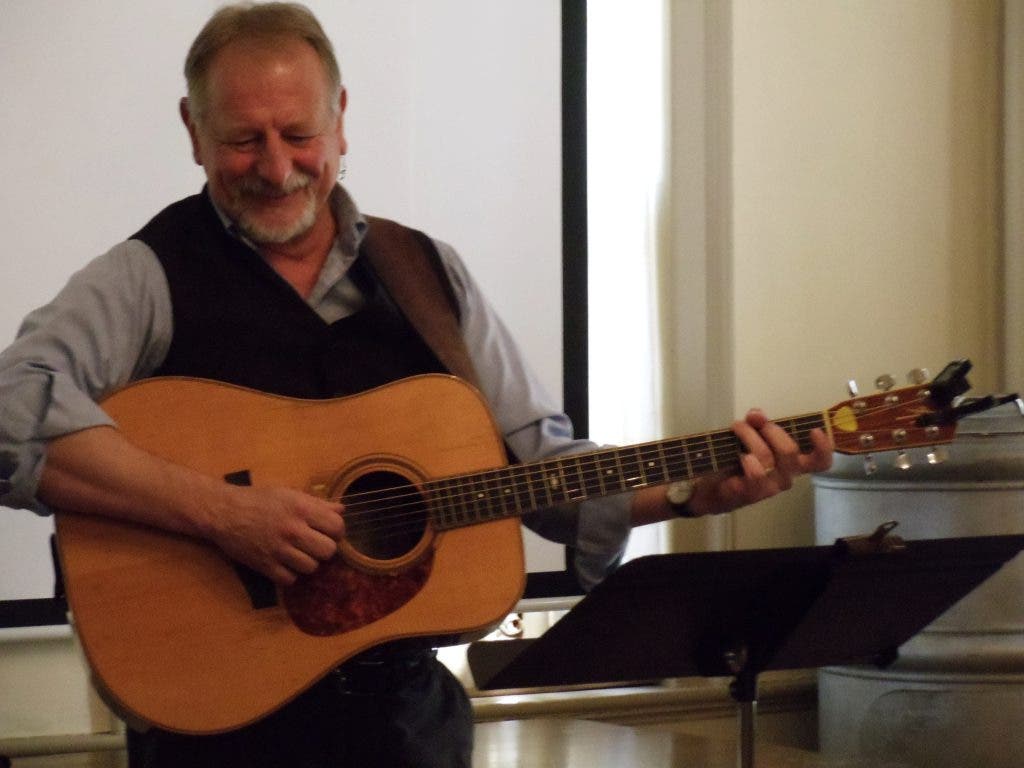
Performer and music historian Rick Spencer presented his program "Greatest Hits of the Civil War: America's Earliest Professional Songwriters" on Sunday.


With all due respect to the songwriters of today, the odds are that few, if any, of the popular songs we hear on the radio and download to our iPods will be familiar to the general population 150 years from today.
The same can’t be said for many American classics, which were composed prior to and during the American Civil War era, as performer and music historian Rick Spencer proved on Sunday at a presentation.
The program, entitled “Greatest Hits of the Civil War: America’s Earliest Songwriters,” brought to the forefront the enduring popularity of such early-American classics as “Oh Susanna,” “Jimmy Crack Corn,” “Camptown Races” and a host of others.
Find out what's happening in Holliston-Hopkintonfor free with the latest updates from Patch.
Spencer, who hails from Norwich, Connecticut, has combined his musical talent and extensive knowledge of American musical history into a series of entertaining programs, which he’s presented to audiences throughout the U.S. and Europe over the past 25 years.
“I started as a staff musician and historian at Mystic Seaport, which is one of America’s largest maritime museums,” Spencer said. “I became somewhat of an authority on traditional maritime music and traveled all over, doing presentations of sea shanties and sailor songs.”
Find out what's happening in Holliston-Hopkintonfor free with the latest updates from Patch.
Through his company, Catfeather Art & Music, Spencer has developed a number of historically-based musical presentations, which he offers to libraries, historical societies and other organizations.
Playing both banjo and guitar, Spencer performed many popular songs of the Civil War, while also acknowledging our debt to the composers of that era who are often considered America’s first professional songwriters.
“During the era of the Civil War, and just prior to the war, was the first time that people could actually make a living as writers of, what we would call today, pop songs,” he said.
“One of the reasons these fellows were able to make a living as songwriters is because the American music publishing industry had finally progressed and evolved to the point where it was an ongoing business.”
Despite the evolution of the music publishing industry, however, songwriters were still not guaranteed proper compensation for their efforts. Spencer explained that “much of this stuff was ‘thieved’ away.”
Much like commercial piracy, which continues to plague the modern day music industry, Spencer explained that “you could buy a copy of Stephen Foster’s most recent song, go home, set up your printing press and print up an unauthorized edition and sell it on the street corner. We were still decades away from the time when we were actually protecting the (songwriter’s) rights.”
Songwriters such as George F. Root and Daniel Decatur Emmett, who are credited with composing a number of immensely popular tunes, would have their works performed in a variety of venues, including theatres, dance halls, grange halls and taverns.
“These songs were big hits," said Spencer. "Everyone knew them. You could go to a theatre or other entertainment place, but you couldn’t bring the music home unless you bought the sheet music and unless you were able to actually play (it).”
“The individuals that I’ll mention today,” he told the audience, “are the ones who laid the groundwork for the likes of George M. Cohen, Irving Berlin, Cole Porter, Johnny Mercer, Bob Dylan and so many other great American songwriters.”
Interspersed between songs, Spencer offered biographies of several prominent songwriters of the era as well as some little known trivia about the songs and their composers. The fact that Emmett wasn’t particular pleased that his popular “Dixie” was adopted as an anthem by the Confederate States, brought a laugh from the audience, as Spencer informed them that “Dan was a Union man, himself.”
As the program continued, the audience joined in on several well-known ditties, such as Foster’s “Oh Susanna.” More trivia ensued as Spencer noted that another Foster composition, “Camptown Races” was, with a lyric change, turned into a popular sea shanty.
The timelessness of popular music was evident in the crowd’s positive response to the program, which was sponsored by CIVILized Solutions.
The continued popularity of the music is no surprise to Spencer, who is executive director of Dr. Ashbel Woodward Museum in Franklin, CT.
“Music has always played an important part in our human interaction,” he said. “It’s been an essential part of human culture. By the time we were drawing cave paintings, we were singing or drumming or making some kind of music. Music’s always been a very, very important and significant way for us to express ourselves.”